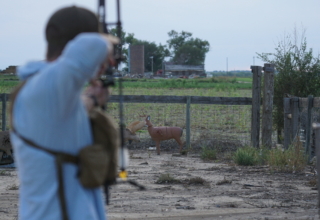
Mathews’ latest flagship, the ARC 30, is light, maneuverable, and scary fast. Here’s what you need to know about this compound flagship.
by Jace Bauserman
Mathews is a compound bow building kingpin. Each year, Mathews Nation, new archers, and those looking to jump ship from another brand anxiously await the manufacturer’s flagship launch.
The Lift and Lift X compound bows were Mathews’ 2024 and 2025 flagship bows. Before the Lift and Lift X were the V3 and V3X. It seems Mathews’ bow eras last two years before the bow-builder flips the script and launches a bow bearing a new name and entirely new technologies.
2026 is a new era of Mathews compound bow design, and the ARC 30 and ARC 34 stand ready to deliver on the tried-and-true legacy Mathews has built.
The ARC 30 is light, compact, and maneuverable. The aluminum riser bow hits an under $1,500 price point, weighs less than 4 pounds, and comes in an array of solid and camo color options, including Mathews’ new-for-2026 Kodiak Brown. The ARC 30 is branded with a radar-busting speed of 348 fps, and according to Mathews, the rating is true to form. We’ll find out.
The ARC 34 is the ARC 30 with four more inches between the axle pins. Mathews created the ARC 34 to ensure enhanced stability, efficiency, and versatility in a lightweight platform that will dominate hunting landscapes from east to west.
The Fiery ARC 30 is what showed up on my doorstep, and will be the point-of-emphasis bow in this review.
Mathews ARC 30 First Impressions
I’m not a color guy, but I admit the new Kodiak Brown riser and limbs jumped out at me when I pulled the compound from its plastic sheath. While Lift remnants linger, it was obvious at first glance that the ARC was its own animal. The riser is even more skeletonized than the Lift X’s, but it feels just as rigid. There are more metal cutouts than on the Lift X 29.5, and Mathews was able to keep the same 3.99-pound weight while adding 1/2-inches between the axle pins. The SCS System has been cut into the riser to reduce weight, and the limb pockets received a slight facelift. You’ll need the new Engage ARC Limb Legs if you’re a limb-leg goer; the Engage EXO Limb Legs will not fit ARC bows.
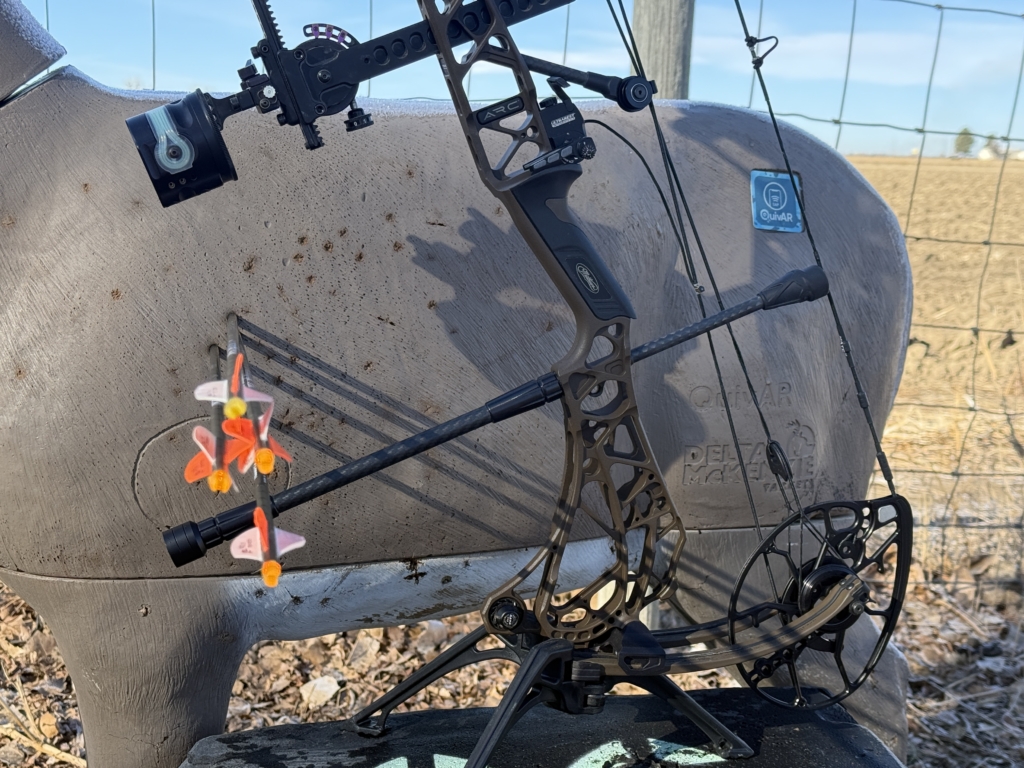
The riser gives bowhunters a standard stabilizer mounting hole and a 7-degree down-angle Bridge-Lock option via the Integrated Bridge-Lock V-Bar and Angled Bridge-Lock Stabilizer.
The second-generation SWX-2 cams wear perimeter weight technology to reduce felt recoil and help the bow retain top speeds even after the addition of a peep sight, brass nock, d-loop, etc. Make no mistake: Mathews built the draw-length-specific 80 percent let-off SWX-2 cams for speed. If you’re looking for a smoother draw cycle, a more gentle backwall, and reduced speed, Mathews offers the SWX-Z Mod.

Mathews gave the ARC 30 redesigned limbs to create a better parallel limb path, enhancing shooter feel while increasing efficiency. The reason: Mathews claims the limbs reduce post-shot vibration and oscillation.
Mathews ARC 30 Bow Build
It’s imperative when you press Mathews bows like the ARC and Lift series that you insert the limbs of the press into the slots of the Limb Shift System. You don’t want to bring the limb tips all the way over the bow limbs like you would with a bow that doesn’t wear a bow-tuning system atop each limb.
As expected, the ARC 30 fell together like a puzzle designed for a third-grader. That’s not a knock on Mathews technology; it’s a compliment. My Spot-Hogg Hogg Father Triple Stack slid through the sight’s Bridge-Lock hole in the riser’s center. QAD’s Integrate MX2 attached quickly to the IMS slots in the back of the riser. Serving the rest into the bow’s down cable and adding a peep sight and d-loop took minutes.
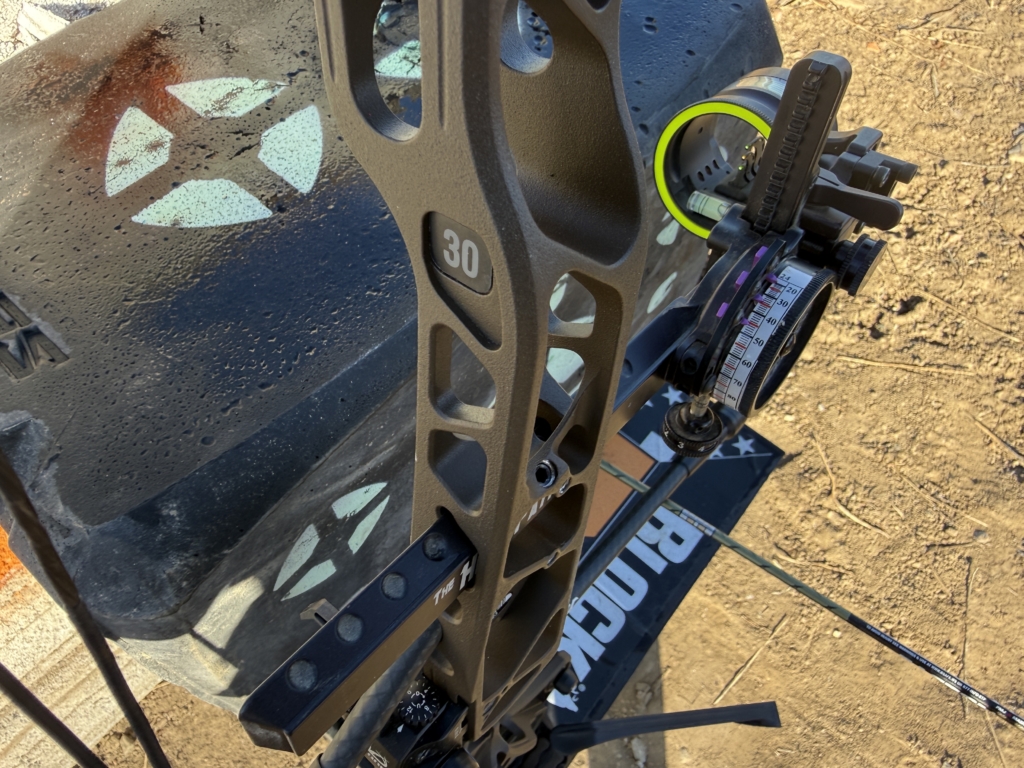
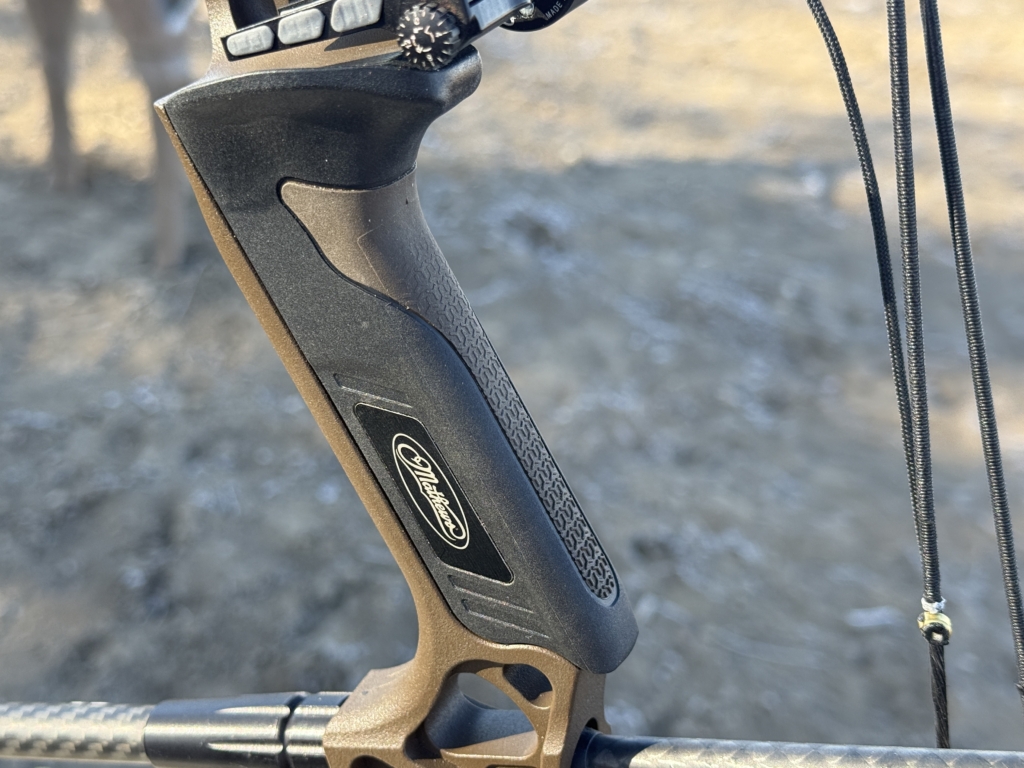
Of all the 2026 bows I’ve tested thus far, the ARC 30 had the closest-to-spec max draw weight measurement. Two different draw scales displayed draw weights of 70 and 70.01 pounds. The bow has a 6-inch brace height, but that measurement is with the grip off. I like Mathew’s Shot Sense Compatible grip. It’s thin and narrow, and I like the tacky nature of the grip’s back. With the grip on, the bow’s brace height is shortened.
I built a pair of arrows to test the ARC 30 with—Easton’s 5MM FMJ Max (467 grains and Easton’s 5.0 (415 grains). Both arrows were fletched with four Flex-Fletch Pro 2.5 vanes, and Lumenoks were added.
The ARC 30: How It Shoots
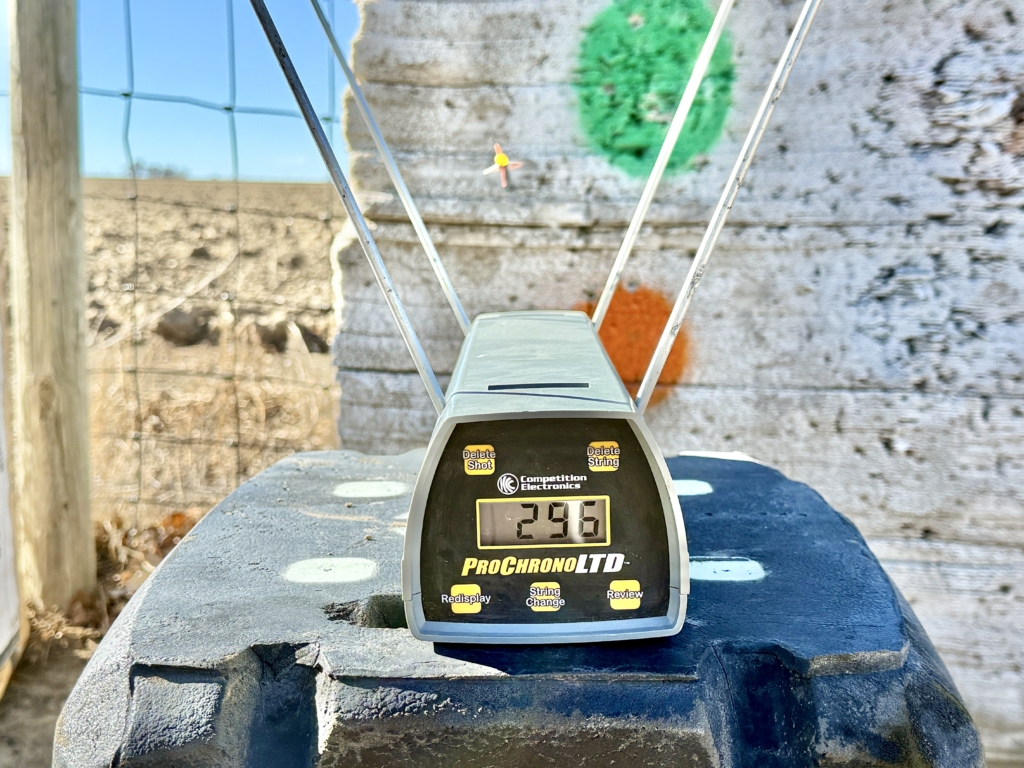
I could save this section a lot of words by telling you the ARC 30 is super fast. Mathews labels it with a 348 IBO set at a 70-pound draw weight and max draw length. My 415-grain Easton 5.0s measured a three-shot fps average of 314 fps. My 5MM FMJ Max arrows, the arrows I will be hunting with for most of 2026, averaged 295 fps, which equates to over 90 pounds of kinetic energy. That’s remarkable. For grins, I created a minimum-for-poundage 350.7-grain arrow, and the ARC 30 drove that shaft at 349 feet per second.
Speed always comes with some sacrifice. The ARC 30 with the SWX-2 cams has a stiff draw cycle, less-than-smooth transition to let-off, and regarding the backwall, you’d better pull HARD into it, or the cams will creep forward and pull you into the shot.
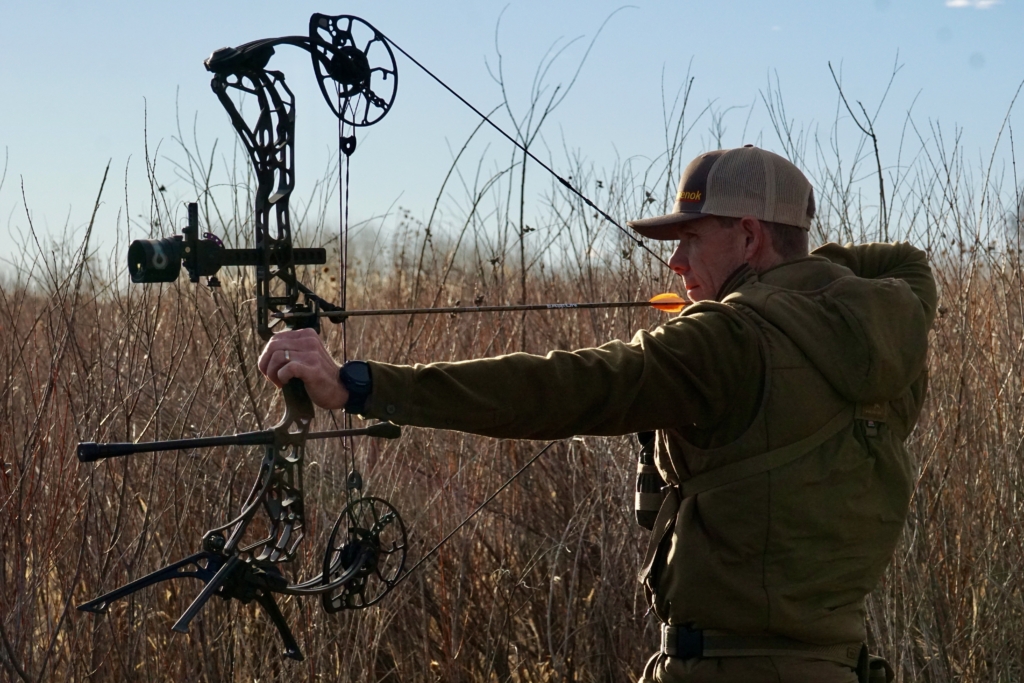
Frankly, I didn’t like the ARC 30 when I started shooting it. I could have swapped to the smoother mods, and while I did try them out and they are much smoother, I pushed through. Sometimes, you have to get used to a bow. I loved how the ARC 30 felt in hand and on target, but wasn’t in love with much else.
After 200 arrows, I started noticing the draw didn’t feel so rigid, and the cams weren’t pulling me into the shot. Did the ARC 30 magically transform? No. I changed how I was shooting. I was pulling harder into the cable-stop backwall and executing excellent shots. The ARC 30 was growing on me.
Mathews ARC 30 Final Thoughts
After 250 arrows, I shot the ARC 30 through paper. It was perfect. I thought I detected a slight right-kick knock via the glowing Lumenoks, but that kick went away after about 100 arrows. Perhaps the strings and cables settled in, or maybe I made a slight grip modification. Either way, I didn’t have to use Mathew’s Limb Shift system. If you do need to use this on-the-bow tuning system, remember to only work on the side of the bow labeled: Limb Shift Technology. You can remove both locking screws and make necessary adjustments with the locking screws removed. Just be sure to put them somewhere you don’t lose them.
The ARC 30 and I are in the third week of our relationship, and though there is still some kinks to work out, I’m shooting this bow, using Stan’s Onnex Thumb, lights out. This is one of the best aiming bows I’ve ever shot, and when the string drops, the arrow sizzles. When shooting my Spot-Hogg Hogg Father Pro Triple Stack and Easton 5.0 arrows, my second yardage indicator needle is 40 yards, and my third is 51 yards. My arrows are finding more Xs when shooting 5-Spot indoor rounds and more 12-rings when punching foam on the range.
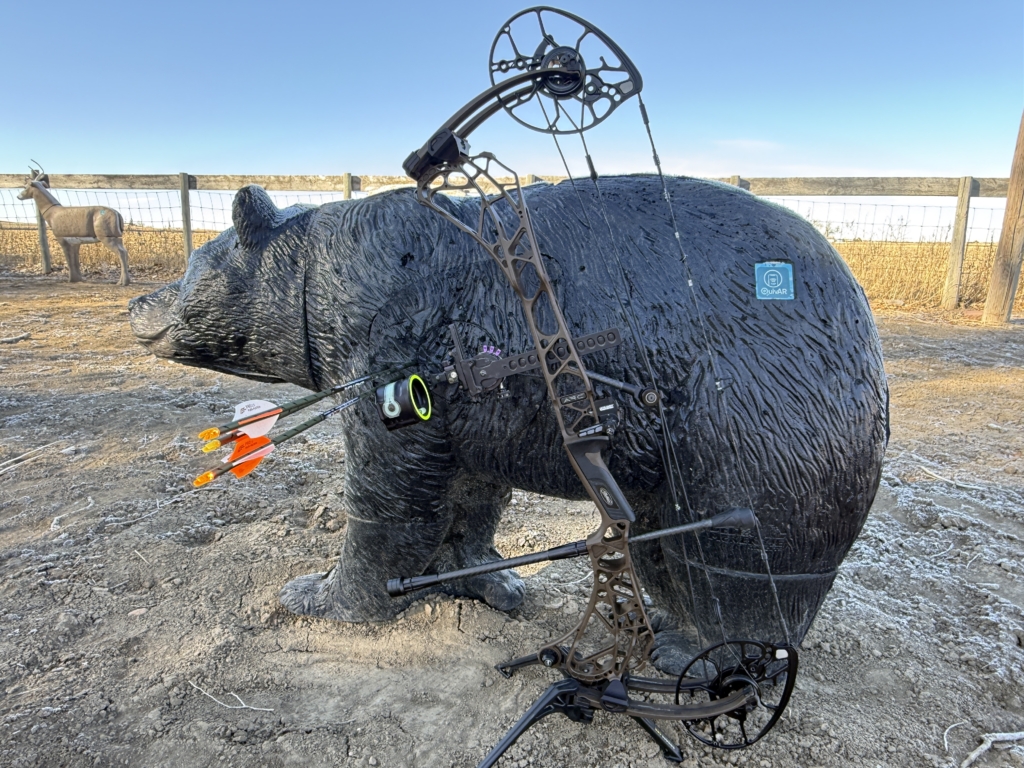
When you visit your local pro shop to test the ARC 30, I recommend shooting the bow with the SWX-2 cams and SWX-Z mods. See which one feels best to you. Also, if you’re not a speed guy, which I am not, I encourage you to stay on the range and get as many arrows through the ARC 30 with SWX-2 cams downrange as you can before making a final decision. You may find you get speed without too much sacrifice once you get a feel for this compound sizzler.