Rarely, if ever, do hunters harvest ducks and elk on the same day. With a little luck and the help of a cell cam and some good friends, November 12, 2025, is a day Scott Haugen will never forget.
by Scott Haugen
Sleep didn’t come easily on November 11th. Earlier that day, I packed five dozen decoys into a pond and tidied up the duck blind. I’d already been on multiple duck hunts this season, but this was the first for Echo and Kona, my two pudelpointers.
I went to bed at 11:00 p.m. and woke up at 2:30 a.m. I was too excited to sleep. When I let the dogs out of their kennels, they knew exactly what was happening. Even though 285 days had passed since their last duck hunt, they knew the drill. Echo is almost 12 years old. It was like she was a puppy. Kona, my 9-year-old male, held his head high, eyes and nostrils full of intensity. The dogs couldn’t load into the truck fast enough.
A wisp of fog blanketed the floor of Oregon’s Willamette Valley. To the east, the Cascade foothills were engulfed in clouds. The conditions were prime for duck hunting.
For four days prior, I’d focused my efforts on filling a General West Cascade Roosevelt elk rifle tag. It’s an over-the-counter tag that’s far from easy to fill, even though I live smack in the middle of the game management unit. I spent days looking for elk in the Cascade Range at elevations between 2,000 and 3,500 feet. I found tracks, mostly old. The few fresh tracks I ran across told me the elk moved into the deep, dark timber. Hunting pressure was high. By the time I discovered fresh sign, someone else was on the herd. The very low percentage hunt had me frustrated. I needed a break.
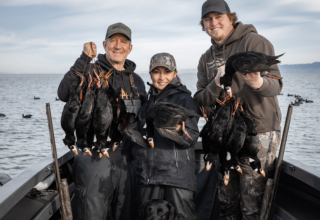
The break came in the form of a morning duck hunt with my dogs. Fog thickened. There wasn’t a breath of wind. Ducks worked well into the decoys. Echo and Kona picked up right where they’d left off, last season.
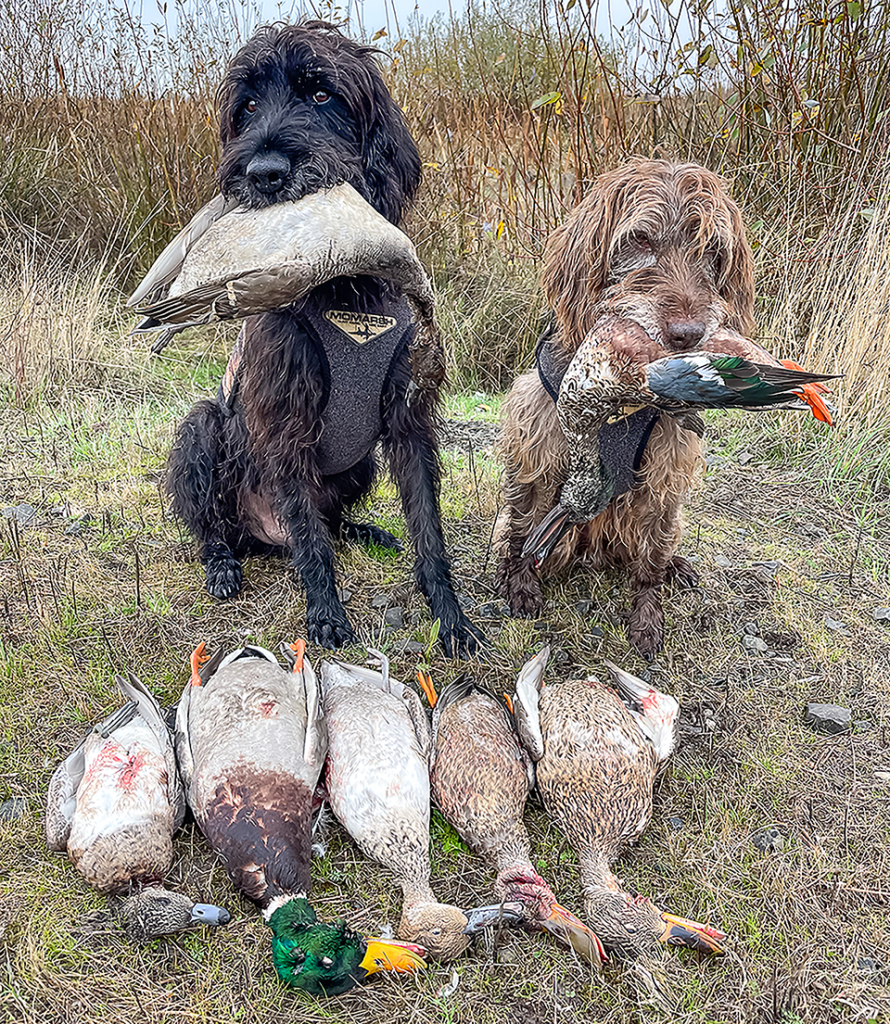
A pair of mallards approached first. They circled twice and dropped into a gap in the decoys. Each dog retrieved a bird. A trio of Northern shovelers came in next. There was no circling; they bombed right in. Two birds folded on the first two shots. I missed the third and easiest shot of all.
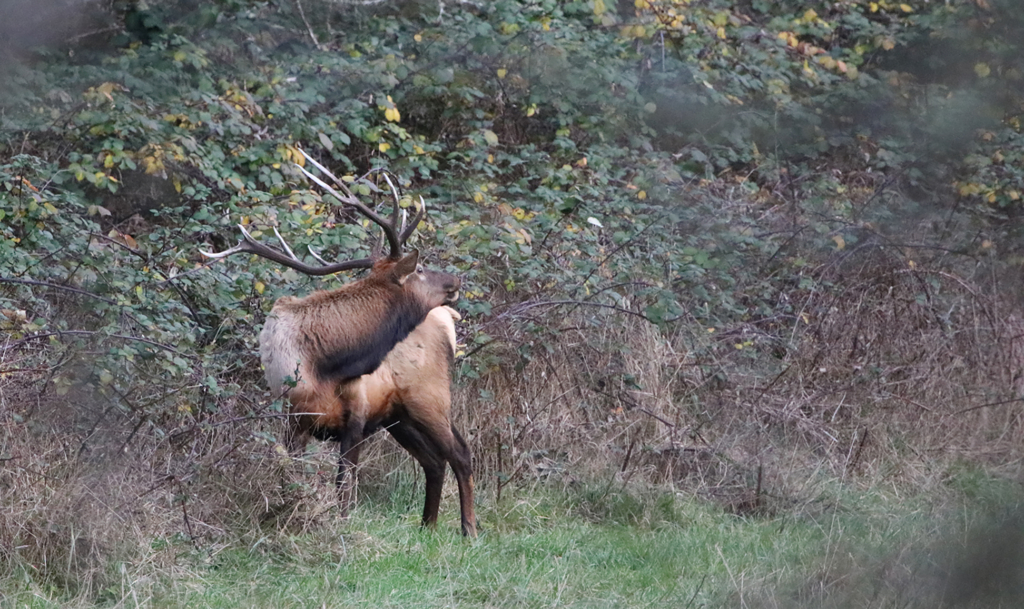
Four birds into a seven duck limit, I got a text from my buddy, Richard Kropf. A big Roosevelt bull had shown up on a trail camera a mile and a half from where I stood. The last time we’d seen that bull was 363 days prior, when it appeared in the same spot. It was on the valley floor, barely more than two miles from Interstate-5, the busiest highway on the West Coast.
Valley Floor Bulls
As many do-it-yourself elk hunters know, rarely do you target a world-class bull and kill it. Often, record book bulls come by chance, a matter of being in the right place at the right time. Over the past 20 years, I’ve received multiple calls about big Roosevelt bulls getting harvested near my home. Most of these bulls came off private lands in the Willamette Valley.
One call panned out to be something spectacular. On private farmland south of Corvallis, Oregon, Scott Ballard shot the first Roosevelt elk ever to break the 400-inch mark. Roosevelt racks have one category. There is no non-typical category in the record books. I was the official measurement witness when the bull was scored for the Boone & Crockett Record Book. The massive 9×10 rack carried an official score of 404 6/8 inches. Ballard’s bull is mounted life-size and is on display in the Springfield, Oregon, Cabela’s store. It’s worth the stop. Ballard took the bull as it wandered through farm fields, smack on the Valley floor.
Thirty years ago, few Roosevelt elk lived in the lowlands of the Willamette Valley. Some meandered through, but few stayed for long. Today, herds thrive year-round on private land. It’s mostly cows and young bulls that reside in the lowland habitats, but during the rut, big bulls drop in from the mountains to breed. Once the rut is over, the mature bulls head back into the Douglas fir-covered mountains. But, come November, some move back into the valley, where it’s safe.
Not only are the bulls safe from hunters and natural predators, but the now flourishing rye grass provides ample, much-needed food to help them recover from the rut. The Willamette Valley is known as the Grass Seed Capitol of the world. Rye grass draws a lot of elk into the lowlands. The hunts are 100 percent opportunity on private land, or close to it. I could offer a glimpse of optimism to do-it-yourself hunters, saying bulls sometimes occupy some public-access land, but that’s a stretch.
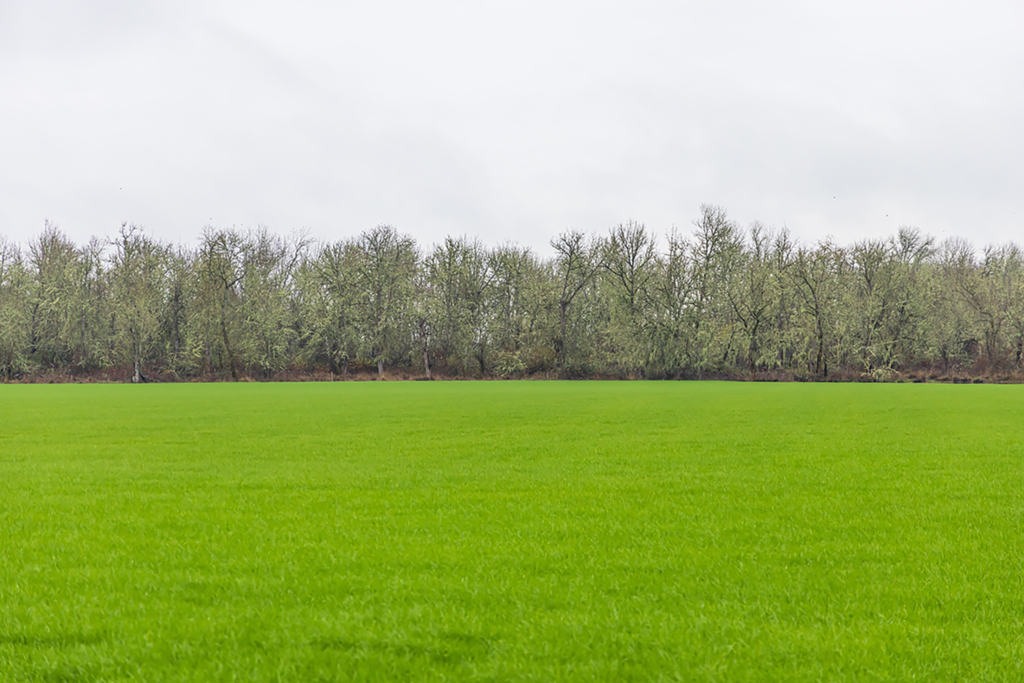
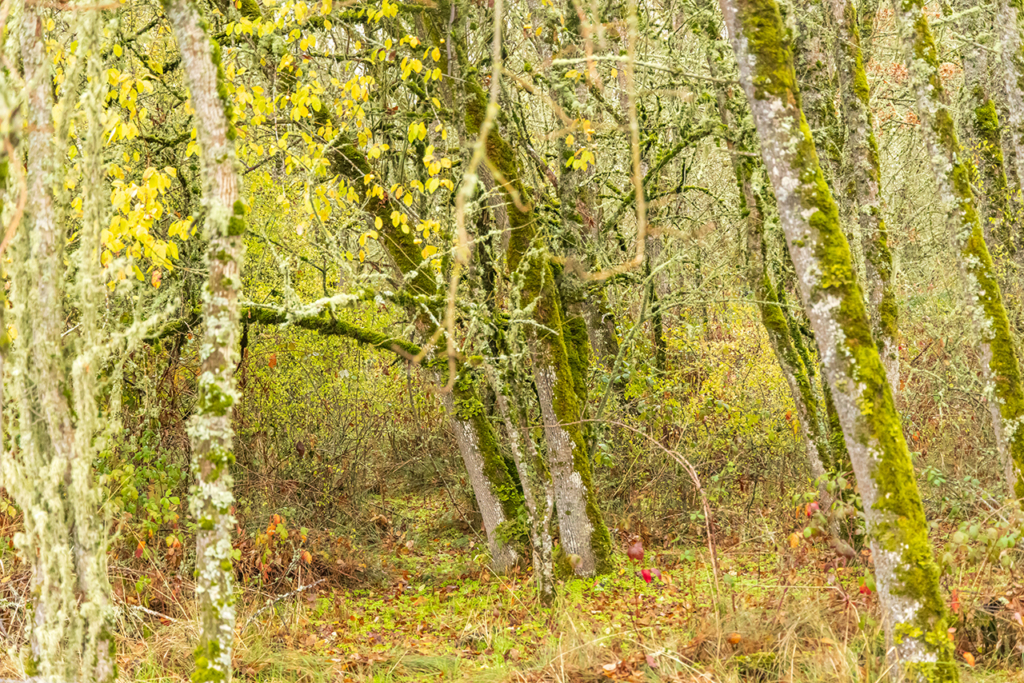
In addition to food, there’s plenty of water in year-round streams. In November, once the rains hit, runoff from the Cascade foothills fills every ditch and rill. And with dense cover in the form of briars, brush, and thick oak trees, bulls don’t have to cover much ground to stay alive. They eat, drink, and sleep in a tiny area, conserving energy and letting wounds heal. Once recovered, some bulls head into the hills for winter. Other bulls might remain in the haven of the valley floor until early spring. It depends on how healthy the elk are and how much pressure from farming activity they’re willing to tolerate.
Ducks & Wait
I had my rifle in the truck and was ready to cut the duck hunt short. I called Kropf. We agreed that with the lack of wind, it would be best to wait until the afternoon to try and find the bull. The 30-some-acre tangle of blackberries and low-growing, densely packed oak trees would make it nearly impossible to find the bull by way of spot and stalk. Briars grew over 20 feet tall in places, mingling with the low-growing limbs of oak trees.
“The best way to get this bull is going to be to drive it out,“ Kropf said. “The wind is supposed to pick up from the north this afternoon. I’ll give you a call when it starts moving, and we’ll make a plan. Until then, keep shooting ducks.”
A drake pintail spun into the decoys and fell dead, five paces from the dogs. Echo got that one, her aged eyes proudly looking up at mine as she delivered it to hand.
Then a pair of pintails came from the west. I missed the boy bird but got the hen. That one Kona had to swim for. The dogs were in heaven, doing great. A lone wigeon rounded out the morning. Echo and Kona know when the hunt is over. Echo gets excited because she loves holding a duck in her mouth and posing for pictures. Kona isn’t as eager for the hero shots. He’d just as soon we keep hunting snipe or look for nutria to shoot. He’s all business.
I was home by 9:30 a.m., cleaning birds and tracking the weather. Winds were supposed to start picking up in the early afternoon in the area where the bull was. For the next three hours, all I thought about was how the shot could unfold on the big Roosevelt bull.
The Mental Game
I was the quarterback of our high school football team. Every Thursday night, following a short practice, I’d lie on my bed and mentally run through every single play in the playbook in preparation for Friday night’s game. I’d start by tossing a football toward the ceiling, but would inevitably kick into a trance-like state, eyes closed, visualizing how defenses might react and what my next move would be. I was also a defensive back and handled all kicking and punting duties. Visualizing those duties was also part of my pre-game. Today, I slip into the same visualization mode for hunting, and that was the case here.
I was familiar with where the bull was hanging out, as nearly two years prior, Kropf had invited me to hunt for elk sheds with him in that very spot. We covered every inch of ground that day. It proved to be an invaluable education. Never in my wildest dreams did I think I’d one day be hunting it for elk, let alone one of the caliber we were after.

For three and a half hours, I did nothing but lie in a recliner, visualizing how the shot might unfold. I didn’t answer phone calls, check emails, or let my mind get distracted by business. Echo and Kona were fast asleep on the floor next to me. Their deep, heavy breathing helped ease my mind.
“Okay, we have a plan,“ Kropf texted me early in the afternoon. I called him. We chatted. He was going to get his brother, Brent, and they’d do an old-fashioned drive to push the bull from thick cover toward me. I knew where I’d be standing in wait in a small clearing that separated the 30-acre mess the bull was in from another one to the south, which was about a third smaller.
On the edge of the meadow, 20 yards of tall briars buffered the oak grove from the field of dead grass in which I stood. The brown grass and weeds were barely knee-high. My shooting window would be less than 100 yards wide, from right to left. Plenty big.
To Read More About Hunting Roosevelt Elk, CLICK HERE
Don’t Think, React
By the time I got set up on the tripod shooting sticks, I’d played out all the possible scenarios so many times that I was ready for game time. It didn’t matter if the bull busted from the brush at full speed or crept out slowly. I would be prepared. If he stood on the fringe looking out or ran perfectly broadside or quartered to or away from me, the shot would be perfect. You must get into a habit of visualizing success.
With the rifle set in the perfect position on the tripod’s saddle, I took multiple range readings and ensured the bolt cleared the saddle, should more than one shot be necessary. I made sure the tripod head moved smoothly so I could track the bull if it emerged, on the run.
I turned on the reticle in my rifle scope, adjusting it to get the perfect amount of illumination; not too bright, not too dim. Barely five minutes into the drive, it happened.
The massive bull lumbered out of thick oak trees and stopped behind a patch of briars. It sniffed the air with intensity, nose held high. Its wet nostrils flared wide in my scope. Its eyes rolled downward, exposing the whites. The rack appeared massive, its main beams longer than I’d expected from the trail camera images. When I saw the seventh point on the left side of the rack, it confirmed I was looking at our bull
I distinctly remember how calm the moment felt. I wasn’t thinking; I was reacting. All I had was a headshot, which I wasn’t going to take at 200 yards. The bull was committed and had to either cross the opening or run right at me. Either option was good.
Given how slowly the bull moved, I thought it was going to walk into the open and offer a broadside shot. It didn’t. After taking two steps, the bull hit high gear, fast. It obviously smelled the Kropf brothers, just as we’d planned.
I swung and pressed the trigger the moment the crosshairs cleared the brisket. The bull dropped, smack on the trail. The shot was 204 yards. When field dressing the bull, we found the bullet had passed through both lungs, clipping the lower spine on its way through. It exited the opposite side.
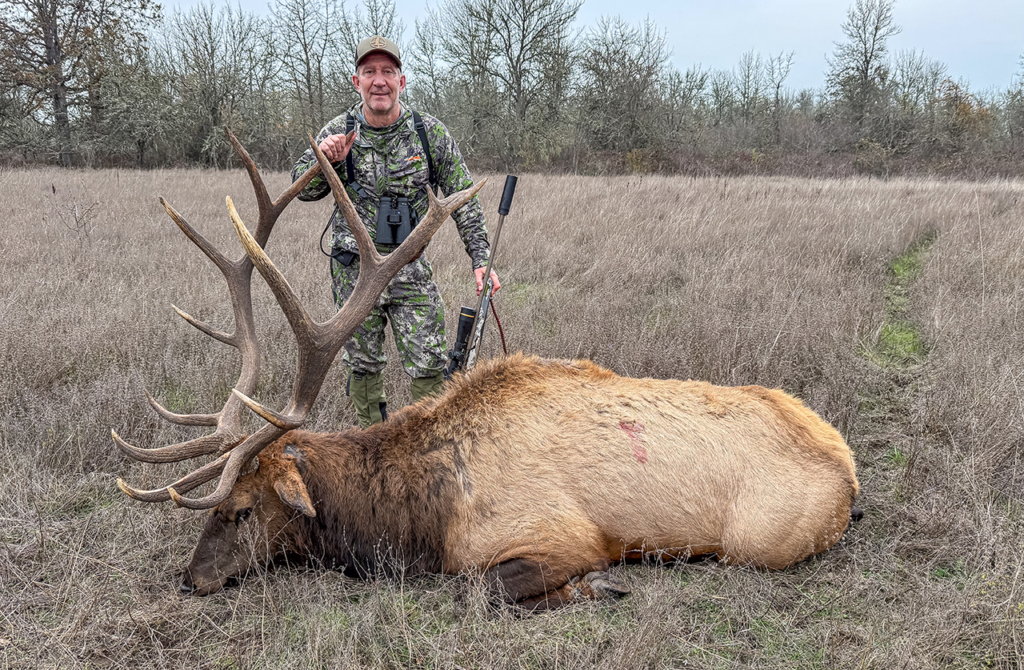
I waited for Richard and Brent to come out of the brush. They were surprisingly close to the bull when it jumped, yet they never heard or saw it. Richard’s decision to make a drive was spot on.
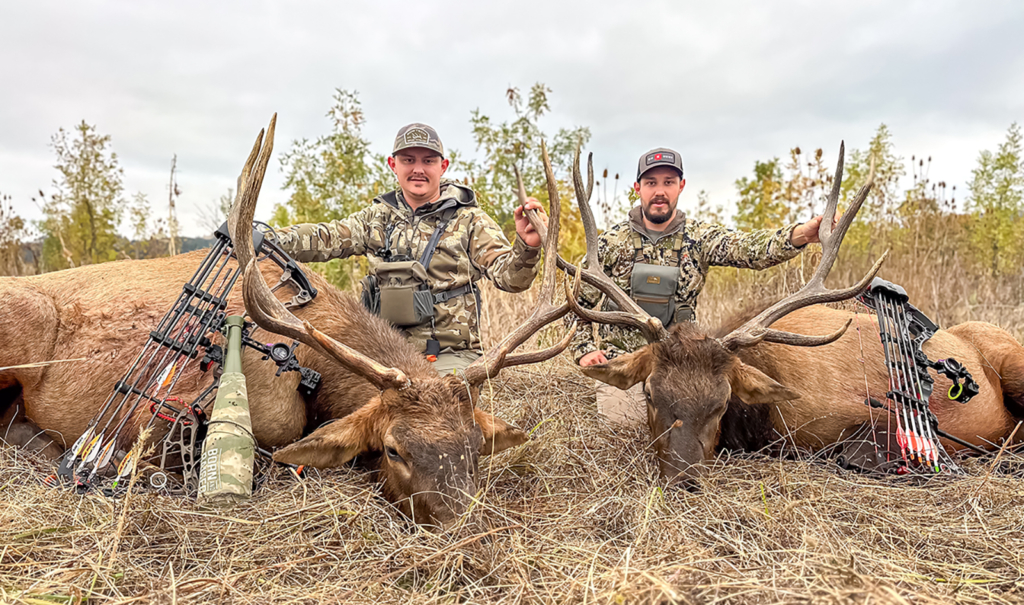
Approaching the bull, it was even bigger than we’d thought. The Kropfs had hunted the area during archery season, but never saw this bull during the rut. The season prior, Richard and Brent called in two bulls and got a double in the same spot.
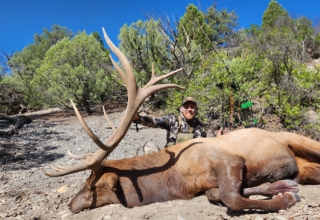
To take any Roosevelt bull in the farmland is an accomplishment, but the 339 4/8-inch monster that lay before us exceeded my wildest dreams. There are bulls of this caliber taken on the Valley floor just about every season. However, it isn’t until you actually see a bull like this that you can actually believe it. The fact that mature bulls occupy such a habitat is mind-boggling to me. The only place I grew up hunting them was in the steepest, darkest, most rugged haunts in the Coast Range and Cascades, which is some of the most challenging terrain I’ve hunted anywhere in the West.
Standing over the grand bull, I could see the brush surrounding the blind where my dogs and I enjoyed a great duck hunt just six hours prior. I saw the tiny opening where the trail camera was set on the edge of a meadow that gave away the bull’s presence. Trails meandered through brush and dead grass. Two fresh beds matted down the lush green rye grass where the bull had recently been.
I had the Kropf brothers to thank, for without them, the biggest Roosevelt bull of my life would still be a dream. It was a blessed day I’ll never forget.
The Gear
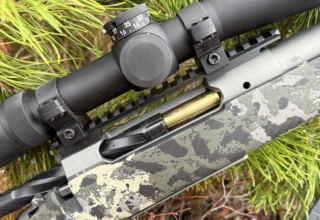
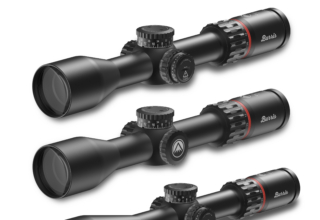
Scott Haugen’s rifle of choice was a Browning X-Bolt 2 Speed, chambered in 6.8 Western. He shoots Browning Long Range Pro Hunter 175-Grain Sierra Tipped Gameking bullets. The rifle wore a Leupold VX-6HD 3-18×44 scope with a Customized Dial System (CDS) for the specific load. A red FireDot is a valuable part of the scope, something Western big game should consider.
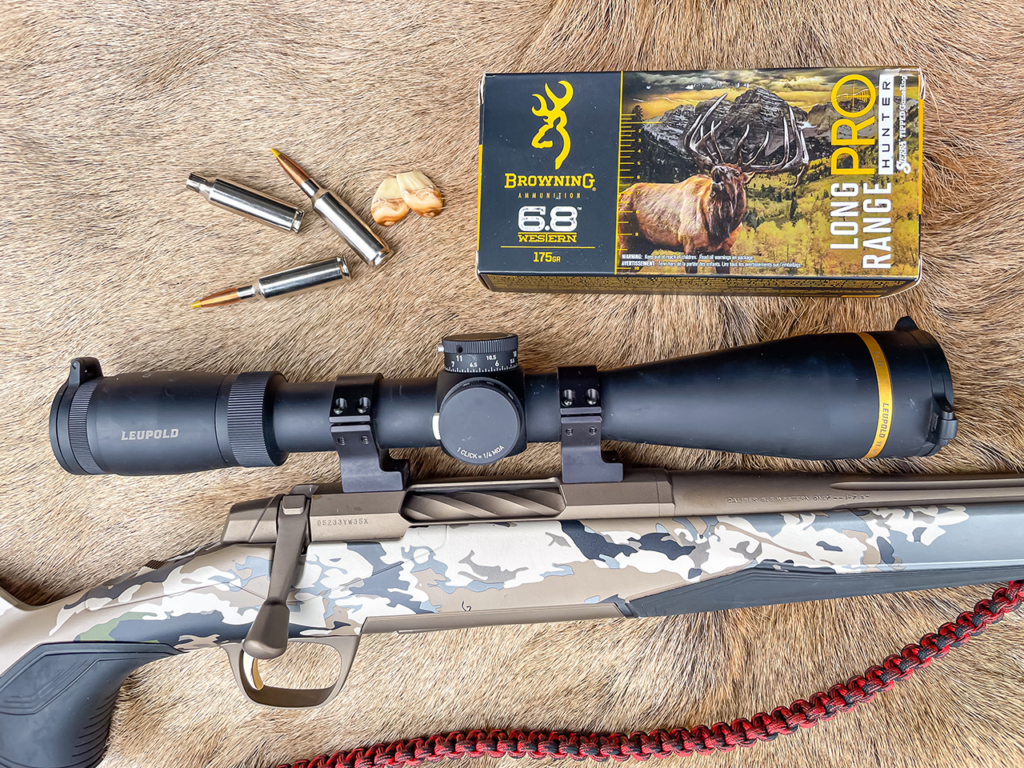
With this setup, Haugen has shot Roosevelt and Rocky Mountain elk, black bear, and sable and roan in Africa. Haugen has witnessed over two dozen big game animals taken with it, including moose and kudu. It’s becoming one of his favorite setups for everything North America, save for coastal brown bears.
A Moultrie cellular trail camera captured the bull and played a critical role in its harvest.
Note: For signed copies of Scott Haugen’s popular books, visit scotthaugen.com. Follow Scott on Instagram & Facebook