ZEISS’s trio of SFL binos, Gavia spotter, and Max-Duty V Tripod is ideal for any hunt, anywhere.
by Scott Haugen
A heavy fog crawled up the old-growth forest in Oregon’s Coast Range. To the East, the rising sun cast an orange hue over the mountain tops. To the West, the rumbling Pacific broke the silence of the morning. Finally, there was enough daylight to begin glassing.
I was prepared to sit for six hours, or until a big bear spurred me to move. I’d been running trail cameras in these mountains since springtime. Four massive black bears frequented the area. I knew which trails they traveled and which mountain slopes they crossed, but finding one was a challenge.
All four bears approached or eclipsed the 400-pound mark. Their front legs were thick, all the way to the paws. Three of the four had big bellies that sagged, and all of them had a swagger in their step.
From late August through late September, I spent 12 days glassing the area for one of the four bears. I never saw one of the big boars. I did see 27 other bears. Some were mature boars, but none were the giants I sought. I never fired a shot.
While glassing is a major part of most big-game hunts out West, it’s the most efficient, highest-percentage approach for finding a mature black bear. More than 10 hours were spent glassing for bears each and every day. I never had eye fatigue or headaches. And the amount of game I saw—bears, Roosevelt elk, and Columbia black-tailed deer—meant there was never a dull moment. I did it all with ZEISS optics.
The first time I ever looked through ZEISS binoculars was in the early 1990s, while bear hunting in Alaska. Even then, ZEISS was synonymous with some of the world’s best-quality glass. Today, their legacy remains steadfast, and their quality optics keep getting better.
This isn’t a gear review that regurgitates numbers and specs you can pull off a website. This is about the range of applications for which quality optics can be used, and how I used three pieces of ZEISS gear on numerous hunts over the past six months.
Black Bears & More
Glassing for black bears is tedious work. The habitat where I hunt them is thick. The locals describe it as jungle-like. Take your eye off a prime location for even a second, and you might miss an opportunity.
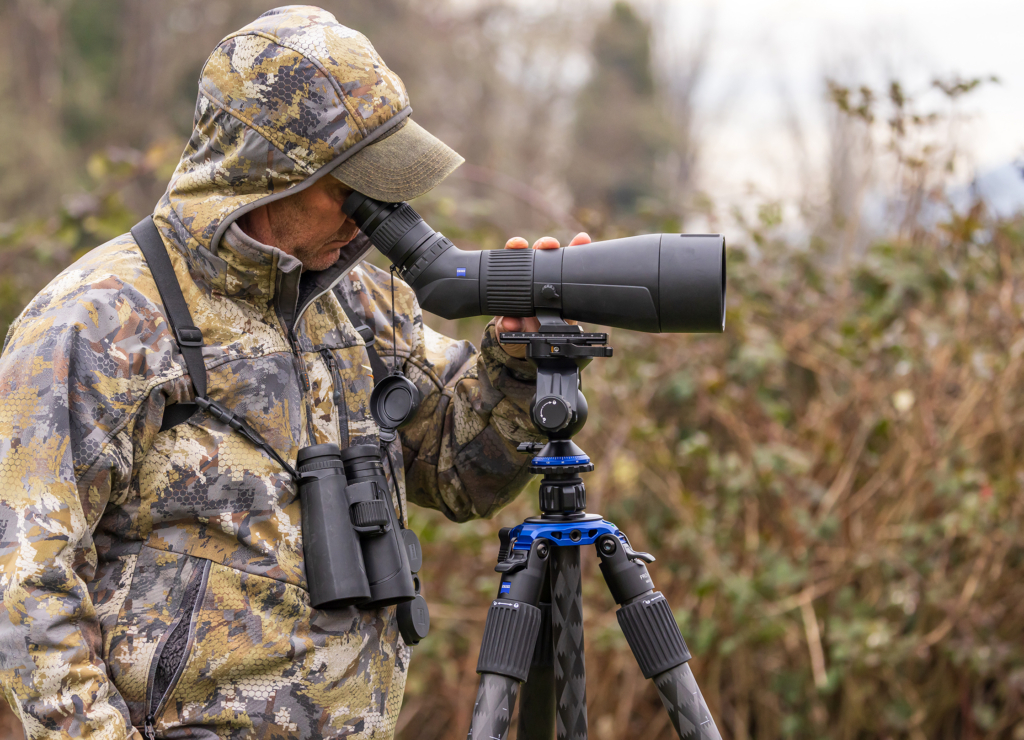
Searching with ZEISS SFL 12×50 binoculars and studying prime locations at a distance with their Conquest Gavia 85mm spotting scope is effective. Covering ground with your eyes, not your feet, is an efficient way to seek out bears in their rugged domain. The Conquest Gavia spotting scope offers exceptional clarity and brightness. The technologically advanced roof prisms result in an all-around clear image from side-to-side, top-to-bottom. Even in wet weather, ZEISS’s LotuTec coating on both the spotting scope and binoculars results in a clear and unhindered view.
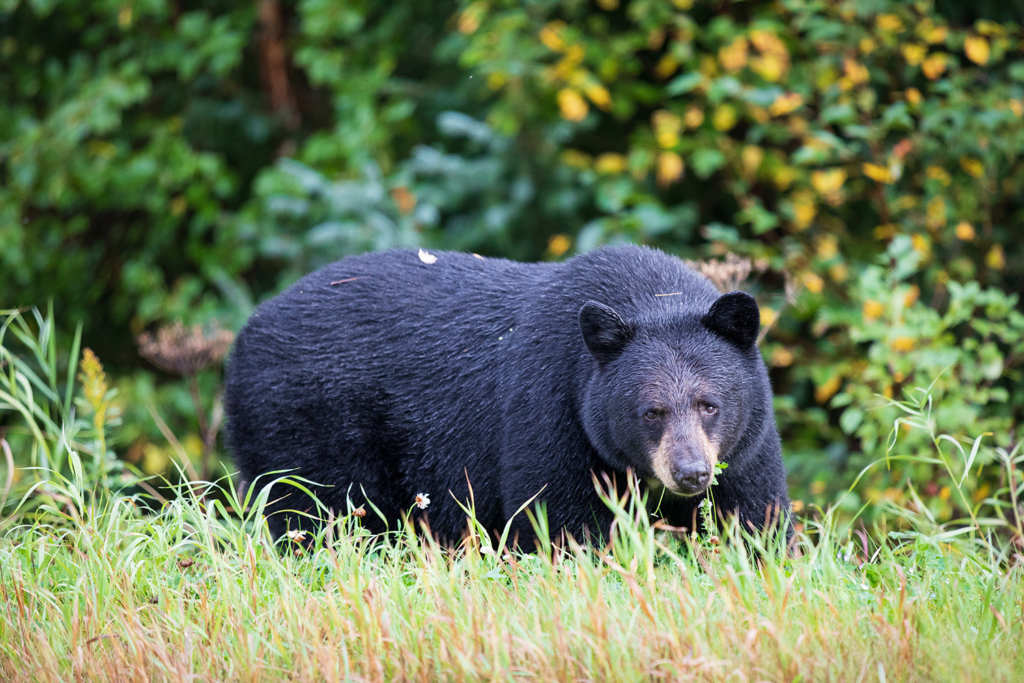
Not only does finding a bear require hours of glassing, but once located, it has to be sized up. Because I was searching for specific, giant bears, field judging each one I saw was even more important. Big bears are an addiction I have, and there’s no substitute for high-quality optics when it comes to evaluating them. Thanks to the glass’s clarity, I was able to judge bears with ease.
ZEISS optics feature another special coating, dubbed T*, that greatly accentuates their clarity in low light conditions as well as in adverse lighting situations. The result is high-contrast images that pop.
The 30-60x Conquest Gavia spotting scope weighs only 60 ounces, thanks to its magnesium body and compact design. Fitted to a light carbon fiber tripod I already had, it performed perfectly on multiple deer and elk hunts last season, too. For bears, I went with a bigger tripod because I knew I’d be sitting for hours in one spot, often amid high winds whipping off the nearby ocean.
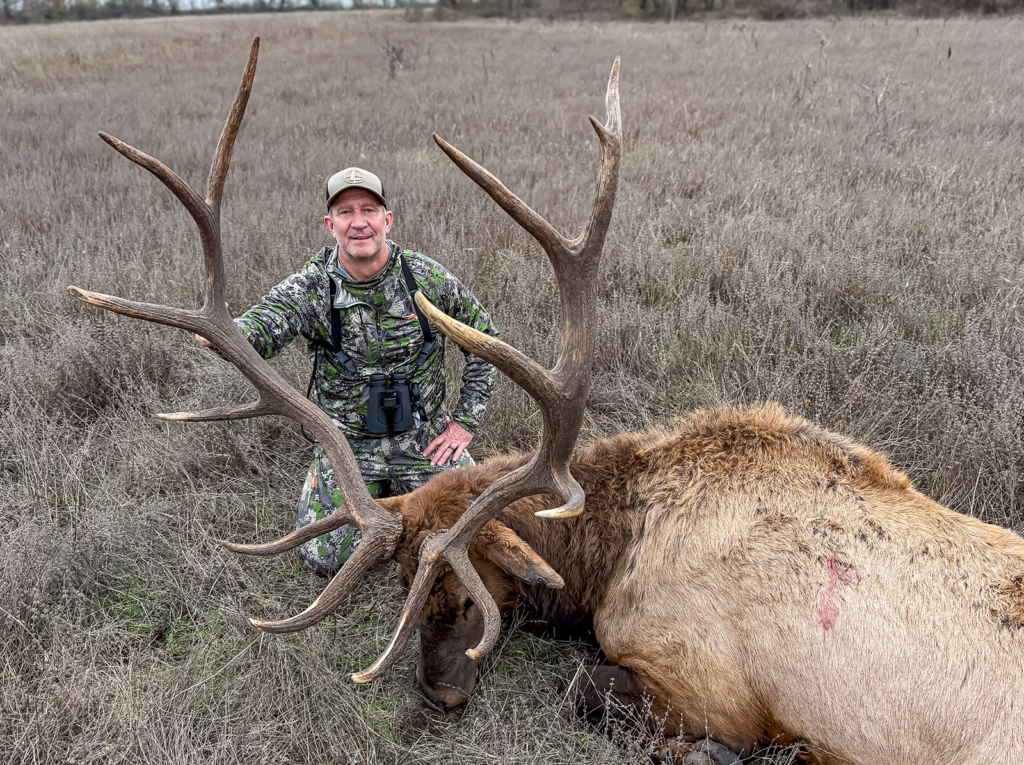
I went all-in and got the ZEISS Max-Duty V, a ball-head tripod offering 115 degrees of adjustment. I wanted a tripod to shoot from long range, too, and this model fit my needs. At just over 12 pounds, the Max-Duty is a tripod you toss in the truck or ATV and set up on the spot. Looking through a spotting scope in windy conditions or lowlight settings is made easy with this sturdy tripod. The easy, fluid adjustment ability of every lever and knob, combined with a unique locking leg system, takes this precision tripod to another level. I was apprehensive about the weight until I used it.
Waterfowl I.D.
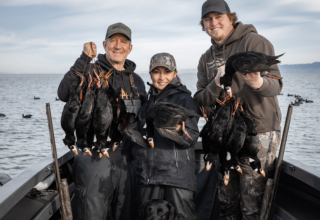
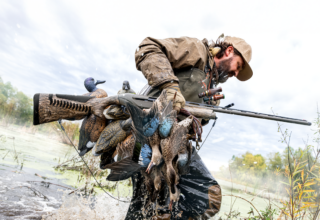
Like most waterfowl hunters, I spend a lot of time scouting for birds. The ZEISS SFL 12×50 binoculars were great for locating and patterning ducks, and the Conquest Gavia spotter was perfect for studying them, up close.
Not only did the Conquest Gavia allow me to see exactly what ducks were eating, but the long-distance details it unveiled made seeking unique birds addicting. I hunt a lot of wigeon and am always on the lookout for Eurasian wigeon or lightly colored American wigeon, what we hunters have dubbed storm wigeon. Even when backlit or lit from the side, the Gavia allowed me to see minute details on every duck.
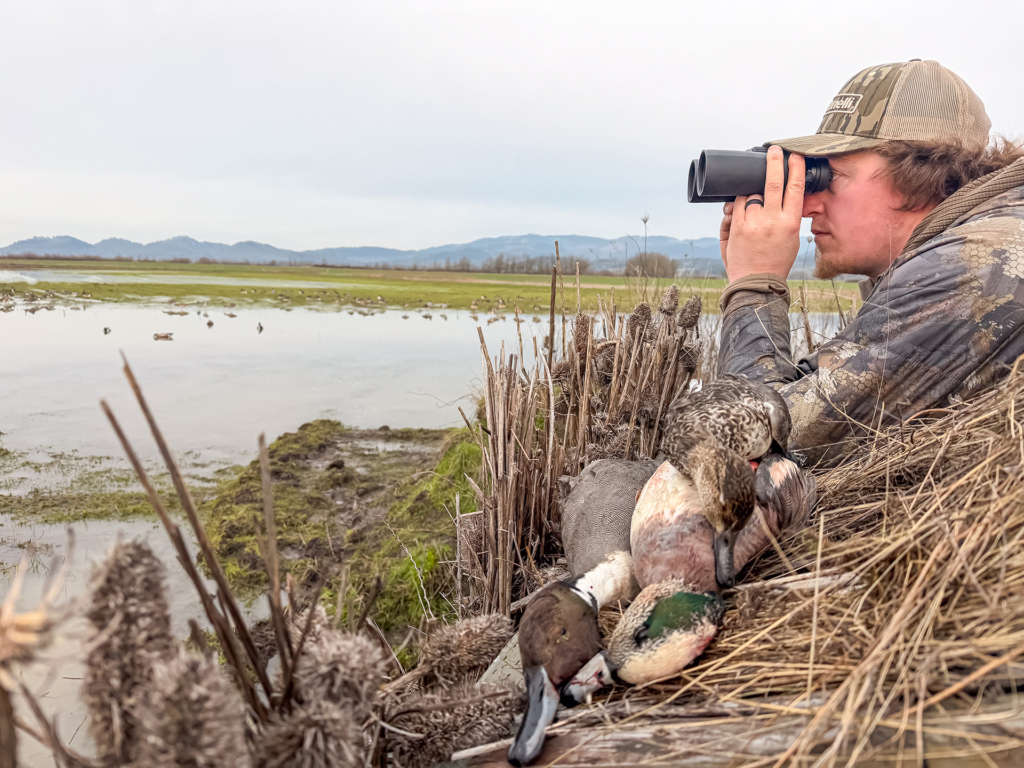
I mounted the Conquest Gavia spotting scope on various tripods, but usually went back to the Max-Duty tripod for its stability. High winds and low afternoon light meant I needed all the stabilization I could get. The more stable you are, the more clarity you’ll see, and this combination is tops.
When I broke out the SFL 12×50 binoculars from my blind bag one day, my buddy shot me a look. “You use these for ducks!” He stated. We were hunting a wide-open valley, and a recent ice storm caused the ducks to spread out. “We’re going to be in this blind for nine more hours, glassing much of the time,” I came back. “You’ll thank me at the end of the day.” Not only did we watch birds moving throughout much of the day, but we also found a spot to hunt the following morning and had zero eye fatigue.
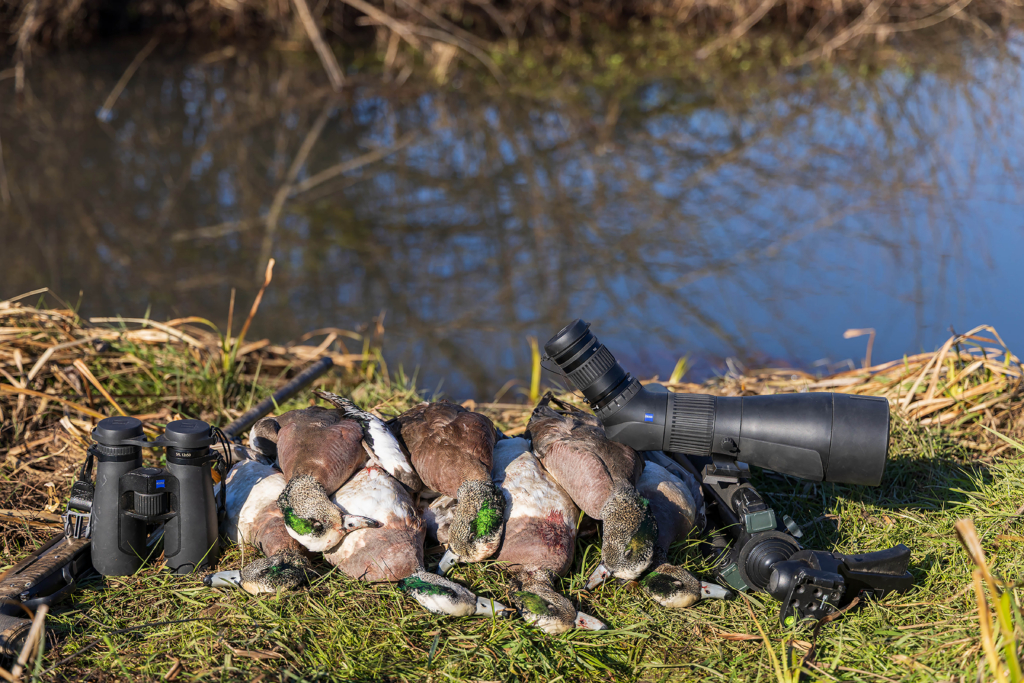
SFL stands for SmartFocus Lightweight, and the fact that these 50mm binoculars fit into a 42mm frame size is nothing short of amazing to me. The larger exit pupil of the objective lens, combined with a 90 percent light transmission rate, results in a brighter image by allowing 42 percent more light to enter. The binos are perfect for western hunters, no matter what animals they pursue or the conditions they’re in. And thanks to ZEISS’s SmartFocus concept in these binos, the focus wheel is perfectly positioned for fast, precise focusing.
Fall & Spring Turkeys
I have two pudelpointers that I use to hunt fall turkeys with in my home state of Oregon. I like locating a fall flock from afar. Then I wait for the perfect moment to send one or both dogs on the run. About one in every seven attempts is favorable to send a dog.
I usually glass from timber’s edge, looking into meadows and fields for turkeys that are several hundred yards away. When the right flock is found—usually a bachelor flock—we stealth to within 200 yards. Before sending a dog to bust up the flock, I wait for the birds to be moving away. If they’re moving into tight timber and thick cover, all the better. I also prefer them to be moving uphill. This encourages the birds to fly into nearby trees, once spooked. The timing has to be perfect, and often, I’m glassing a flock for two or three hours, waiting for the ideal moment.
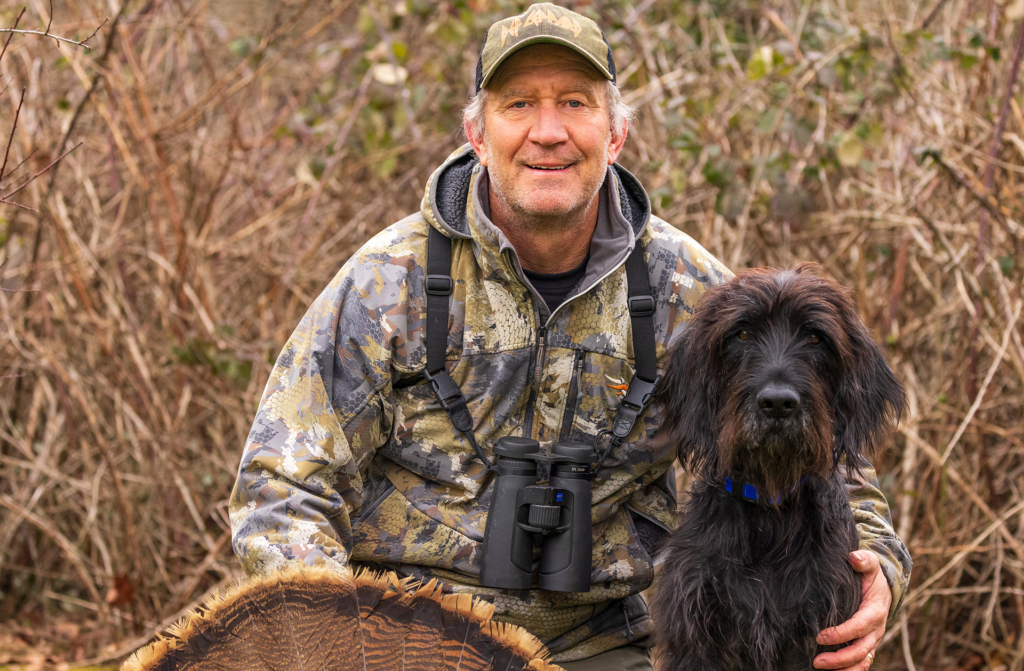
When the time is right, the dogs run in on the flock, forcing them to flush and seek safety in the trees. That’s when I call the dogs back to me, we sneak in on the flock, unseen, and call them in. The dogs love it, and so do I. Sometimes a turkey holds tight, like a quail, and my dogs stick a point. On those, I’ll move in for the flush, then shoot.
As winter flocks of toms begin to establish dominance, now is the time to start scouting for birds you’ll be hunting this spring. Quality optics not only allow you to observe bird behavior but also to identify specific toms, which will teach you a lot about turkey populations in your area.
This marks my 50th year of big game hunting, and the technological advancements I’ve seen in gear are nothing short of spectacular. When it comes to binoculars and a spotting scope, invest in the highest quality that you can afford. Even a superior tripod will be a game-changer. I know high-end optics are not cheap, but their quality and precision are top of the class, including the new lineup from ZEISS.
Note: For copies of Scott Haugen’s popular line of hunting and fishing books, and Tiffany’s cookbooks, visit scotthaugen.com.