Yes, we all know to pattern deer on food and wait for a front, but did you think about these late-season tips?
by Jace Bauserman
The nastier Mother Nature gets during December and January, the better the late-season whitetail hunting gets.
Why?
Bucks are biologically expendable. Between October and November, mature bucks lost 20-25% of their body weight. Those who lost 30 percent won’t survive the winter. They will be cornered and killed by a pack of predators or a lone assassin, like a mountain lion. Others will succumb to Old Man Winter’s wrath. They won’t be able to pack on the pounds quickly enough to replenish the nutrients they’ve lost.
Naturally, post-rut deer gravitate towards food. The colder the weather, the more bucks need high-carb food sources like corn and soybeans. During late-season warming trends, bucks feed on high-protein, high-energy foods like clover, rye, and wheat to replenish their fat stores.
Too many outdoor articles have been penned about how to kill late-season deer. Honestly, it’s not complicated, and the late season, with help from Mother Nature, is the best time of year to kill a mature buck. So, if you’ve made it this far into the article, you’re likely now pondering why you’re reading it. You know to focus on food. However, these five tips will ensure your target buck takes a ride in the back of the truck.
Let’s get it!
Shoot In Your Cold-Weather Gear
If you’re relying on the foam-pounding you did during the summertime and the practice arrows slung during October and November to ensure you fill the freezer, you’re making a mistake.
Wintertime clothing adds weight and bulk. I’ve witnessed bowhunters not be able to crawl into their anchor points. I’ve seen strings slap sagging coat sleeves, sending arrows clattering through the hardwoods. Twice, I’ve had buddies tell me that their wintertime clothing was so heavy that they felt less balanced at full draw. Two others told me the thicker fabric decreased their maneuverability to the point they couldn’t get their bows to full draw.

You may know the trail your target buck is walking out on. You may be able to make a flawless entrance that guarantees you won’t spook him. However, if you don’t take the necessary steps to ensure your arrow hits behind your pin, your late-season big buck plan will dissolve.
Be Ready To Strike!
I don’t have massive destination plots set up for wintertime deer. I can’t leave standing corn, and in my neck of the whitetail world, wintertime green sources like clover, turnips, etc., won’t grow. The soil is too dry and sandy. I spend many days each late season taking advantage of crop fields enrolled in a particular state’s Walk-In Access Program.
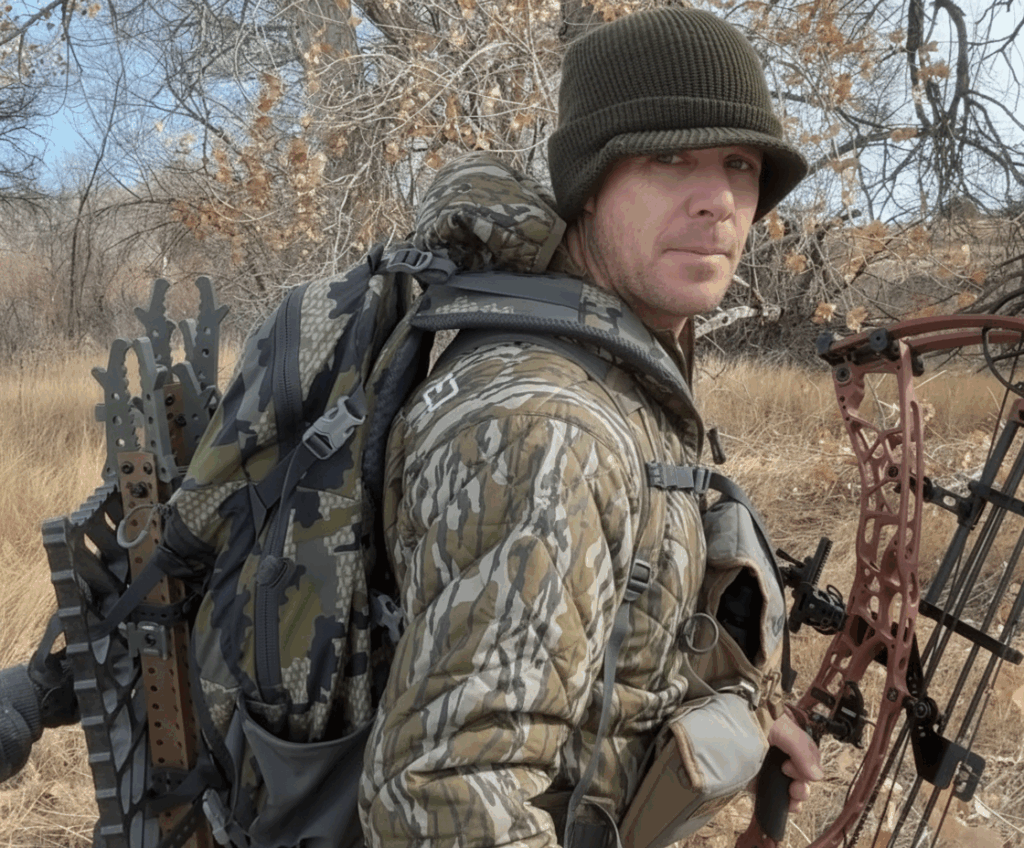
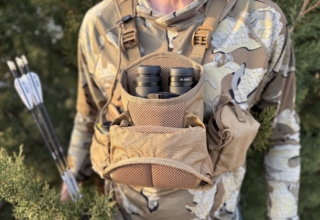
Most of the time, when I notice a late-season buck pattern, I don’t have a treestand or a ground blind where I need to hunt. For this reason, I keep my KUIU Ranger backpack loaded and ready. Its contents include late-season whitetail basics such as hand warmers, extra gloves, an SD card reader, and knives. However, it’s what’s lashed to the outside of the backpack that matters most. With my Tethrd Carnivore 2 Saddle in my truck and a lightweight platform and climbing sticks attached to my pack, I can take advantage of a late-season buck pattern immediately.
Practice How You Play!
I was fortunate to have some great coaches during my time in high school. One in particular told me something that has stuck with me. Coach Ball said, “Son, you’ll play how you practice.” Coach Ball was a hard man and a demanding coach. I loved him. I wanted to be pushed hard. Ball expected every rep, drill, and every situation to be taken seriously and executed at a level that would ensure prime game performance. Anything less than our best was unacceptable.
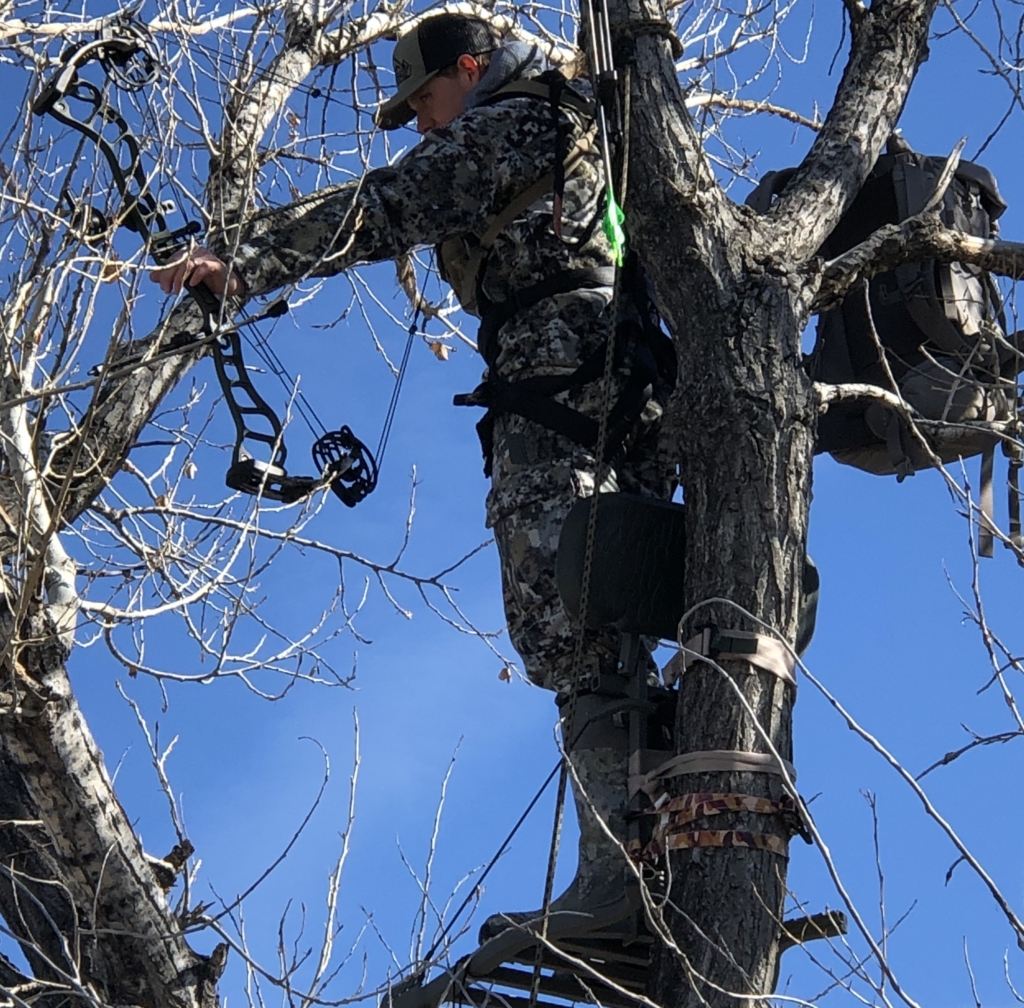
I take hunting seriously, and in addition to practicing shot execution, I practice regularly from a treestand while wearing wintertime clothing. It really doesn’t matter if you’re hunting from a saddle setup, lock-on, climber, or a ladder stand; you need to get reps in from an elevated position.
Hunt Less, Scout More!
Not hunting sucks, but so does hunting without a purpose. Right now, there MUST be a definitive rhyme and reason concerning the “where” part of your late-season hunting plan.
Why?
The best time to kill a buck on a wintertime food source is the first time you hunt him. If you’re hunting over food, then your opportunity will come during an evening hunt. The buck you’re hunting will leave his bedding area, travel a short distance, and be on the food source. Yes, it’s really that simple. What’s often overlooked is whether the bowhunter will be able to get an arrow in the desired deer before that deer catches the hunter’s wind.
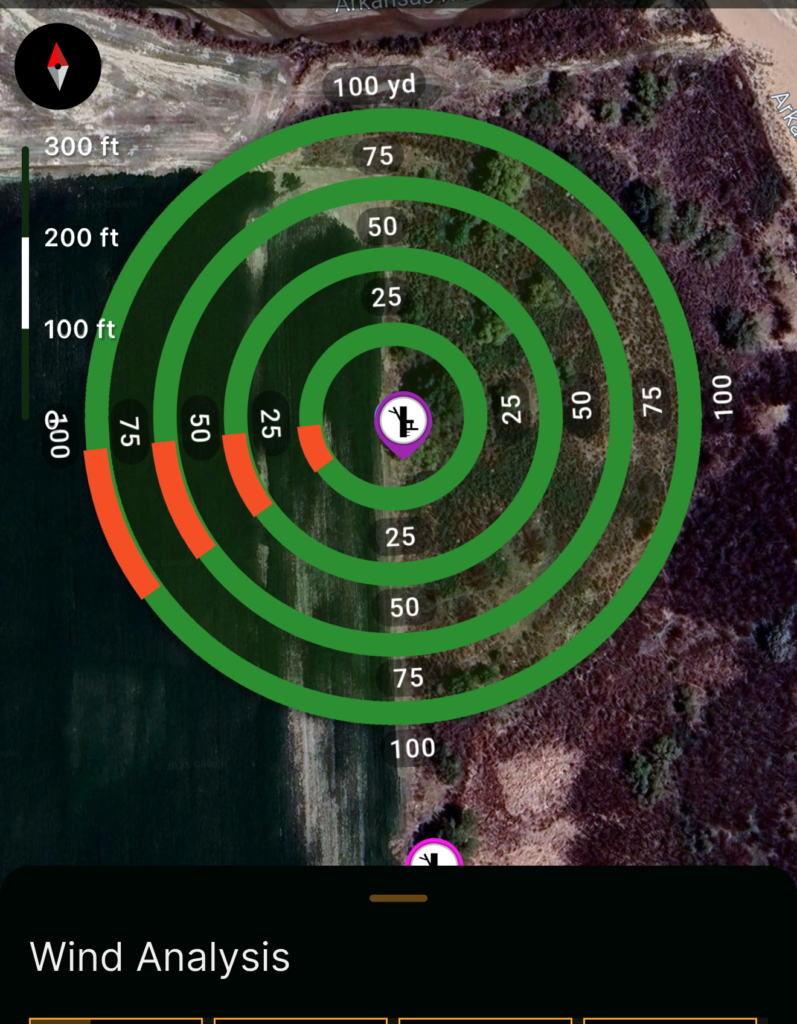
Think about it for a minute. You don’t want the wind blowing toward the buck’s bed, so it’s likely your wind will be pushing somewhere out into the food source. Is your treestand location going to allow you the best opportunity to arrow your target buck before he gets into the field and gets your wind? Have you studied his movements and the movements of other deer in the field to know exactly what wind you can risk it all for the biscuit on? Only you can answer those questions.
What I will add is that there’s a reason you see so many whitetail gurus on outdoor television and YouTube hunting from elevated box blinds with windows. I’ve hunted from these types of blinds. When you hunt from them, you don’t need to play the wind. If you take proper scent precautions and purchase a well-built box blind, you can hunt any location on any wind. For me, these blinds take the once-required woodsmanship to kill a mature deer and remove it from the hunt. I don’t like that.
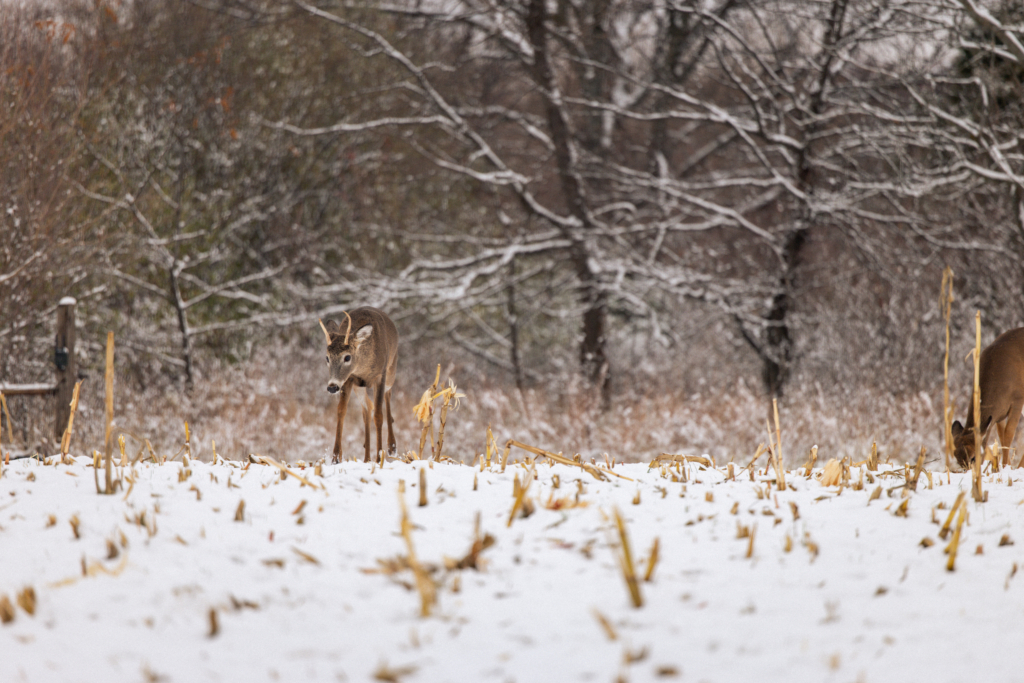
You may know the trail, time, etc., when your target buck comes onto a food source. However, if you ignore how that buck and other deer—deer that will likely arrive at the food source before your shooter uses it—your late-season efforts will be in vain.
For More Late-Season Whitetail Hacks, CLICK HERE!
Don’t Count Out Morning Hunts
Lastly, don’t count out morning hunts. Again, if you’re hunting perfectly manicured deer dirt, there’s no reason for you to hunt mornings. If you’re sharing private-land permission with another (or several others) hunter or chasing late-season bucks on public land, morning hunting will likely be your best opportunity to notch your late-season tag.
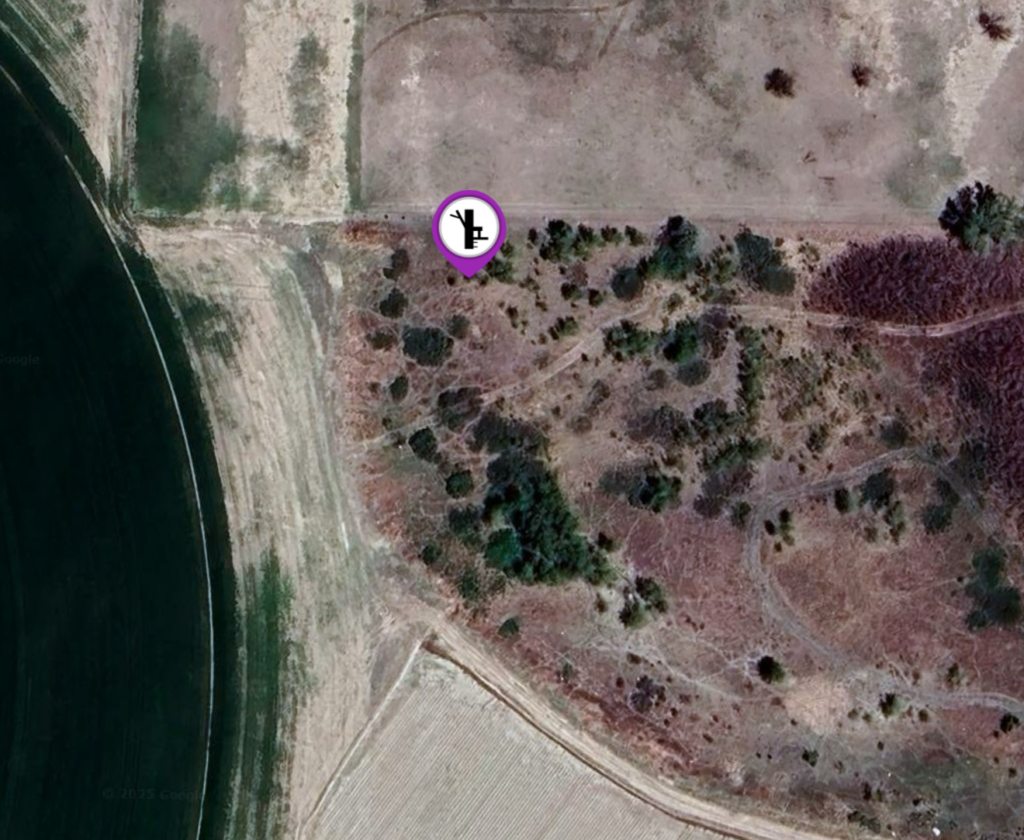
If the weather isn’t too warm, it’s common for mature bucks to feed later in the mornings. Last year, I watched a 180-inch buck in Oklahoma linger on a green wheat field until 8:30 a.m. Finally, the buck exited the food source. He walked through a thin, narrow patch of timber, and bedded amongst a thicket of wild plum in the middle of a CRP field.
Two days later, my buddy Scott Sanderford and I set a stand in the middle of the thin strip of timber the buck was using to access his bedding area. Scott is an outfitter, and his hunter killed that buck at 7:45 a.m. the morning after we scouted.
Final Thoughts
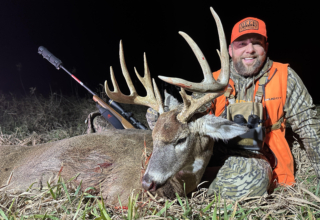
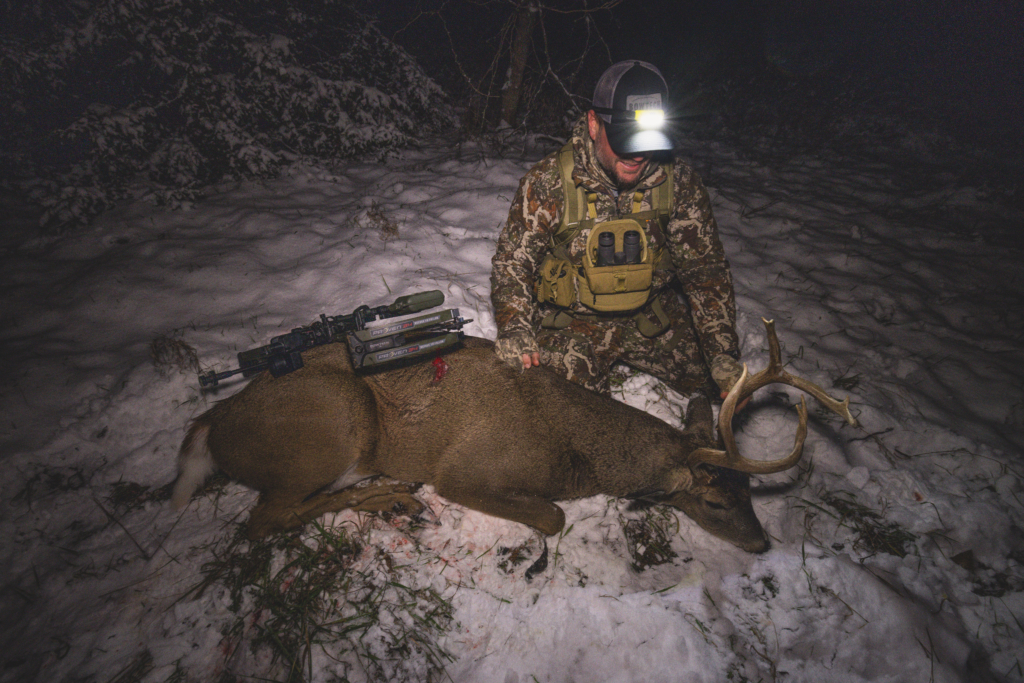
It’s the fourth quarter, and though the sand is draining quickly through the hourglass, careful preparation and planning will lead to meat for the freezer and a grip-and-grin photo.