The trick to executing a great bowshot during crunch time is how you prepare for those moments between now and this fall. Small 3-D target practice is a must.
by Jace Bauserman
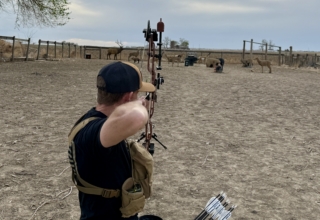
I have a 3-D target addiction. It’s expensive, and it’s a problem. Unlike other problems, though, I don’t want this one to go away. I recently dropped $1,800 on Rinehart’s Standing Elk. I’ve wanted it for years and finally added it to my home range. I love shooting it. It’s fun and serves a purpose. I also have numerous large-range targets and other sizeable 3-D targets that eliminate the pressure and anxiety that come with shooting smaller targets from a distance.
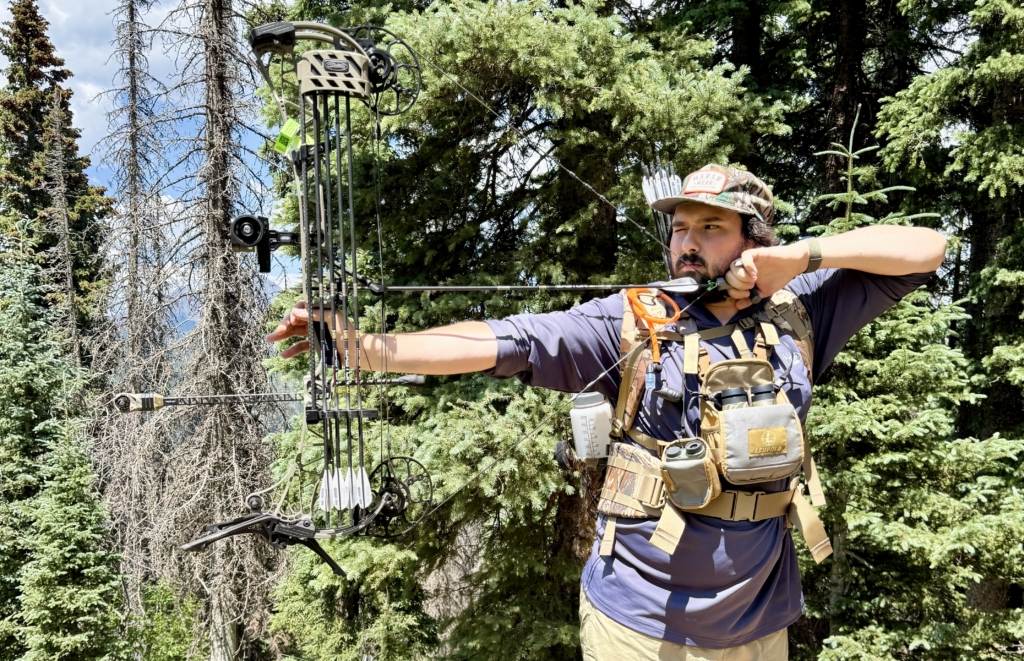
Think about this scenario for a moment: You’re at a TAC event, and you walk up on an 86-yard shot at a full-size moose target.
How do you feel?
I feel great. Shooting far, if you’ve practiced, is fun. Plus, there is very little pressure. I know even if my arrow falls outside the target’s massive vitals, that arrow will hold foam.
You are the only person who can answer how you feel.
Now, think about this scenario: You’re at the same TAC shoot, and you come around the corner and see a 68-yard coyote target.
How do you feel?
I feel anxious. The target is short and thin. My margin of error shrinks. The thought of sending a $20 shaft into space or sinking it into a pine jumps to the forefront of my brain.
Now ask yourself this: Of the two scenarios, which helps you, as a bowhunter, prepare for the moment of truth?
I know my answer. Though there’s no way to fully simulate actual crunch-time pressure. However, shooting at a smaller 3-D target at distance always adds in-the-moment pressure. We should, whenever possible, put ourselves in high-pressure shooting situations.
One of the best ways to do this is to go to TAC events, participate in competitive 3-D shoots, and add smaller 3-D targets to your home range. Besides being fun to shoot aand help you execute during crunch time, smaller 3-D targets wear a reduced price tag.
Smaller Targets Are Much Cheaper
Most smaller 3-D targets from Rinehart, especially if you stay away from the Competition Series targets, come in under $200. You can add a few of these targets to your outdoor range each year without breaking the bank. Here are four of my favorites:
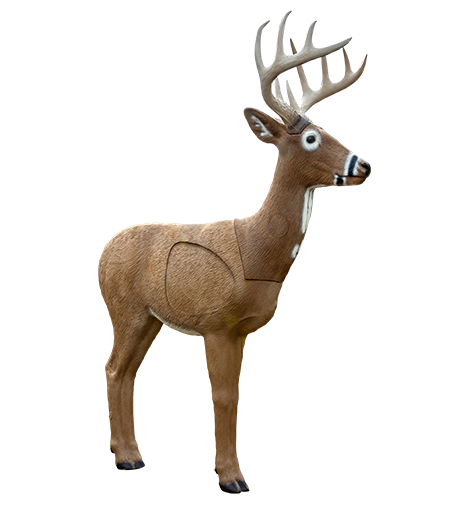
Rinehart Signature Jimmy Big Tine: OK, this target is just north of $300, but it lasts forever, and the vital section is replaceable. The target is only 39 inches long, but more importantly, the vitals measure 10 inches by 8 inches. The total target width is only 12 inches, making it smaller than a Texas-sized whitetail.
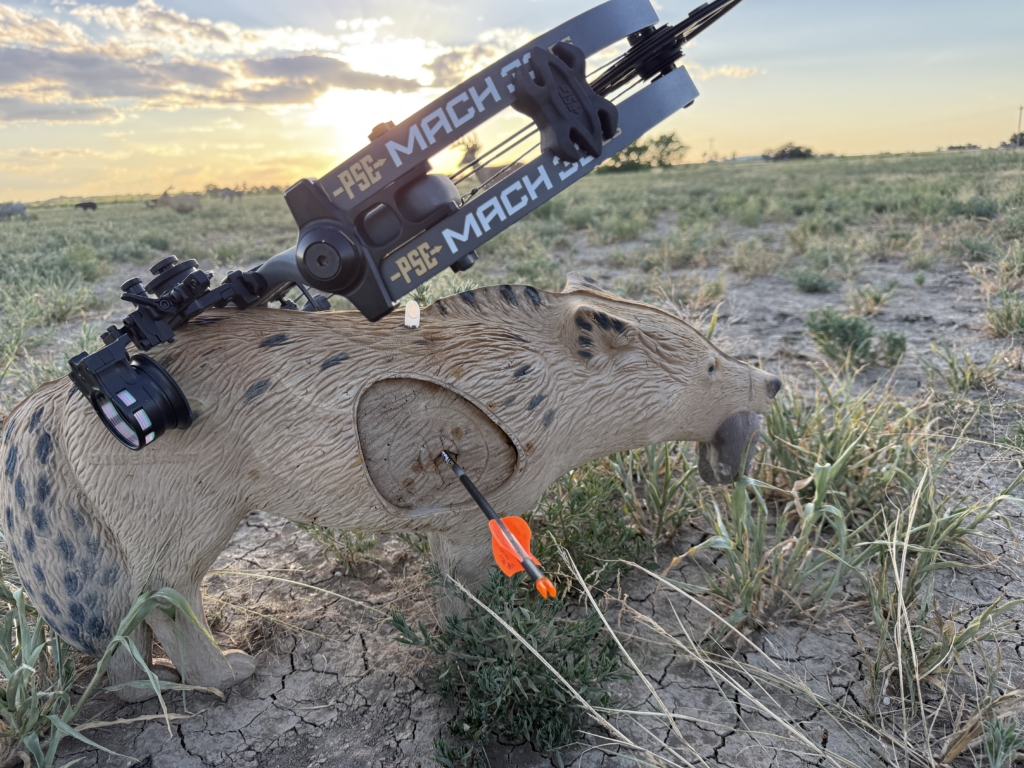
Rinehart Signature Javelina: Another replaceable-vital target, the Signature Javelina comes in under $180, and the vitals measure 7-3/4-inches across by 7 inches high. Total foam height is just a tick over 10 inches. This target doesn’t leave room for error. It’s extremley fun to shoot, and from distance, the open space above the target is hard to block out.

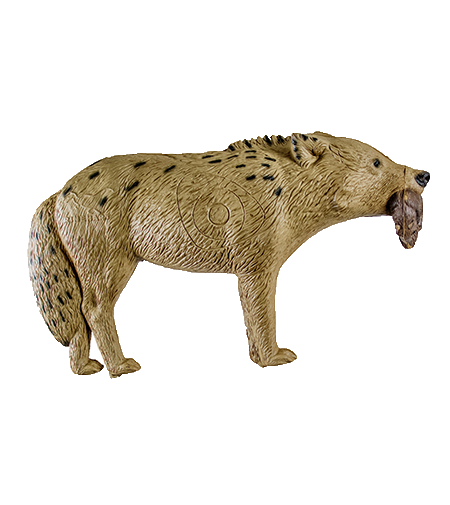
Rinehart Signature Coyote: Not only is shooting this target fun, but its vitals measure 5 inches wide by 5 inches tall. The target’s length does give you some room for windage error. However, total foam height is under 10 inches. If you’re not executing properly, you’re going to miss. The vitals are replaceable, and the target comes in under $140.
These three targets are excellent choices, and though small, they last for a very long time. I recommend not shooting them with fixed-blade broadheads.
Smaller 3-D Targets Don’t Have Defined Aiming Points
Another reason I like practicing with and shooting 3-D targets is the lack of aiming points they provide. Naturally, 3-D targets have scoring rings, but when shooting a small 3-D target from distance without a scope magnification lens, the rings are nearly invisible. This allows the archer to aim for a killing shot without adding the anxiety that comes with hitting a defined spot or dot. My goal when shooting any smaller-sized 3-D target beyond 50 yards is to hit somewhere in the replaceable vital core.
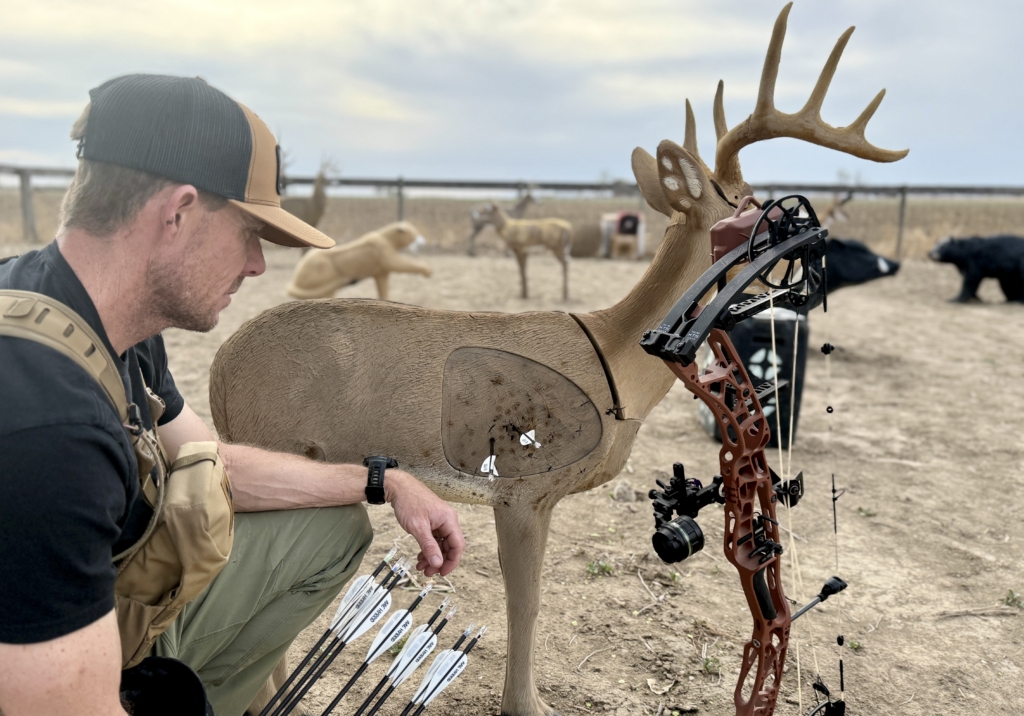
Think about this way: One of North America’s smallest big-game animals is the pronghorn. The vitals on a pronghorn measure roughly 8 inches long by 8 8inches tall. Regularly hitting the vitals of smaller 3-D targets at 50 to 100 yards, especially under pressure, gives me extreme shooting confidence. It will do the same for you.
How To Simulate Pressure
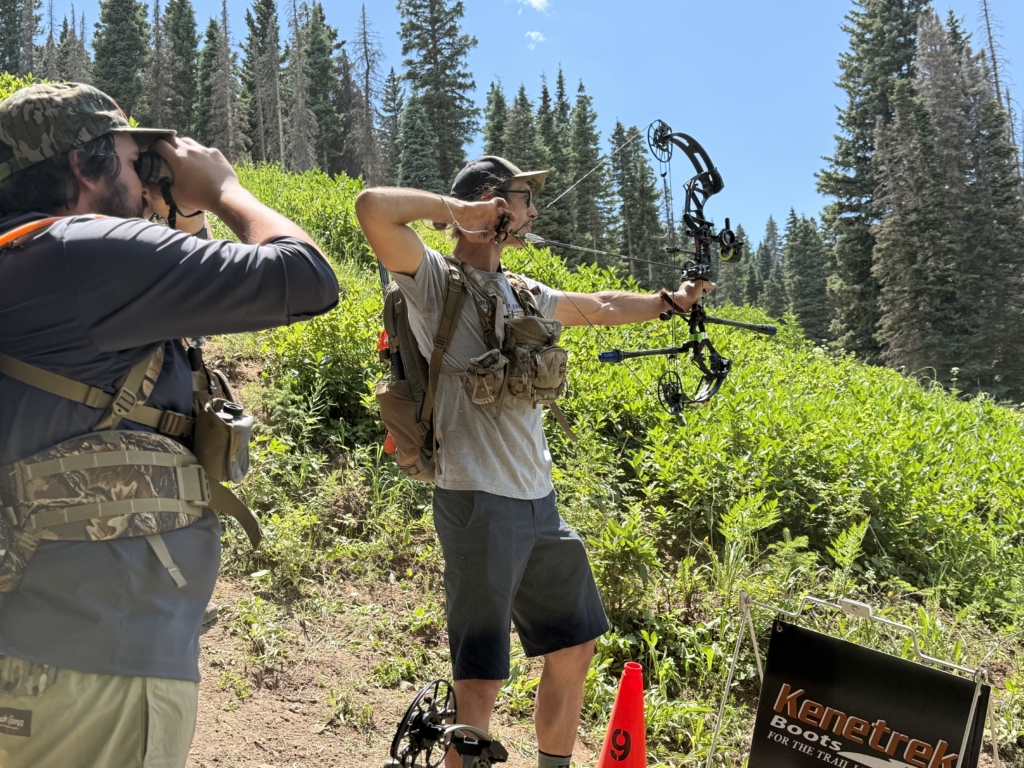
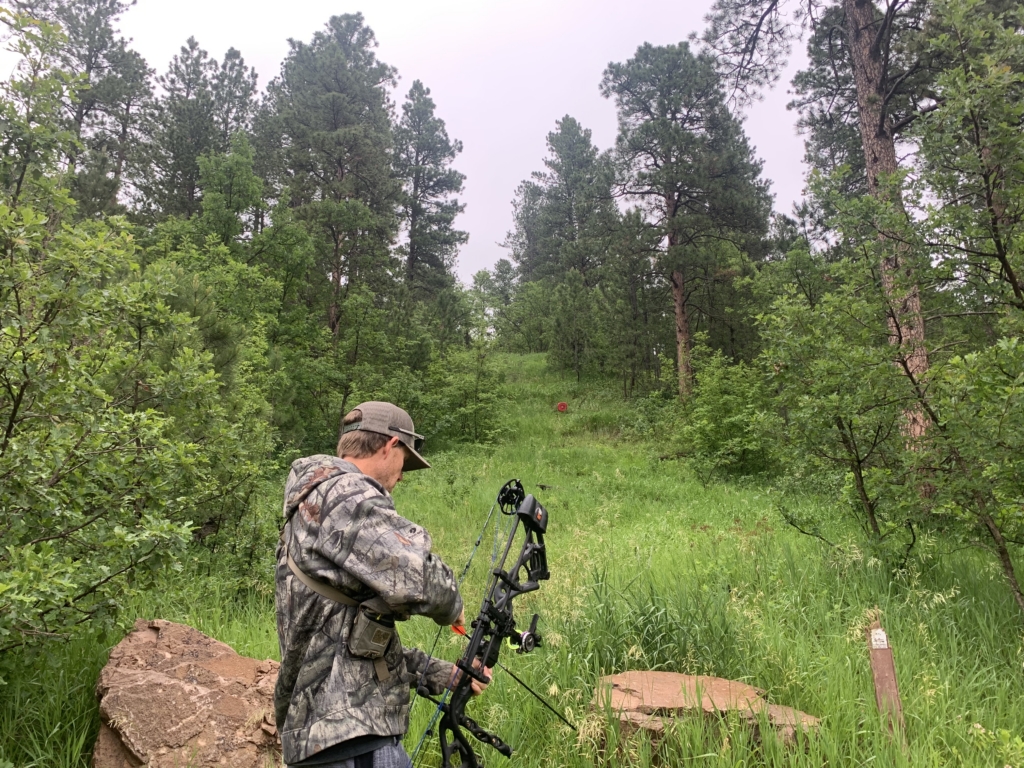
I shoot my bow every single day, rain or shine. With nobody watching, I could hit the 5-inch by 5-inch vitals of the coyote every single time from 70 yards, shooting on my flat range. I can’t promise you I will hit the vitals from 70 yards with my feet at a weird angle and the target tucked in the shadows of a dense cottonwood thicket. And I 100 percent can’t promise I will hit the 10-ring from 50 yards at a 3-D shoot when I’m in third place and trying to close on the leader. You must find ways to put yourself under pressure when shooting if you want to perform better during crunch time.
There’s A Time For Spots & Dots
While having multiple 3-D targets is important, it’s critical to have a couple of square foam targets with defined aiming points. Defined aiming points, like those found on Morrell’s High Roller Foam Target, give you immediate feedback. If you know your release fired the bow while your pin was bouncing on or around one of the 2-inch circular white aiming points on the High Roller, and your arrow hits behind your pin, you know you’re likely sighted-in at that distance.
However, there’s more purpose to shooting at spots and dots than to sight-in. The High Roller is built like a dice. You can shoot six sides, and each side has a set number of white aiming points set like a gaming dice. I like to shoot the single dot on the red target face when sighting in my bow. However, when shooting to build confidence and improve crunch-time performance, I flip the target to the five-dot side and shoot five arrows at five different aiming points from 60 yards. Aim, small, miss small, right? It’s easier to stack two arrows inside a single dot and put a third arrow in the same dot than it is to hit five different white dots with five different arrows.
Final Thoughts
The bottom line is you want to create shooting situations that are difficult and put pressure on you. Standing in your backyard range, stacking tight groups at 40 yards daily won’t be enough when you need to thread the needle through a small gap in the timber on the biggest whitetail buck you’ve ever seen. Prepare for in-the-field moments every single day, and you’ll be more successful this fall.