Experiential knowledge is the building block of a hunter. In the 1990s, Scott Haugen took his education to another level in Alaska’s Arctic.
Easing over a rise on spongy tundra, a cool ocean breeze met our faces. A short distance away, two bull caribou fed. They were unaware of our presence.
“You shoot the one on the right, I’ll take the other one,” Perry Pikok whispered. There was no counting. No more communication.
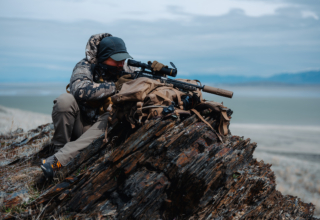
We were prone on a bed of soft lichens. The report from my .30-06 was surprisingly quiet. The bull dropped. Pikok, my new Inupiat hunting partner, shot the other bull.
We were on the shores of the Kokolik River, 230 miles north of the Arctic Circle. It was August 1990. My wife, Tiffany, and I had just moved to the village of Point Lay, Alaska, two weeks prior. This is where we began our teaching careers.
“You’d better go while you’re single because no woman will follow you to the Arctic,” Tiffany told me. Eight months later, we were married, and have been for 36 years.
Point Lay is one of the most remote villages in Alaska. When we arrived, fewer than 100 indigenous Inupiat people lived there. We were two of four teachers at the school. I taught every subject in high school and coached all sports. Tiffany taught every subject, 3rd through 8th grade.
My first caribou was one I’ll never forget. It was the first animal I hunted in Alaska. It was the first time I set foot on the tundra. I still had a year until gaining residency, which would qualify me for subsistence hunting. Still, filling tags on my sport hunting license got us through.
There was no store in Point Lay during the three years we lived there. Each summer, we did nine months’ worth of grocery shopping in Anchorage. Then, we had those groceries flown into the village on bush planes. All the meat we ate was what I hunted and fished for. Little did I know the impact this lifestyle would have on me.
Caribou were the only big game species routinely found near Point Lay. The Inupiat people of the tiny village largely depended on beluga whale meat and blubber. They hunted whales in the summer. They also hunted seals and, occasionally, walrus and polar bears. Being non-native, I didn’t qualify to hunt sea mammals.
Tiffany and I ate three or four caribou a year in Point Lay. Ptarmigan, king and common eiders, and fish, rounded out our diet.
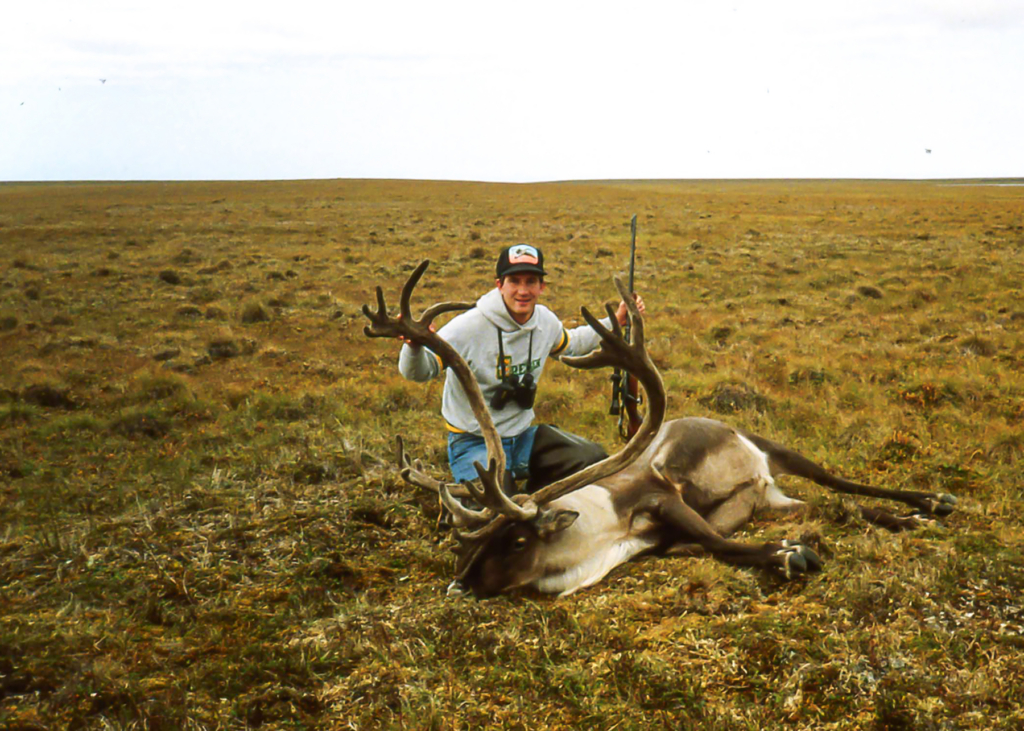
On one caribou hunt, I came across a herd of over 200 bulls. They were crossing a stream. I worked ahead of them, the wind in my favor. The whole herd swam the narrow river. When they hit the alders, they stopped. It was then that I witnessed one of the most captivating moments of my life: The bulls started stripping their velvet racks in the green-leafed alders. It was intense and loud. The power they spent ridding their racks of the itchy tissue was simply awesome.
When a bloody-racked bull stepped out, four steps from me, I held out the rifle and pulled the trigger. There was no need to look through the scope. The rest of the herd wasn’t phased. I shot another bull. It dropped on the gravel bar, 20 yards from the first.
I gutted and strapped them to the three-wheeler—one on the front rack, one on the back—and headed home. It was a miserable, long ride across the tundra, one of my first tastes of how challenging this landscape can be.
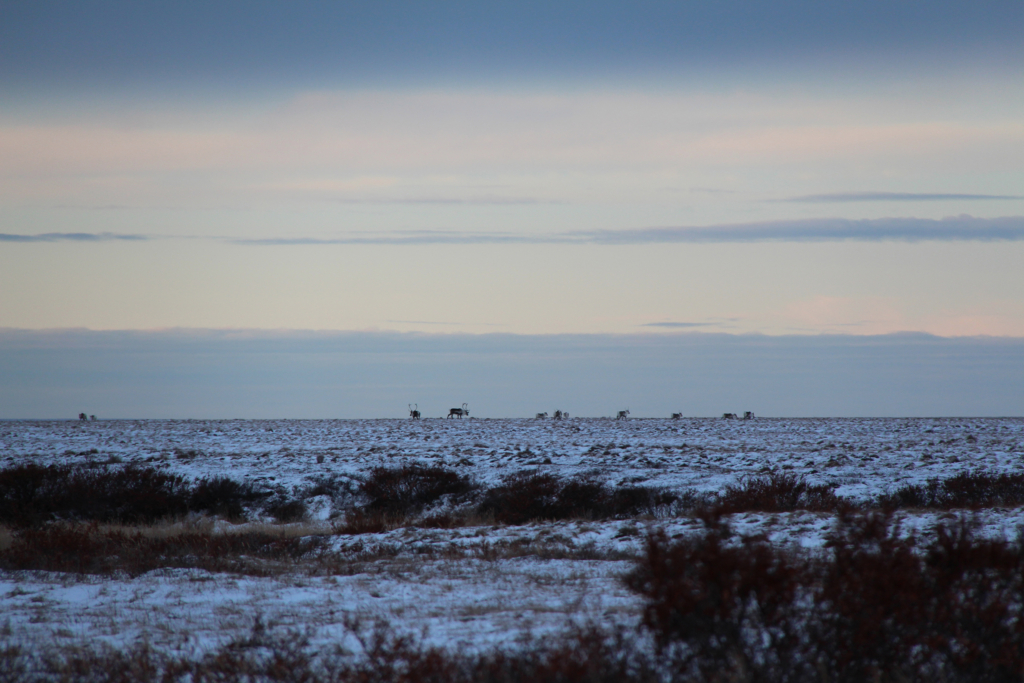
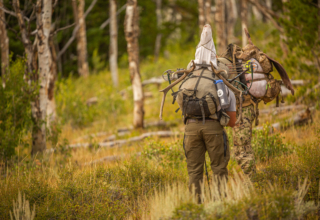
By the end of my time in the Arctic—and 27 more years of hunting throughout Alaska—I came to despise many parts of the tundra. It can be simple in places. But largely, it’s among the most challenging terrain to navigate on the planet, especially when it’s soggy and only a few inches thick. My Inupiat hunting partners taught me what to look for to better navigate the land. To this day, I utilize those skills.
When subsistence hunting, antler size doesn’t matter. Often, racks were left on the tundra simply to alleviate space. Subsistence hunts are about the meat.
Three years later, we moved to Anaktuvuk Pass. Situated on the North Slope of the Brooks Range, in Gates of the Arctic National Park, this was reportedly the last Native village in the United States to be settled. Traditionally, the people of Anaktuvuk Pass were nomadic, following caribou through the Brooks Range all winter long. It was a fitting place to call home for the next four years.
The region is regarded as one of the most game-rich in the Last Frontier. This was what I moved to the Arctic for. To experience subsistence hunting on the highest level and learn from the Inupiat men and women.
In Point Lay, we went 199 consecutive days below zero. Not freezing. Zero. One Thanksgiving day in Anaktuvuk Pass, I went caribou hunting. I was alone. It was 23 degrees below zero when I left home. I had to travel farther than expected to find caribou.
This far north, there are only a few hours of twilight in November. Right before dark, I shot a bull. I quickly began skinning it. The wind was now raging. It was brutally cold, and the bull was freezing faster than I could get the hide off. I gutted it, rolled it onto the sled of my snow machine, and sped back to the village. I put the bull in the school shop to keep it from freezing further. I went home to warm up. It was 43 degrees below zero, and the high winds took the wind chill to 72 degrees below.
Temperatures below 20 degrees are fairly comfortable to hunt in. But when the wind picks up, things change fast. In the Arctic, a cold day can quickly turn life-threatening when high winds hit. Proper clothing and survival gear are of utmost importance.
Back then, navigation was done with a paper map and a compass. I always told Tiffany where I was going, my planned route, and when I intended to be home. There was no way to communicate from the field. Many unplanned nights were spent on the tundra and in the mountains. There were sunken boats, a plane crash, broken-down snow machines and ATVs, and more. But we always came out on the good end.
In Anaktuvuk Pass, I hunted and trapped for four years with Ben Hopson Jr. He died in 1997. Suicide. That was one of the hardest times of my life.
Hopson was an Inupiat man, born and raised on the North Slope. He’d spent most of his life in Anaktuvuk Pass. He was a renowned wolf trapper and hunter. We shared many outings together. I learned so much from Ben. I entrusted him with my life more than once.
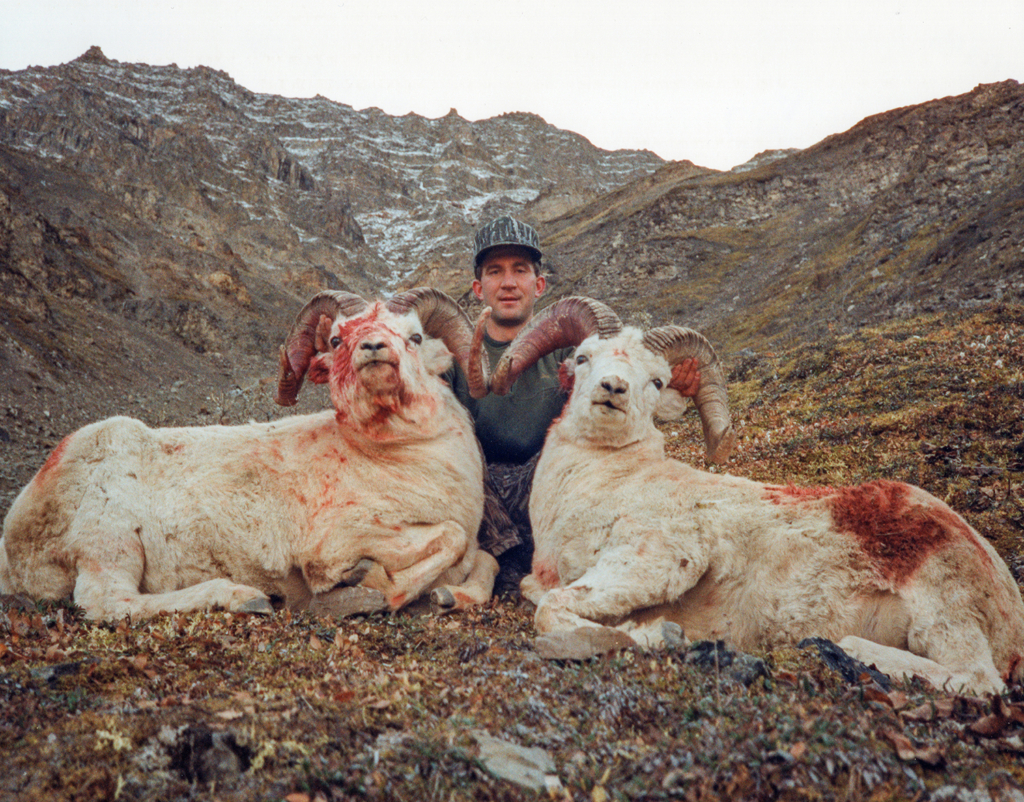
One hunt found Hopson killing a caribou late in the afternoon. It was high on a mountain. It was a long, arduous pack. We spent the night, as planned. The next morning, we spotted a band of Dall sheep in the mountains above camp. Three hours later, we were in position to shoot. Hopson shot first and missed. The band of six rams ran. I dropped one that toppled over the edge of a cliff. Hopson emptied his rifle but missed.
The five rams dove into a massive ravine. We lost sight of them for several minutes. Then they emerged on the opposite side, over 300 yards away amid some of the most rugged, rocky terrain in the central Brooks Range.
“You shoot, it’s too far for me,” Hopson said. The shot toppled a big ram. It free-fell more than 300 feet, bounced off rocks, tumbled end over end, then slid down a shale chute. It came to rest 10 paces from the first ram. Both white pelts were dirty and covered in blood.
Back then, I could take four Dall sheep a year: one under a sport hunting license and three under a subsistence permit. You could get five caribou a day, each, year-round under subsistence rules. This was in place for a good reason. Some years, the caribou were scarce, their migrations shifting or delayed for various reasons.
They’re odd animals. Some years, people struggled to get meat. If I were out and ran into a herd of caribou, I could shoot five. The animals were shared with multiple families. Shooting game while knowing others were in need of meat was a pressure I’d never known before.
Late one fall, I went sheep hunting in the mountains east of the village. I counted over 150 rams by noon. I shot one and headed home. That’s when I spotted a bull moose in a river valley.
The next morning, I found the bull. It was over 800 yards away on the open tundra. It was too open to put a sneak on, so I called. I’d never tried it before. Upon hearing my groans, the bull thrashed the tundra with its rack and oversized hooves. Piles of sod flew through the air. Some of it landed in its antlers. Then it came strutting in, looking for a fight.
Inside 50 yards, the bull’s silver breath mingled around flared nostrils. Its lips curled upward. The whites of its eyes were easy to see. I hunkered on the edge of a stream, amid sparse willows, occasionally calling. At 12 yards, the bull finally stopped. I shot it in the neck. I drove the Argo to it, quartered the massive animal, and loaded it up. We gave half of the moose to a Native family who needed the meat.

One afternoon, Hopson and I were headed home with an Argo full of caribou meat and camping gear. Four of the eight tires eventually popped, stranding us in a valley. Snowcapped mountains surrounded us. We built a fire and ate fresh caribou. We pitched a tent, figuring someone would come looking for us in the morning.
Just after midnight, we heard an Argo approaching. When we got out of the tent, a faint line of Northern Lights danced above the rocky pinnacles. Three Inupiat men who’d come searching for us were glad we broke down on the trail. Over the next four hours we all sat, drank coffee, and watched the most brilliant light show we’d ever seen. The indigenous men had lived their whole lives on the Slope and said it was the most spectacular, colorful display of the Northern Lights they’d ever seen. It was one of the most memorable events of my life.
Hunting for meat to live on is far different from how I grew up hunting. Back home, if you didn’t fill a tag, someone had extra venison or a cow to share. Or, God forbid, there was always the supermarket. No one was going to starve. To this day, Tiffany and I eat only wild game. It’s what we raised our sons on. We still do our own butchering and processing.
Subsistence hunting instills a sense of pressure I never knew before. There’s an urgency to succeed because someone is always in need of meat. Miss a shot, and two months’ worth of meat could be negated.
In the Arctic, coming home alive was always the priority. Survival is rarely a thought on most hunts we embark upon. One mistake in the Arctic under harsh conditions can result in death. I cheated death many times and came out a better outdoorsman because of it.
Little did I know at the time, but the experiences gained during seven years of subsistence hunting in the Arctic would provide me with the necessary skills to live a dream career.
After our time in the Arctic, Tiffany and I taught at an international school in Sumatra, Indonesia. Then I was offered a job as a TV host.
For the next 14 years I made my living hosting hunting TV shows. I traveled the world. Two of those years, I hosted two shows, going on upwards of 60 big game hunts a year. I learned a lot, but it was the experience gained through subsistence hunting, fishing, and trapping in Alaska that made for a successful TV and outdoor writing career.
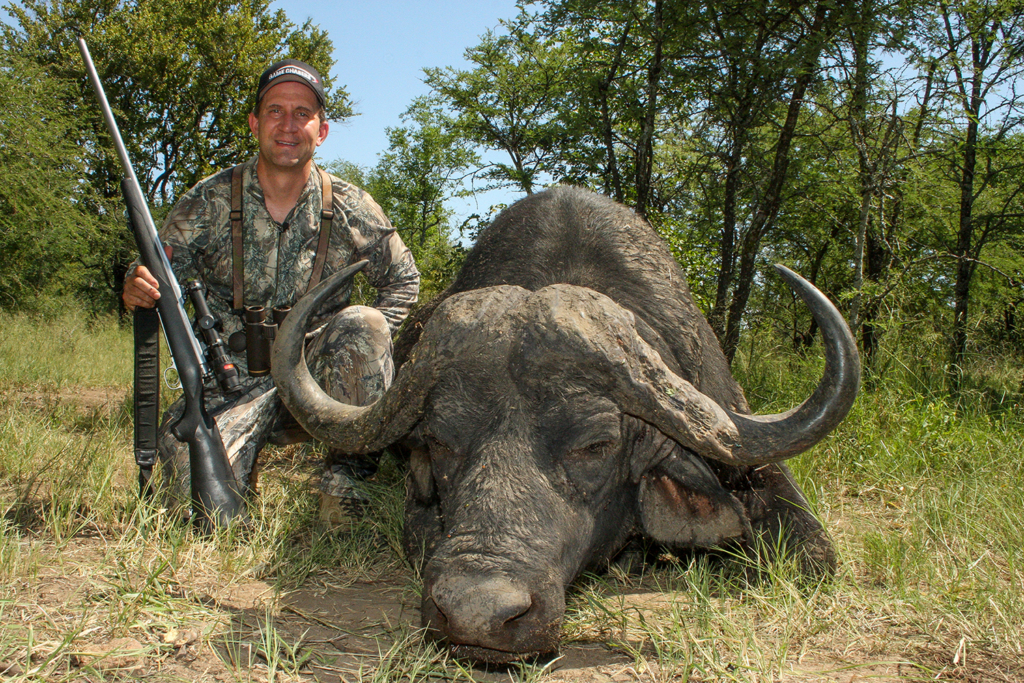
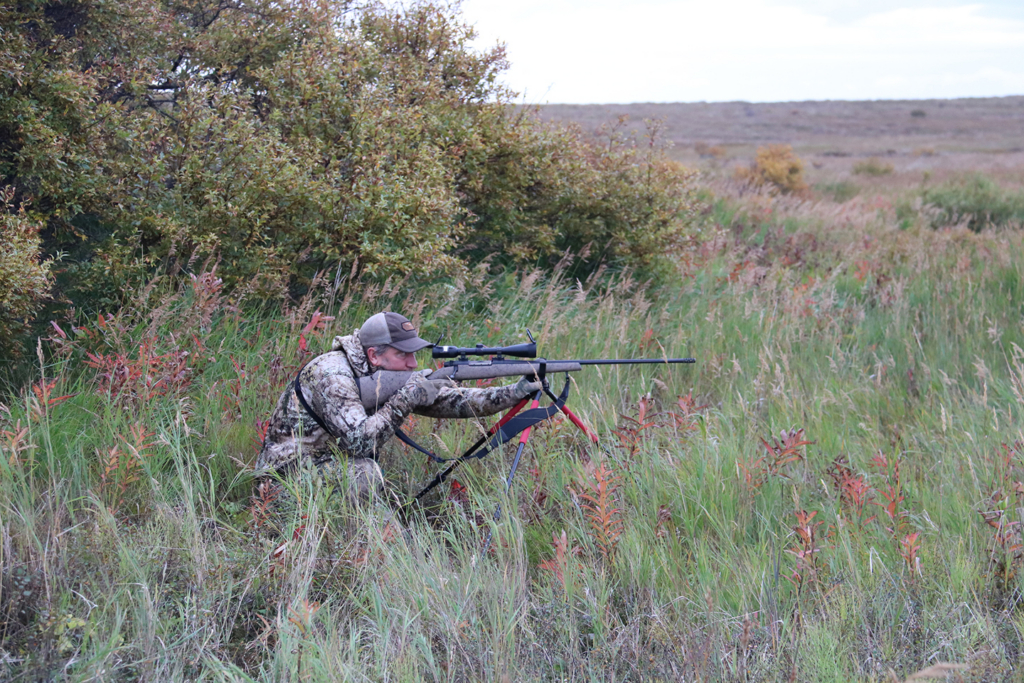
In the TV world, time is money, and missed shots are costly. It was a different form of pressure than shooting to put meat on the table. Nonetheless, it was pressure. Accurate shooting was a must. Advanced hunting skills, knowledge of animal behavior, and outdoor navigation and survival further made the transition into filming hunts around the world efficient. I stepped away from that job in 2014 and have no regrets.
For the past 25 years, my main job has been to organize and arrange words with the hope of bringing joy and knowledge to fellow hunters. Writing is my true passion, and I love photography. I have the formative, life-changing years of living a substance-hunting life in Alaska’s high Arctic to thank for paving the way into a life I only dreamed of as a kid.
Note: For signed copies of Scott Haugen’s best-selling book, Hunting The Alaskan High Arctic, visit scotthaugen.com. Follow Scott’s adventures on Instagram and Facebook.