Hoyt’s Carbon RX-10 is light, silent, hyper‑accurate, and has on-bow tuning. Read the full performance test.
by Jace Bauserman
I’ve been testing compound bows for 20 years. It’s a job I take extremely seriously, and I pull zero punches. If a bow is amazing, my writing reflects that. If a bow is average—has a few good qualities and a few not so good—I pen that. I’ve tested lots of compound bows, and the 2026 class is the best the bow veil ever lifted.
I crowned Hoyt’s AX-3 33 with a litany of well-deserved awards this year. The 33-9/16-inch axle-to-axle, 6-3/8-inch brace-height compound with on-board XTS tuning system is a Cadillac. However, the Carbon RX-10 is a Bentley.
I’ve spent the last seven days sending 418.7-grain Easton X10 Parallel Pro arrows downrange with Hoyt’s 2026 carbon flagship. Not only is it the best carbon compound bow I’ve ever shot, but it’s the best compound bow I’ve ever handled. I know, spoiler alert, right? But there’s no point in beating around the bush. If you stop reading this article right now, you need to know that Hoyt’s Carbon RX-10 trumps the 2025 Carbon RX-9 in every way. The 30-1/2-inch axle-to-axle platform feels longer than it is when you crawl into your anchor. However, when you’re moving around the range and woods with the bow, it feels like a light (4.1 pounds without accessories) hyper-maneuverable vertical rig.
Let’s dive in!
Hoyt Carbon RX-10: First Impressions
Hoyt offers a litany of riser and limb colors, and you can mix, match, and build your RX-10 your way. My RX-10 arrived sporting Hoyt’s new Duck Camo limbs and Georgia Clay riser. It’s sexy. The first time I posted the bow on IG, I got more comments about how good it looked than how accurate and quiet it was.
The Duck Camo is cool. The new-for-2026 pattern is a specialized blend of Hoyt’s uber-popular solid bow colors (Tombstone, Wilderness, Georgia Clay, Blackout, and Sandstorm) into a single cohesive “camo” pattern constructed from Hoyt solids. The pattern pops.
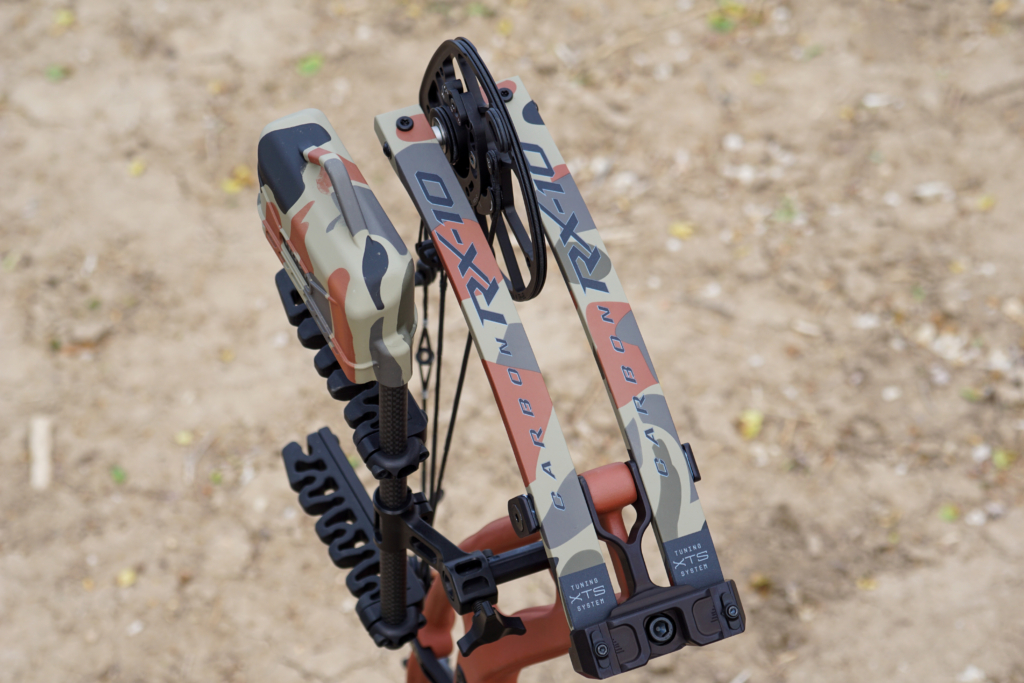
I’ve never been much of a solid or camo guy. I like both. If the bow is quiet, draws smoothly, doesn’t pull my shoulder through the riser at full draw, and arrows hit behind the pin, I couldn’t care less about aesthetics. This time was different. The Georgia Clay riser with new Duck Camo limbs and Duck Camo SuperLite QD Quiver made my heart flutter.
Like other 2026 Hoyt flagships, the RX-10 wears the XTS Tuning System; the most effective on-bow tuning system I’ve tinkered with so far. More to come on this, but the patent-pending XTS Tuning System corrects left, right, up, and down paper tuning tears up to 1-inch. All that’s required is that the user follow Hoyt’s downloadable White Paper and use a 3/32 Allen wrench.
The highly customizable HBX 4 Cam System is back. Draw length adjustments, using Hoyt’s easy-to-follow letter system, can be made in 1/4-inch increments. The cam system still offers a trio of let-off options (75, 80, and 85 percent) and Hard and Xtra Hard backwall choices.
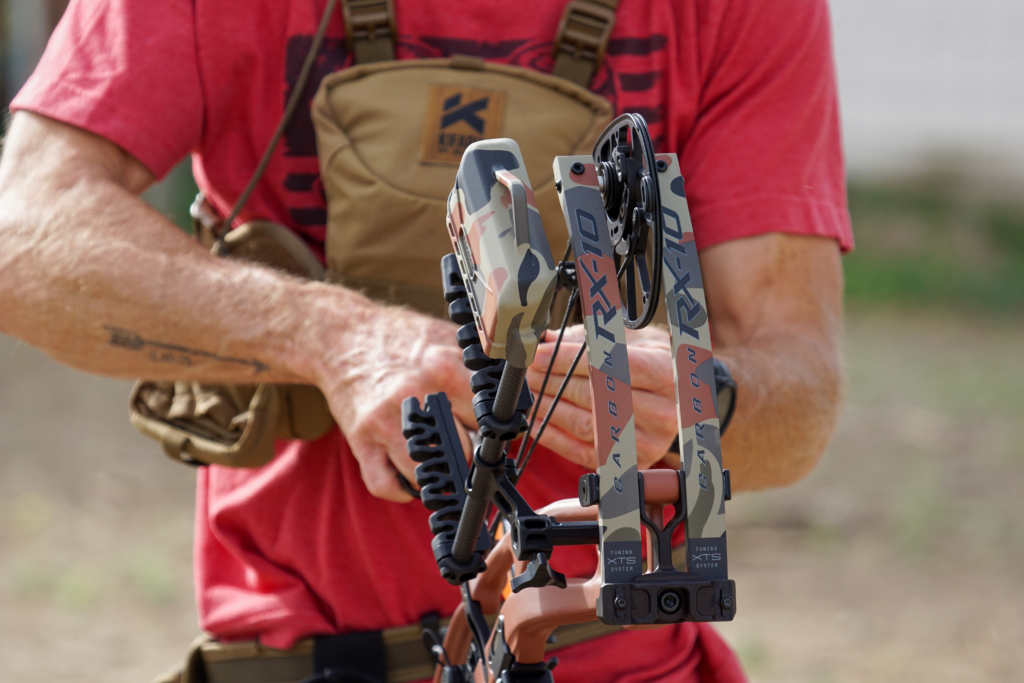
The front of the light, durable carbon riser wears a three-rail Pic-mount for direct-to-riser sight mounting. This eliminates the need for a sight-mounting bar and bolts and puts the sight in line with the riser. The QAD-designed Integrate Mounting System places a pair of slits in the back of the riser for direct-to-riser rest mounting. Other accessories, like Go-Stix 2.0, stabilizers, stab mounting bars, quivers, etc., take only seconds to mount.
Hoyt also offers SD (Short Draw) and LD (Long Draw) models. This means the RX-10 will accommodate draw lengths as short as 23 inches and those as long as 33 inches.
Hoyt Carbon RX-10: The Build
My 70-pound Hoyt Carbon RX-10 came in a tick hot in the draw-weight department. Tested draw weight with a digital and a standard scale showed draw weights of 72.23 and 72.65 pounds, respectively. I made no adjustments to the draw weight; a bow performs its best at max poundage. The draw length was set to 29 inches, and while I typically adjust that by 1/4-inch, I left it alone. I changed the bow’s let-off from 85 percent to 80 percent and the backwall from Xtra Hard to Hard by swapping the bottom let-off/draw-stop arm to the top cam and the top to the bottom. I prefer a backwall with a slight valley, and the Hard setting provides this.
Accessory attachment was a breeze. I attached QAD’s Integrate MX2 rest to the back of the riser, pressed the bow, and slid the rest’s timing cord into the down cable. I timed the rest using a Last Chance Archery draw board. My sight was Spot-Hogg’s Boonie PM, Double Pin ROTI with PRIZ. I inserted a 3/16″ peep between the string strands.
The Hoyt Carbon RX-10 On The Range
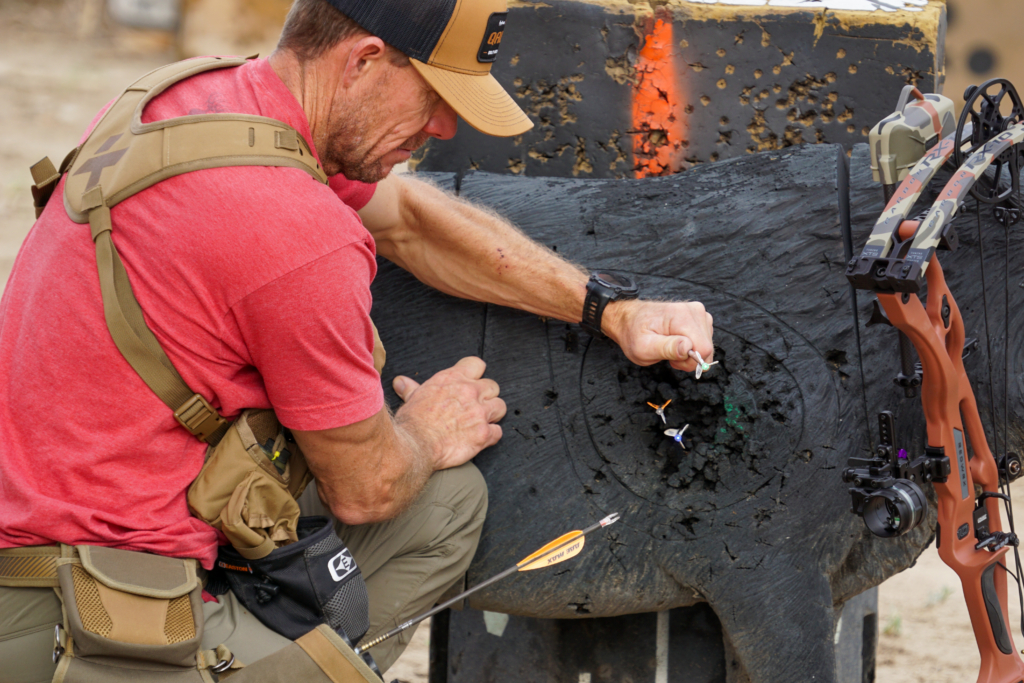
Holy crap does this thing shoot. Again, spoiler alert, but I don’t care. Typically, even with a bow I love, it takes me a dozen arrows or so to make me crack a smile. I loved the RX-10 from the second my hinge brought the string back. The cycle is butter, you anchor up quickly, and your pin will sit dead still on target. Mother Nature added some challenge to my first RX-10 range day with a 12-mph crosswind. It didn’t matter. Shots broke clean, and there was no noise. No hum, buzz, tingle, tickle, twang; just silence.

I’m not sure when this article will go up or when you’ll read it, but I can already see some of you rolling your eyes.
Why not go from the bow press to the paper tuner?
Because I want to get a feel for the bow first. Even though Hoyt engineers went to great lengths to ensure better bow alignment from brace to full draw, I need to get used to a bow’s grip, feel, etc. And, as good as Hoyt’s WireWRX strings are, mine always stretch. Almost every string, even custom ones, stretches a touch. I want to get a bow shot in before I punch through paper with it.
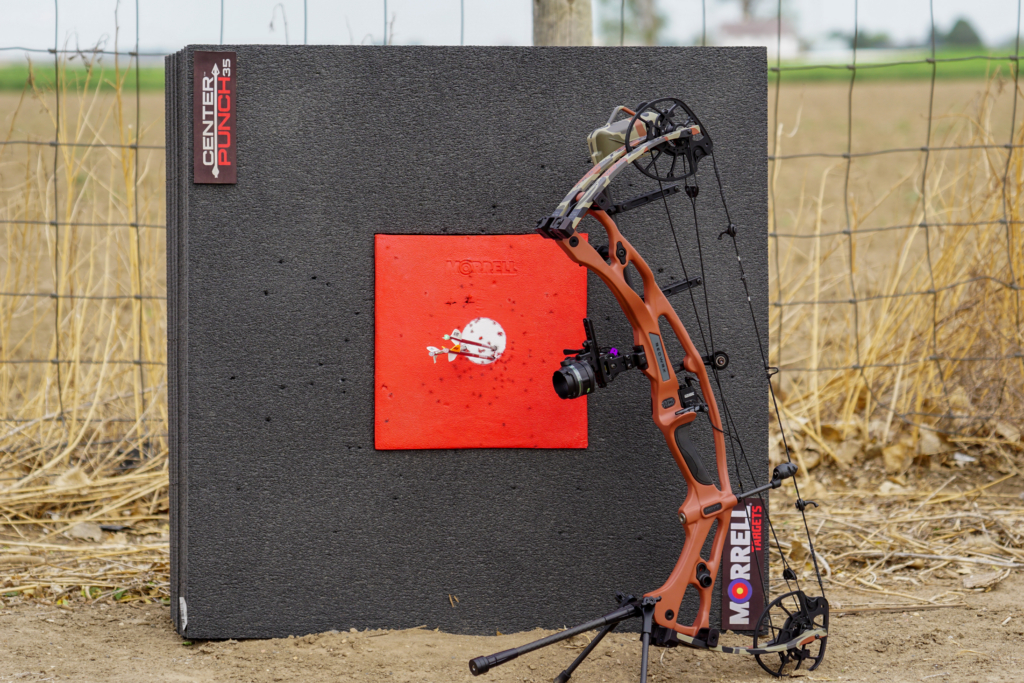
My rule is this: If my lighted nocks aren’t showing me too much vertical or horizontal travel, I shoot 200-plus arrows on the range before I paper and bare-shaft tune. It saves me a lot of time and keeps the Ibuprofen in the bottle.
I did notice my LIT lighted nocks in my Easton X10 Parallel Pro arrows were kicking a touch tail right, but not bad, and I was hammering Rinehart, Morrell, and Delta McKenzie targets on my range between 20 and 100 yards. Even without a perfect tune, this bow/arrow combo was driving tacks.
Hoyt Carbon RX-10 Data
The shorter brace height makes it faster than its aluminum cousin. At 72 and some change pounds of draw weight and a 29-inch draw length, the RX-10 pushed my X10 arrows at 304 feet per second. Crunch the numbers, and you get 85.94 foot-pounds of energy.
Even more impressive was the compound bow’s lack of noise. The AX-3-33 produced a three-shot dB rating of 62.2, which is scary quiet. The Carbon RX-10 produced a three-shot dB rating of 61.0. This bow is going to be a big-game nightmare, but its cream will really rise to the top in the Rockies for elk and the Midwest hardwoods for deer.
Hoyt Carbon RX-10 Final Tune
My first shot through the paper produced a slight tear to the right. The tear was less than 1/4-inch but needed to be corrected. After loosening the shuttle block locking screws on the top of the limb pockets, I made a slight right turn to increase tension on the right limb tuning bolt. Next, I repeated the process on the bottom right. It’s critical to remember that because tension was added to the top right and bottom right limbs, your draw weight will increase slightly. Remedy this by decreasing tension—the same turn you made on the right limbs—to the top and bottom left limbs. This will put your draw weight back in alignment, and you’ll experience no change to your sight tape.

Hoyt Carbon RX-10 Final Thoughts
I’ve tested bows for two decades, and I don’t hand out hyperbole. After a week and hundreds of arrows with the Hoyt Carbon RX-10, I’ll keep it simple: this is the benchmark. It’s lighter than it measures, absurdly stable at full draw, and the shot is surgically quiet — not the polite quiet of good bows, but the kind that lets you hear the woods.
The HBX 4 Cam, XTS Tuning System, and modular carbon riser aren’t marketing fluff; they produce real-world benefits you feel in follow-through, arrow flight, and tuning speed. The RX-10’s adjustability (short and long draw models, three let-offs, micro draw-length increments) means it fits more shooters out of the box, and straightforward accessory mounting makes setup simple.
Performance at 20–100 yards was flat and repeatable with properly tuned arrows. The slight right-paper tear I fixed in minutes proves the system encourages precision rather than masking issues. If you want a flagship that blends modern carbon tech with practical, on-bow tuning and race-car handling in the woods, the Hoyt Carbon RX-10 is it. Buy it, tune it, shoot it — then tell me I’m wrong.