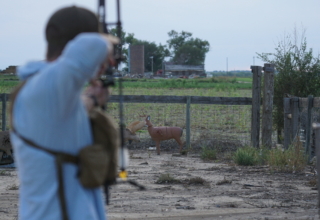
Spot-Hogg’s ROTI w/PRIZ bow sight is designed for serious bowhunters seeking durability, versatility, and extended yardage performance.
by Jace Bauserman
Testing archery gear is not just part of my job—it’s a passion that drives me every day. Throughout my experiences, I have encountered numerous products, many of which have left a lasting impression. However, only a select few earn a permanent spot in my hunting setup. I can assure you, when you notice an accessory on my compound bow, it reflects rigorous evaluation in both controlled settings and real-world conditions. This isn’t merely a promotional message; it’s a sincere recommendation from one dedicated bowhunter to another about an exciting new bow-mounted accessory I’m eager to share.
For over a decade, I’ve exclusively relied on Spot-Hogg bow sights. During this period, no other brand has earned a spot on my hunting bow’s riser. I’ve certainly tested various competitors, but none have matched the tank-tough durability and exceptional performance of Spot-Hogg products across all weather conditions and terrains. After years of use and numerous models, I’ve never experienced a single mechanical or technical issue with any Spot-Hogg sight.
A pivotal moment occurred last November when Kris Christensen from Spot-Hogg reached out. Normally quite talkative, he surprised me with his brevity, simply announcing that a new sight would be sent my way for testing. His excitement piqued my curiosity.
Spot-Hogg’s ROTI with PRIZ
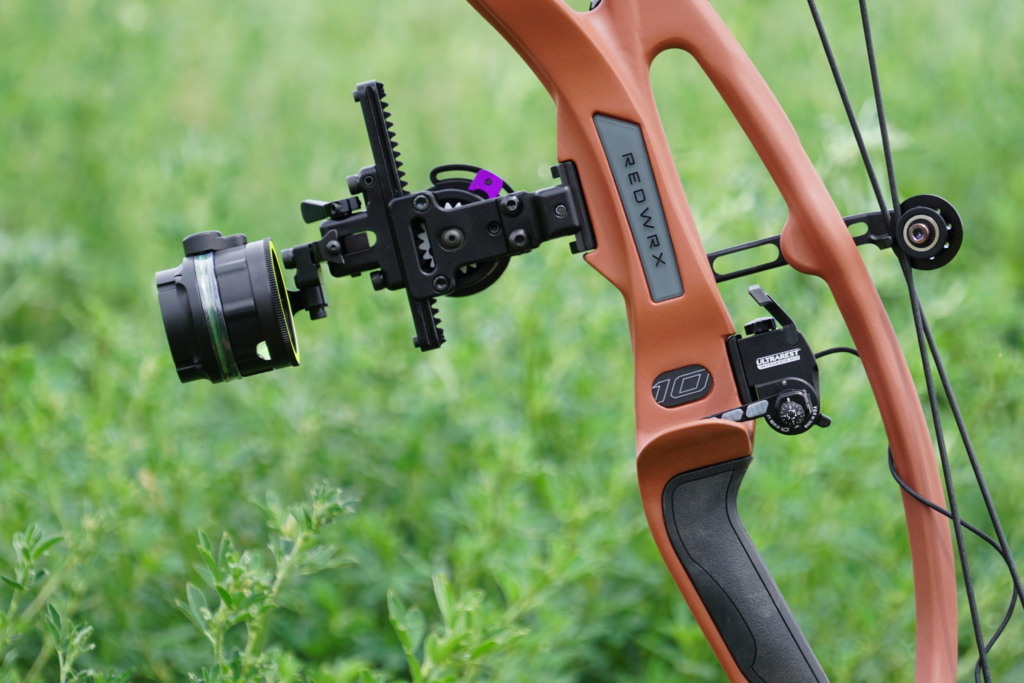
The sight I received was based on Spot-Hogg’s award-winning Boonie model, yet it featured a smaller, lighter housing that tapered toward the front. The sight included a familiar .019” double-pin setup along with multiple MRT options for the outer ring.
Before we delve deeper into the this sight, which was the ROTI housing with PRIZ, I want to ensure everyone reading this is up to speed on Spot-Hogg’s Boonie. The best asset of Spot-Hogg’s lightweight Boonie body is that it comes in mounting options of PM (Pic Mount), DT (Dove Tail), and HM (Hard Mount), and allows for interchangeable yardage wheels.
Trying to slide a sticky sight tape under purple yardage pin indicators is frustrating and was one of my least favorite features of previous Spot-Hogg sights. With the Boonie, remove a pair of set screws, pull off the yardage wheel, attach your sight tape without moving the yardage indicator pins, and put it back on. The feature simplifies sight-tape setup and allows archers and bowhunters to set up multiple wheels for various arrow setups.
The Boonie wears a new lock/unlock feature on the sight yardage wheel. The wheel lockdown feature is no longer under the wheel and is no longer a bulky lever. The yardage wheel knob is in the middle of the wheel. Like the windage knob, lock and unlock directions are labeled. The wheel is gnarled, making it easy to grip, and a clockwise rotation locks it down while a counterclockwise turn unlocks it.
To Read More About Spot-Hogg’s Boonie, CLICK HERE!
What truly captured my attention when looking over the ROTI with PRIZ was the innovative four-set-screw design that allowed the housing to split into four sections: the front, featuring the ring and lightweight sight-light bracket; the pin insert (which I will explain shortly); a prism lens; and a sunshade. This modular design provides complete customization, including a non-magnifying prism option, with single- and double-pin inserts available in .19” and .10” sizes. Spot-Hogg is even working on introducing more inserts in the future.
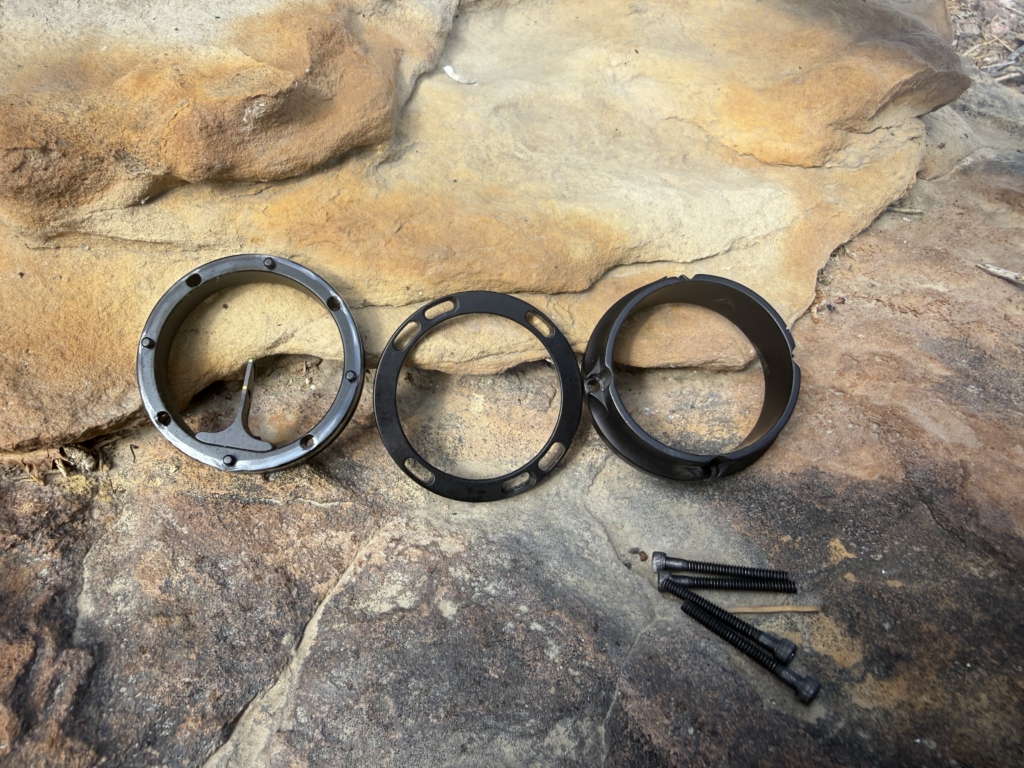
The Purpose of PRIZ
The beauty of this design lies in its efficiency. Bowhunters and archers can easily swap pin configurations without needing to change sights, making this potentially the last bow sight they’ll ever need. Swapping a pin cartridge doesn’t change second- or third-axis settings. However, I always recommend confirming everything after a change is made.
Initially, I was puzzled by the prism lens. Believing it to be a magnifying lens, I quickly understood that it offered no magnification. After reaching back out to Christensen for clarification, he connected me with Spot-Hogg engineer Bryce Pick. Pick explained that the prism raises the housing by 3/4 inches, expanding the sight-tape range by up to 30 yards while maintaining pin gaps and sight-tape accuracy. He also explained that the PRIZ has NO magnification.
Constructed of durable aluminum housing with optical-grade glass and an AR coating, the PRIZ is secure and robust thanks to four 1-inch set screws.
Enhanced Distance
Currently, I have my Hoyt Carbon RX-10 set at 70 pounds with a draw length of 29 inches, using arrows that weigh 418.7 grains. Without the prism, my sight tape reliably took me up to 128 yards; I could’ve pushed that to 132 but preferred to avoid risking damage to my equipment. With Hoyt’s Alpha AX-3 33, my tape with the ROTI w/PRIZ maxed out at 124 yards. I could have pushed that yardage to 130 but I’m a Nervous Nellie and don’t like seeing the bottom of my housing anywhere close to my launcher arm.
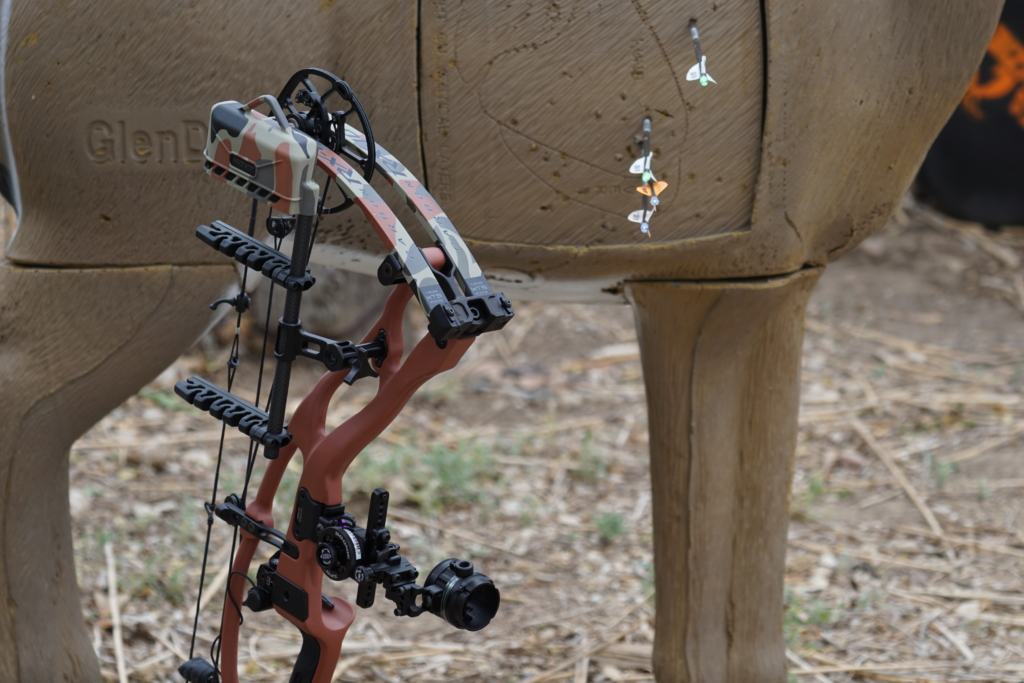
After attaching the PRIZ, I retraced my steps from 10 to 60 yards to confirm the arrow’s impact on the target had not changed. Spot-Hogg provides thorough instructions to help users maximize yardage with their bow-and-arrow setup. I experienced no changes to my sight tape. Still, getting accustomed to the reorientation of my sight picture with the PRIZ took time. Ultimately, after familiarizing myself with it, I discovered that my grouping returned to normal at longer.
One standout aspect was the clearance I noticed between my launcher arm and the bottom of the ROTI housing at 80 yards—a significant improvement. Over a week and taking my time to ensure accuracy at a distance, I pushed my distance from the target to 148 yards. This is by far the furthest from a target I’ve shot without holding high and off the target.
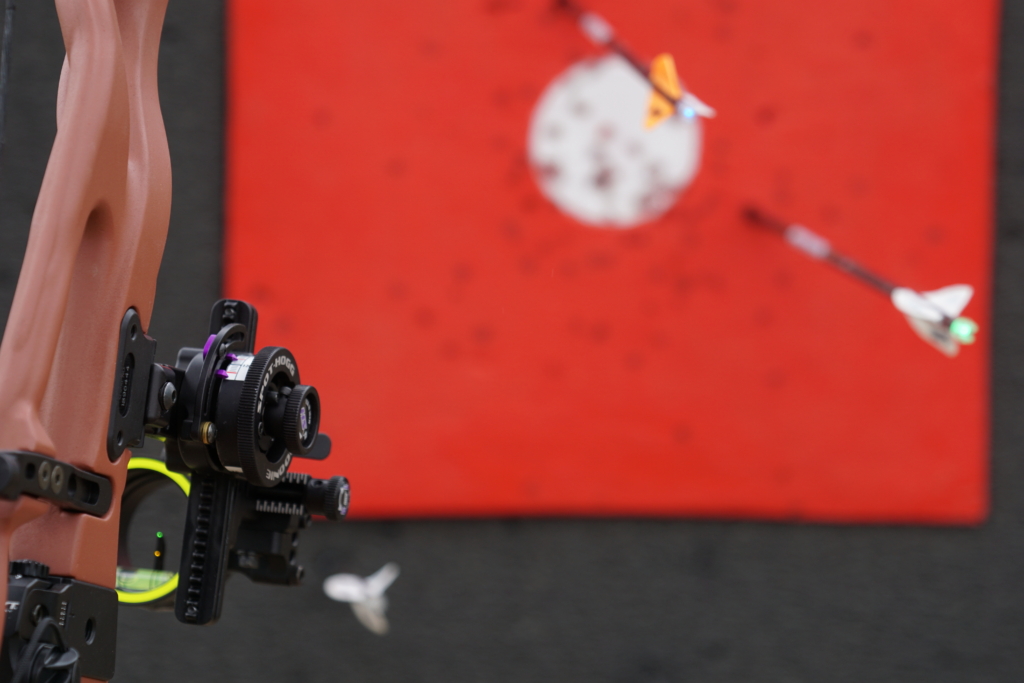
Guess what?
I still had clearance between the bottom of my sight ring and the up vane of my arrow. It is critical to note that I use Spot-Hogg’s standard neon-yellow housing ring. This ring nearly matches the outside diameter of the threaded-ring housing. Adding one of Spot-Hogg’s MRT rings, which do offer advantages when shooting in various lighting scenarios, will slightly reduce housing clearance.
The Importance of Extended Practice Distance
It is essential to clarify Spot-Hogg’s intentions with the PRIZ. They aren’t promoting a sight for bowhunters to take game at rifle-like ranges, which runs contrary to ethical bowhunting principles. Even for an experienced shooter like me, 80 yards is my maximum for ethical shots. Of course, that distance varyies by species, wind conditions, and the animal’s awareness.
Levi Morgan, a revered figure in bowhunting, advocates for practicing at double the distance you’re comfortable with when harvesting game. Prior to the PRIZ, achieving this was challenging without experimenting with various techniques. According to true double-distance practice, I should shoot regularly at 140 yards. Pre-PRIZ, I had to guess. I would hold my second pin on the double-pin post above, and often off the target I was shooting at. Long-distance practice requires precision. When shooting longer distances, you need to hold your pin on the spot you want your arrow to impact. Pin float magnifies as we move farther from a target. Add in the factor of guessing with that pin, and there’s no purpose to the practice session. Now, thanks to the PRIZ, I can practice efficiently beyond 140 yards, which enhances both skill and confidence.
FAQs
Do I have to have a sight on my bow to kill big-game animals with my bow?
No. There are lots of bowhunters who run standard fixed, three, four, and seven-pin sights. The advantage of a slider sight is having the ability to dial to the exact distance, eliminating pin gapping.
What is pin gapping?
Pin-gapping is guessing to a degree. Take a fixed five-pin bow sight. Now, imagine the range to the target is 35 yards. If that bow sight is sighted in at 20, 30, 40, 50, and 60 yards, the shooter will need to “gap” the space between the 20 and 30-yard sight pins.
What is a slider bow sight?
A slider bow sight runs on some sort of rack-and-pinion rail and comes with a yardage lock-down feature. A slider bow sight lets the archer attach a calibrated sight tape and dial to the exact yardage they’re shooting.
Final Reflections on the Spot-Hogg ROTI w/PRIZ