Using Wildlife Research Center products to create mock scrapes now will lead to big results this fall. Here’s what to do.
by Jace Bauserman
I’m a 24/7/365 whitetail addict. If that first sentence resonates with you, tune in to what’s to come. Four miles from my southeast Colorado home is a little slice of heaven. I don’t own it, and probably never will, but two amazing landowners (husband/wife) allow me to treat it like I do.
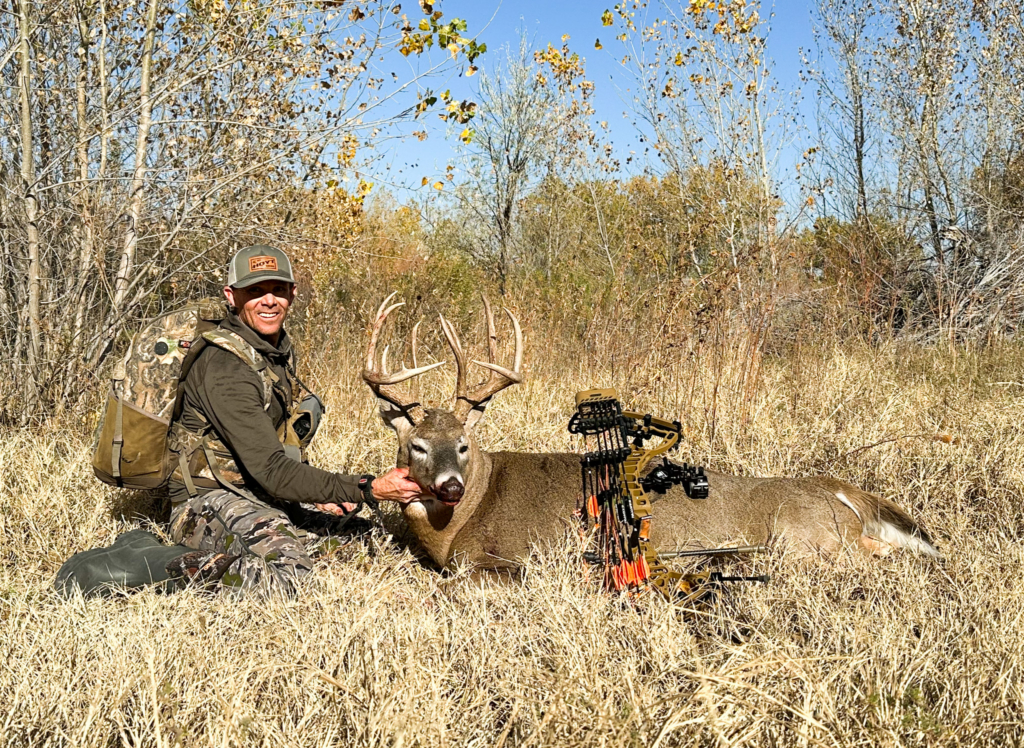
For the past seven years, I’ve done everything in my power, from isolated food plots to waterholes to travel corridors and more, to make the property an attractive whitetail destination. Hard work, as it always does, pays off. Over the past three years, I’ve harvested one Boone & Crockett and two high-scoring Pope & Young bucks.
During spring and summer, we tend to classify our whitetail work into a single category under a single adjective: BIG. A spring/summer whitetail to-do list may look something like this:
- Plant spring plots
- Prepare fall plots for planting
- Mow travel corridors
- Put in new water sources
- Hinge cuts
- Burn
- Plant new mast-bearing trees
Those are but a few, but you get the idea. The above list, for the most part, requires equipment: John Deere, mower implement, chainsaw with habitat hook, etc.
Here’s the thing, though: Don’t forget about little improvements that make a big difference
What Did You Miss?
According to my HuntStand app, my whitetail property measures 272 acres. Less than 100 of those acres are timber. I shed hunt the property every single spring beginning in mid-March. You probably do the same. While shed hunting, I have my HuntStand app open. You’d think after 7 years of hunting a property and spending as much time on it as I do, there would be no new mysteries to solve. I’ve had years where I thought the same, and the property and the deer that use it ALWAYS prove me wrong.
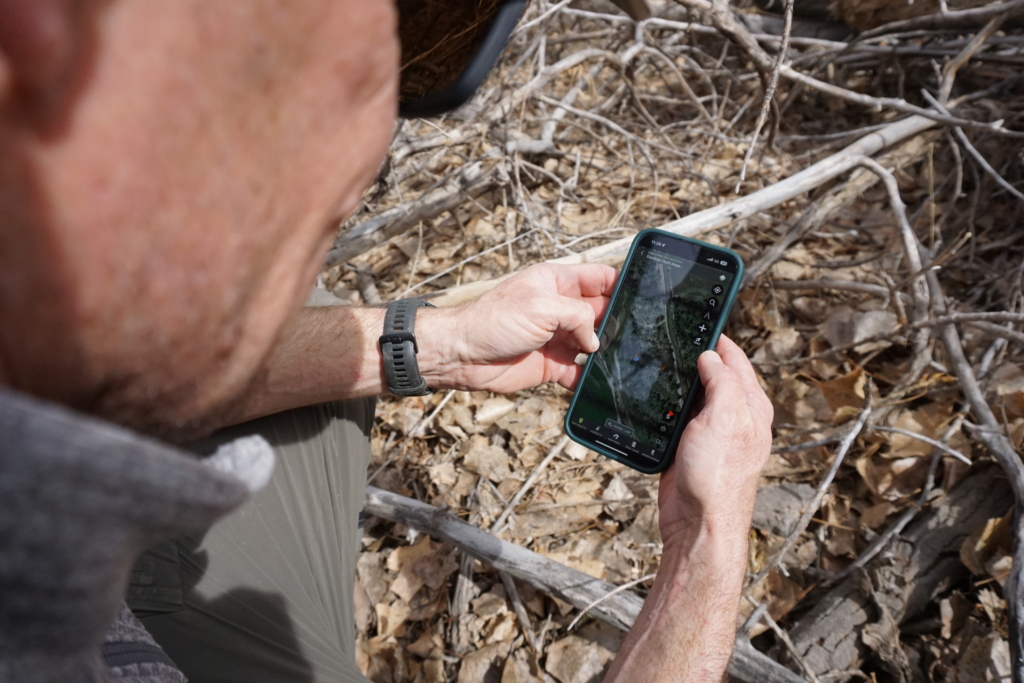
While shed hunting, I regularly drop waypoints on my digital map. Those pins may indicate a trail intersection I wasn’t aware of, new buck/doe bedding area, etc. Two years ago, I discovered the biggest community scrape I’ve ever seen in the whitetail woods. I’ve chased whitetail from Colorado to Illinois to Florida and most everywhere between. This scrape is unreal. However, I’d failed to notice it in years past.
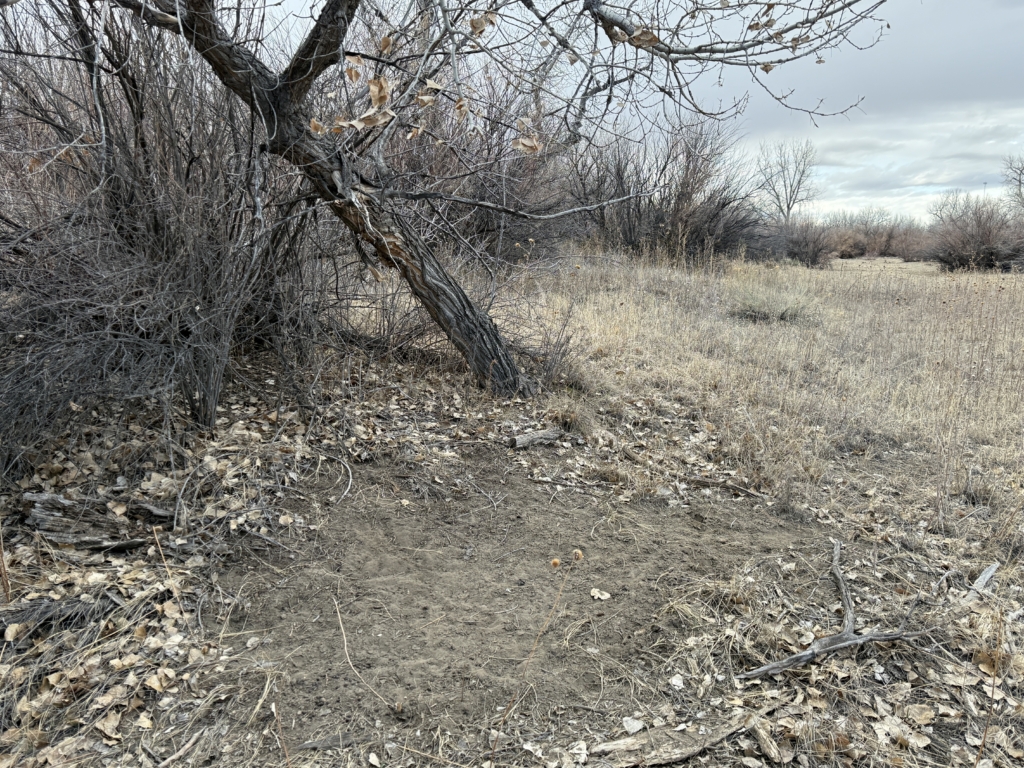
The scrape is on a small knob. A pair of trails intersect below it, and several large cottonwood branches showing years of limb abuse dangle over the scrape. Heavy bedding surrounds the scrape, and the two trails are major routes connecting prime bedding to food and water.
Whitetails create community scrapes on high points like knobs and hills due to changes in terrain. When a buck moves to a high point, his visibility increases, and he knows wind currents are stronger and often less stable. From an elevated position, bucks can cast their scent over a broader area and detect scent more easily.
Discovering this single scrape changed the game for me.
Putting What I Missed Into Practice
I was a fan of mock scrapes, but not a superfan. I made a few each year during September and October but have never seen great results. Mock scrapes were a very small part of my year-round whitetail plan. My 2024 community scrape discovery changed that.
I was a fan of mock scrapes, but not a superfan. I made a few each year during September and October but have never seen great results. Mock scrapes were a very small part of my year-round whitetail plan. My 2024 community scrape discovery changed that.
I’m a firm believer that keeping things as natural as possible helps hunters kill big deer. I wasn’t about to alter the gagger scrape in any way. In early May, as the dry Colorado ground began to sprout weeds and grasses, the scrape remained open. I could stand downwind from the scrape and still smell ammonia. The earth there is forever stained with urine, and piles of poop surround the bare, oval circle.
Rather than altering the scrape, I took what that scrape taught me and sought out another area.
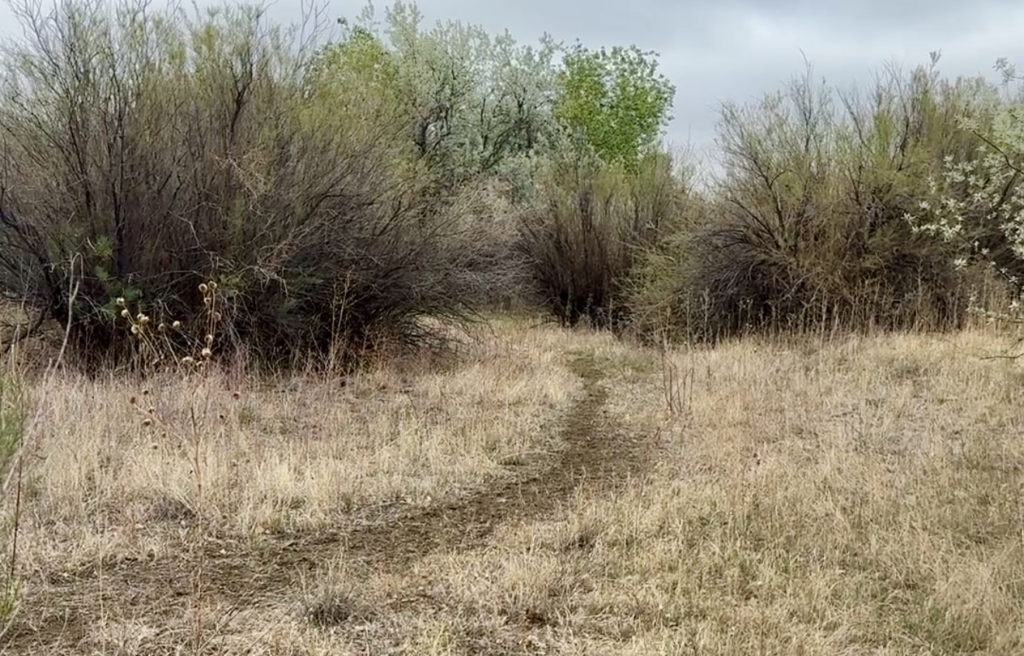
What was I looking for? A small knob, hill, or ridge with heavy travel near prime bedding. I found the perfect spot. The problem: There were few trees. There was plenty of heavy brush and a few small cottonwoods. Still, I had a plan.
Wildlife Research Center To The Rescue
I don’t blow smoke, and I don’t lie. I call a spade a spade. In a recent meeting with WRC, I told the company they make the best scent-elimination products on the market, but that I haven’t used their scents and lures enough to offer a valid opinion on their effectiveness. They encouraged me to change that.
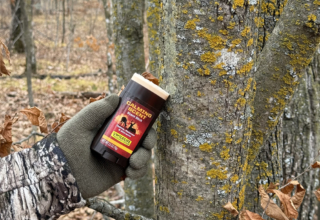
The first thing I did was attach WRC’s Active-Branch where I wanted my new scrape. It’s important to note that WRC’s Active Branch comes in the manufacturer’s Active-Branch Mock Scrape Kit. WRC also offers an Active-Branch Spray in aerosol and spray-bottle options. More to come on these.
The Active-Branch Mock Scrape Kit comes with a patent-pending branch holder. This holder can be screwed or strapped to a tree, post, etc., and lets you attach a pair of overhanging branches. This lets you place licking branches where you want them, experiment with different types of licking branches, and set them at the perfect height.
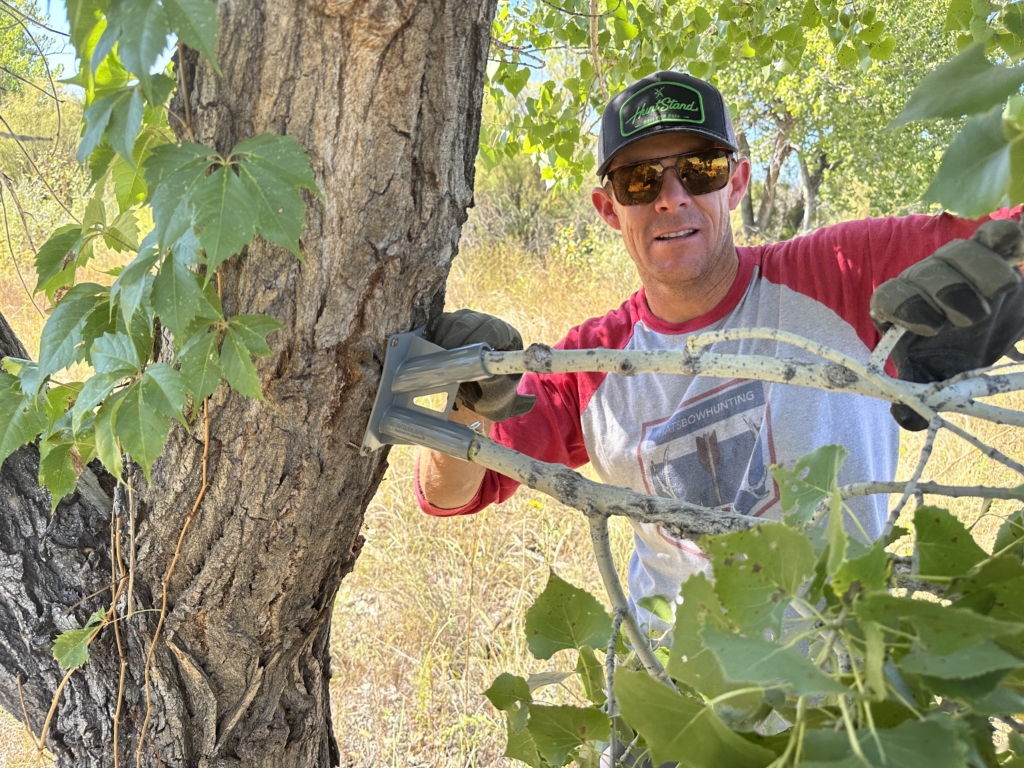
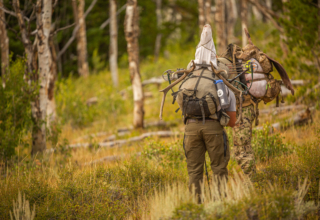
PRO TIP: My wife thinks I’m weird. I am, but that’s another story. There isn’t a single hardwood tree on my whitetail lease. I cut elm and hackberry branches from the trees in my yard and use them to create my licking branches. It’s amazing when you introduce a new tree species that deer aren’t used to. My deer come to these new branches like moths to a flame.
Finish It
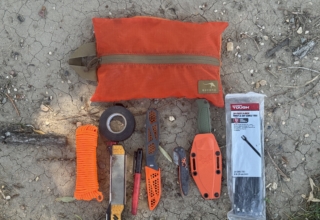
After attaching my overhanging branches, I add a WRC Golden Rope Scent Rope. The process is elementary. Attach the rope to the lower-lying branch using the included zip-tie. Be sure to look at your rope before attaching. Both ends of the rope have a golden sticker band. One band sits near the top of one end of the rope, and the other sits several inches below the opposite end. The end with more rope below the band allows you to unravel the rope to increase scent absorption and give deer multiple rope tails to sniff. This end of the rope should hang down.
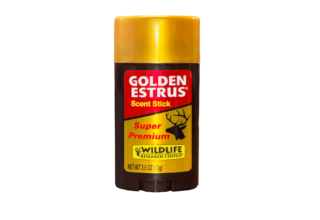
Next, I use a shovel to dig up and soften the ground under the overhanging branches. I add store-bought topsoil for added attraction. Deer are aromatic creatures, and the smell of fresh dirt is an attractant. Lastly, I soak the rope’s tails in WRC Trail’s End #307, then pour a little into the newly made scrape. Trail’s End #307 is a complex blend that is the best all-season scent I’ve discovered. Starting in October, I will saturate the rope with Golden Rope Scent Concentrate and spray the overhanging branches with Active-Branch Spray.
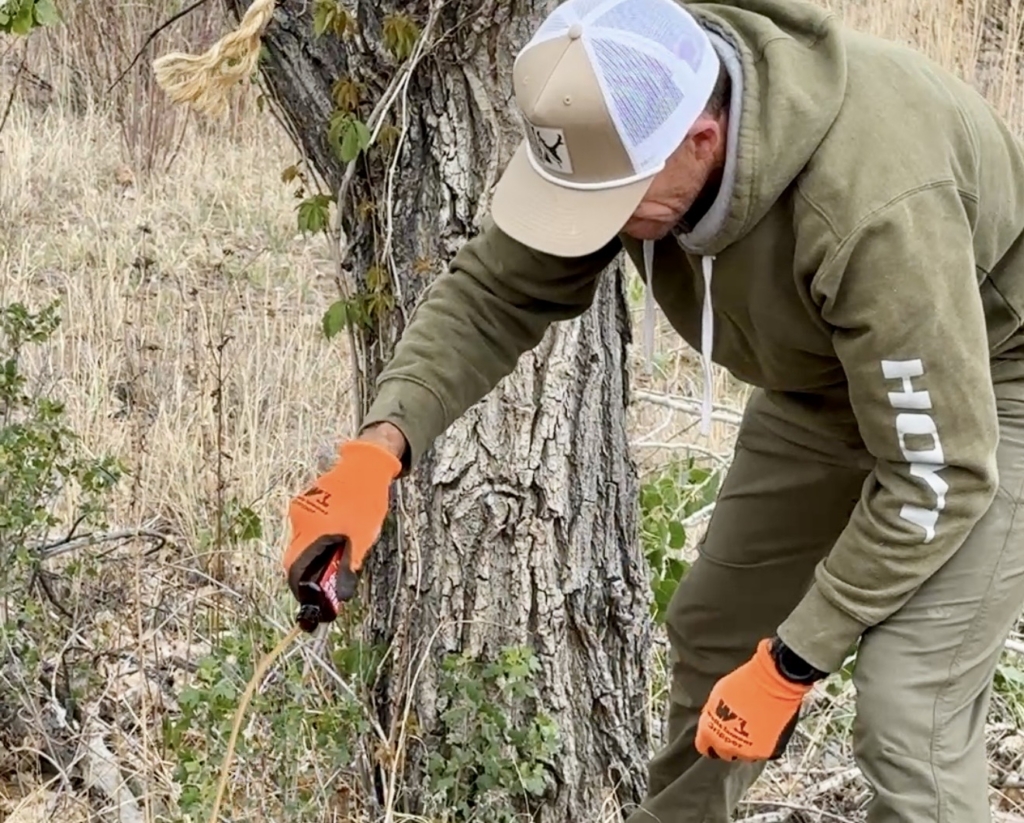
Set trail cameras to video mode to monitor how deer interact with your new summertime scrapes. I think you’ll be surprised by the results.
This spring, I’ve created four mock scrapes on my whitetail property. Two of the four are already getting daily attention. No, bucks aren’t actively scraping, nor should they be. However, bucks and does know where the scrapes are, smell the dirt, and sniff the branches. They spend time around my new signing areas. They urinate and defecate—not in the scrape but around it. I know these new scrapes will get HOT come October. Given their proximity to heavy bedding, daytime activity is likely.
Final Thoughts
In the world of whitetail hunting, the details can make all the difference. My journey has taught me that while big plots and heavy equipment are essential, sometimes it’s the small, strategic enhancements that yield the most significant results. The discovery of the community scrape transformed my understanding of deer behavior and led me to experiment with innovative techniques using Wildlife Research Center’s products. As I prepare for the upcoming season, I’m excited to see how these newly established mock scrapes will influence deer activity and, ultimately, my hunting success.