Whether you’re hunting black bears in the spring or the fall, food is key. Find the food, and you’ll find lots of bears.
by Scott Haugen
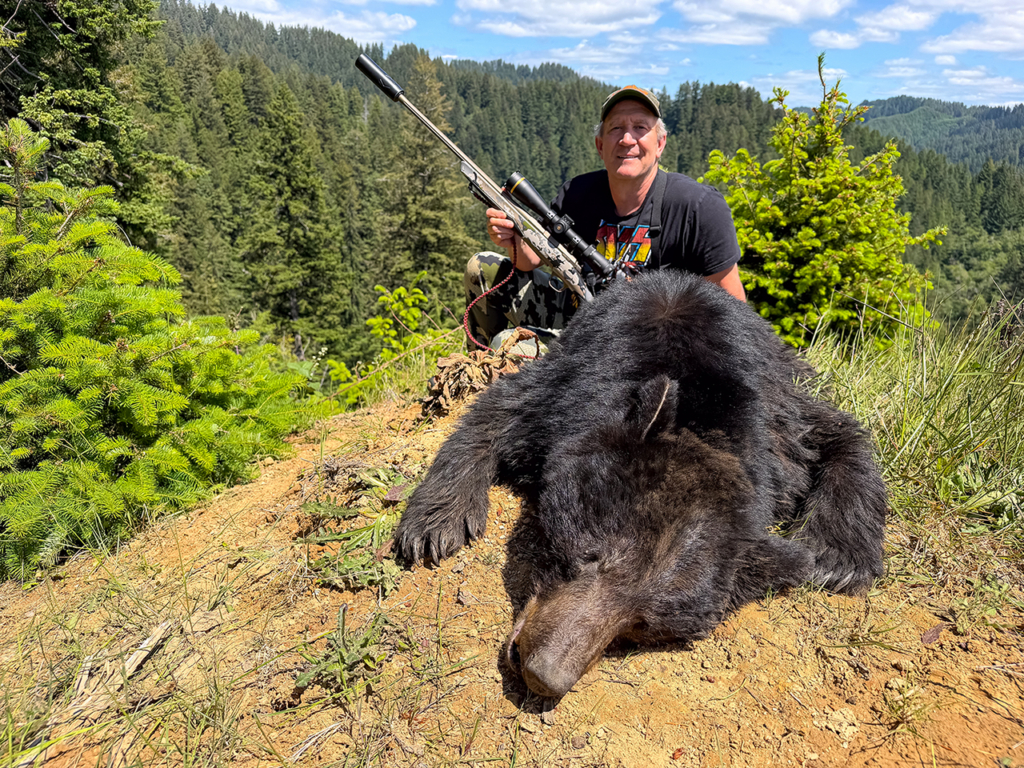
A final reading on the rangefinder confirmed the bear was 318 yards from where I sat. It hadn’t moved for 15 minutes. Through the rifle scope, I watched it gather mouthfuls of green grass as intensely.
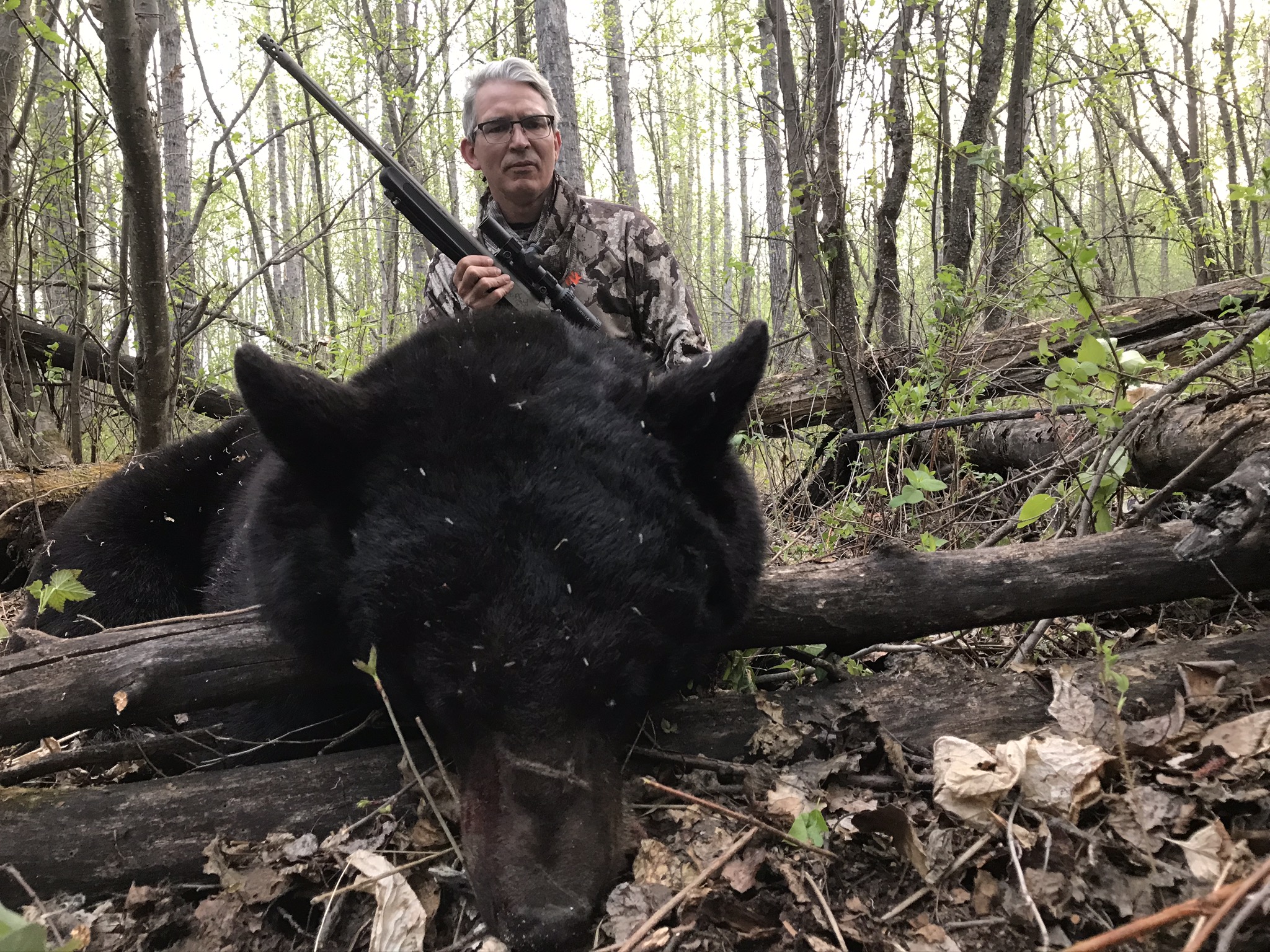
Rock solid in the tripod’s saddle, the report of the rifle surprised me, as usual. The sound of the bullet hitting the mark echoed across the draw. Working the bolt and finding the bear in the scope happened in reflex action. A follow-up shot wasn’t necessary. The bear lay dead three feet from where it was hit.
It was the final week of this past spring bear season, and it was the 23rd bear I’d seen in five days of hunting Oregon’s Coast Range. I watched the old bear graze for a long time. I was hoping the massive boar I’d caught a glimpse of earlier in the morning would emerge. He never did.
I’d caught the giant boar on a trail camera multiple times over the past three years. This was the first time I’d seen it. The image of the massive beast took my breath away. Stout, thick legs and a blocky head left no doubt what I was looking at. But the crosswind was too powerful and inconsistent to chance a 753-yard shot. I snuck to within 175 yards and commenced calling, but the bear wouldn’t emerge from the tall grass where I’d last seen it. Either it had moved too far away by the time I got set up, or it simply didn’t care. I’ve called in several bears over the years but have always struggled to pull them off a food source. If the big boar had a stomach full of grass, I figured it wouldn’t react to the call.
I was alone, and the packing job was going to be just over 50 yards; another reason I pulled the trigger on this bear. The joy of bear hunting ends the moment the breakdown begins. I waste no time getting the hide off a bear and the quarters and backstraps into coolers. The sooner the meat is cut, wrapped, and in the freezer, the better tasting it is. Due to their greasy fat, we don’t age bear meat like we do other big game. Bear meat is delicious, even that of old, big boars. My family eats lots of bear meat.
Spring Bear Hunting
The spring bear season runs 61 days in the unit I recently hunted. I shot the bear with two days left in the season. I waited to hunt until the end of May for three reasons. First, the bear rut would be commencing, and this is when big boars cover ground—upwards of 25 miles a day in search of sows in heat. Second, Roosevelt elk would be calving, and bears thrive on killing calves and eating the placenta. Third, the green grass would be lush, and the bears would be hungry.
Only one of the three scenarios played out. I saw seven mature boars, and none were acting rutty. One beast of a boar was with a sow for only a few minutes. When it learned she wasn’t in heat, the big boar melted into the forest. I’m still kicking myself for not shooting that bear, as it was the biggest, I saw during the hunt, and one of the top-10 biggest I’ve ever put my eyes on. It was also the first bear I laid eyes on that trip. I passed it up as I knew there were three bigger ones in the area. I just failed to find them.
In addition to a lack of bear rutting activity, elk calves were late hitting the ground—two to three weeks behind what they were 30 years ago. I was seeing over 100 head of elk every day, yet not one calf.
For years, many archery hunters who spend much of September in the woods have claimed that the elk rut is increasingly delayed across the West due to intense heat. Based on a cow elk’s approximate 245-day gestation period and the timing of calf births this past spring, I calculate that most of the elk breeding took place during the final days of September through October 12th. That’s a big shift. I used to think photoperiodism governed the elk rut. The scientist in me still wants to believe it, but personal observation of breeding elk and calves being born negates prior conclusions. From now on, I doubt I’ll wait until the end of May to target spring bears with the hopes of finding them preying on elk calves.
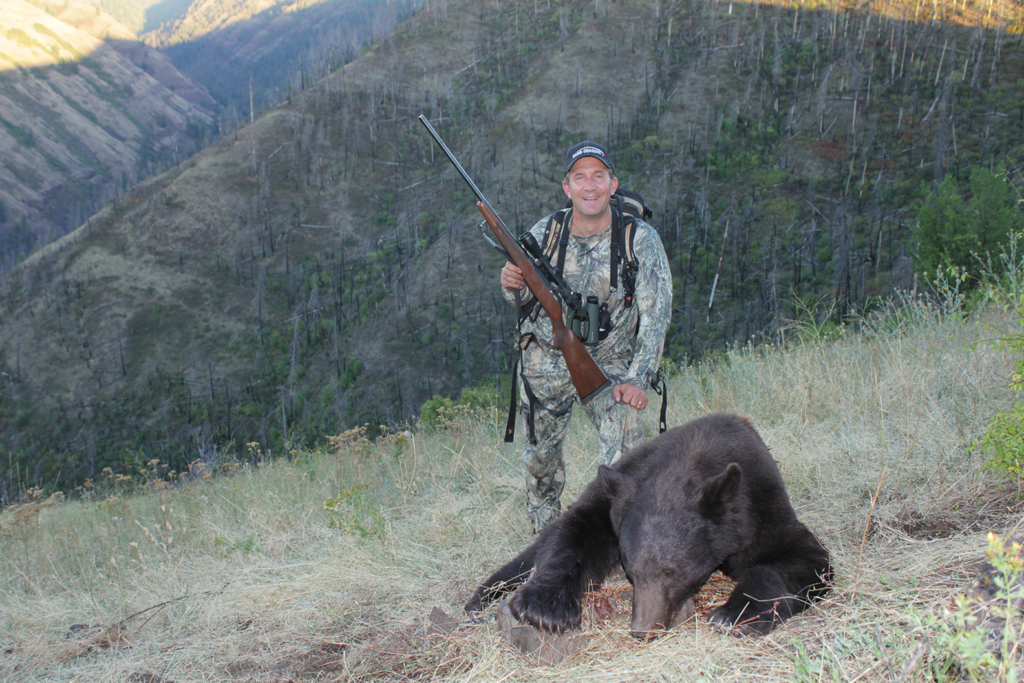
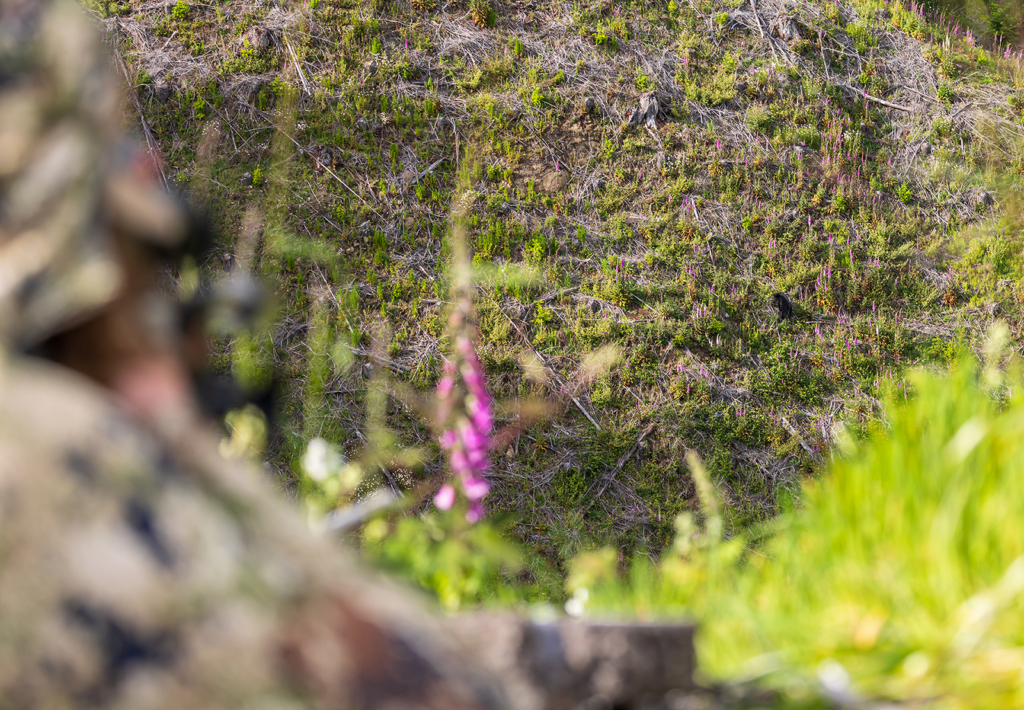
My spring bear hunting efforts focused on food, specifically, green grass. The challenge was that the grass was taller than anticipated. I like hunting south-facing, rocky slopes where spring runoff is high. This is where green-up first occurs, and where bulbs and tubers thrive underground. However, being so late in the season, the grass was five feet tall in some places. I’d often only see the horizontal back of a grazing bear or simply grass moving. Tediously glassing through binoculars and a spotting scope is a necessity this late in the season.
In spring, bears amass the weight lost during their winter nap. Grasses, clover, roots, tubers, and bulbs are their primary foods. That’s where hunters should focus their efforts.
Fall Bear Hunting
I’ll be bear hunting the same area for fall bears. The season opens August 1. Last season, I passed up 21 bears in 12 days, though I didn’t start hunting them until late September.
Bears in late summer and early fall have one thing on their mind: To gain as much weight as possible for the upcoming winter. Fall bears are on their feet a lot because they spend so much time eating. Spring food sources have dried up, shifting fall bears’ focus to berries and mast crops. They’ll prey on calf elk, fawns, and small game, too. Calling bears can be effective this time of year.
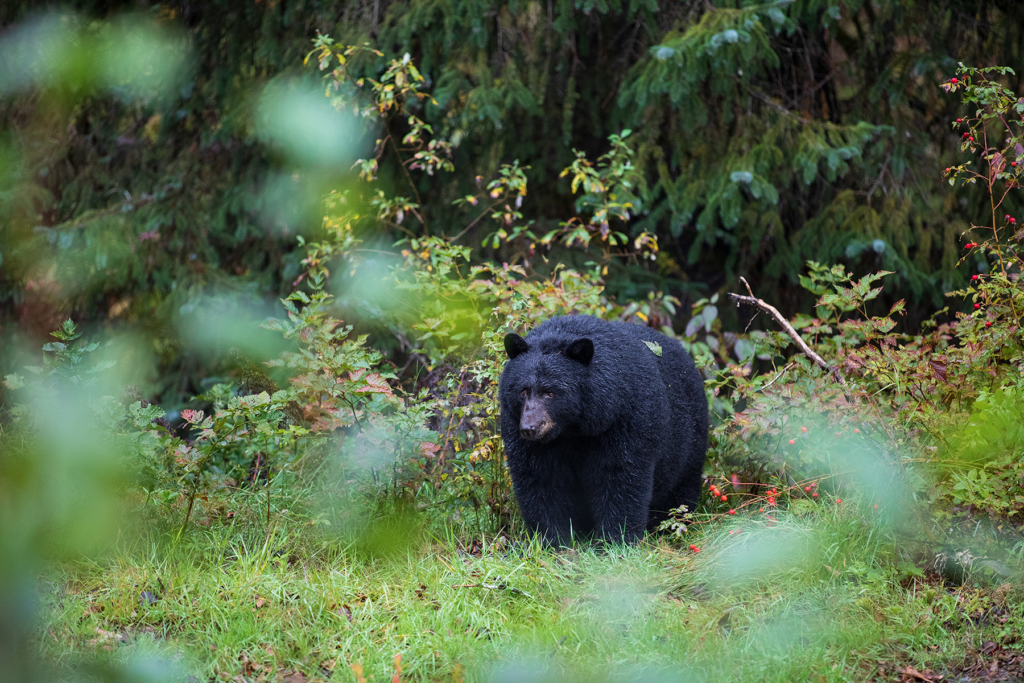
Blackberries are a favorite food of bears where I hunt. Before berries are fully ripe, bears have tunnels carved into the massive tangles of thorny, blackberry patches. They’ll eat the berries when they begin transitioning from red to black. The berries are too sour for our liking, but bears love them. They’ll also eat the soft, green, new shoots of blackberries. Bears will often spend an entire day in blackberries, eating and sleeping.
Elderberries, cascara berries, huckleberries, wild blueberries, and more become key to a bear’s fall diet. Bears will travel miles to gorge themselves on acorns, nuts, and wild fruits.
Dedicated scouting and hunting as much as possible will reveal a lot about bears in your area. I’ve been hunting bears in some locations for over 30 years. Why? The food is there, and the bears know it. If they don’t know it, they find it. Bears are nowhere near these areas for the remainder of the year, but come late August and September, bears show up, sometimes in surprising numbers. Find what bears like to eat in the fall, and the chance of filling a tag greatly increases.
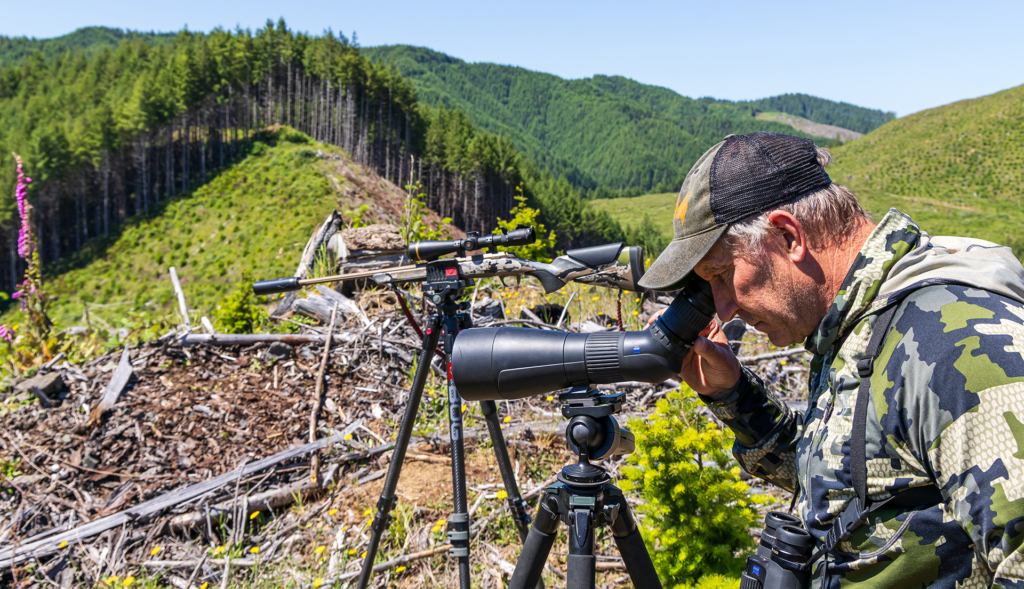
No matter the season, you can never go wrong when it comes to targeting food sources for bears. While the timing of the black bear rut may vary, and the birthing of deer and elk may be delayed, one thing’s for certain: bears must eat.
Bear Hunting Gear
Hit through both lungs, bears are easy to kill. I’ve shot them with a range of calibers, from .260 to .375, and plenty with a bow, even a crossbow. Pick a caliber you can shoot accurately and with confidence.
Of all the big game camps I’ve been in over the decades, black bears are the most often missed and crippled. Eliminate the challenge of trying to place a black reticle on a black hide by using a scope with an illuminated reticle. Select a powerful scope to place the shot with precision. Leupold’s Customized Dial System (CDS) is a wise choice. I use a Leupold VX-6HD Gen 2 fitted with a CDS-SZL2 Elevation dial set for a specific load. The red FireDot is a valuable part of this scope.
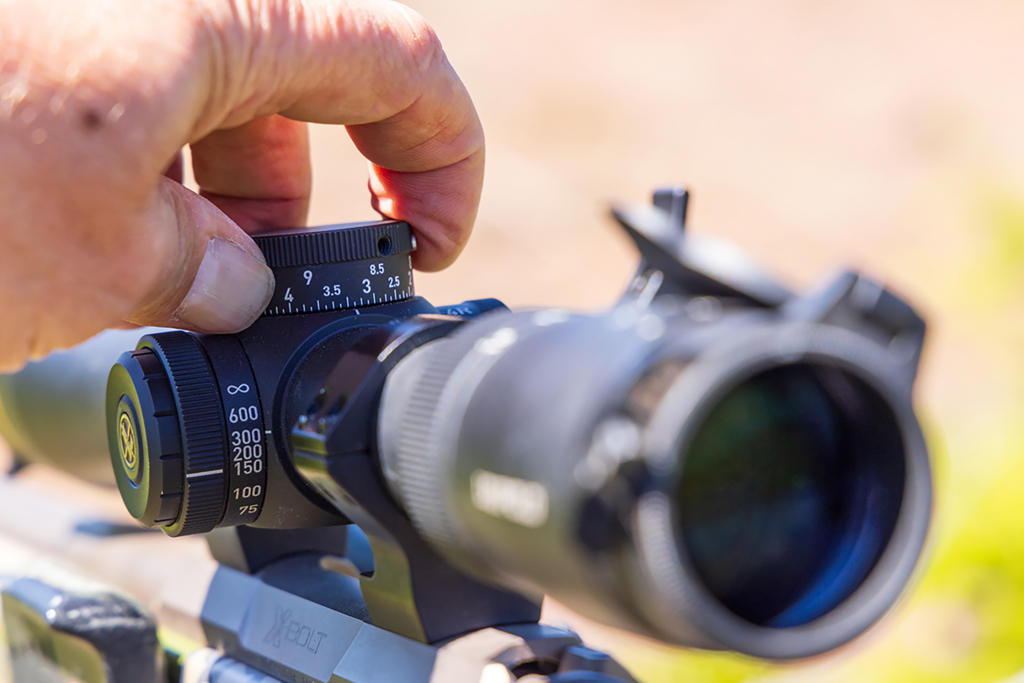
The more I shoot Browning’s X-Bolt 2 Speed rifle in a 6.8 Western, the more I like its accuracy and lethal performance. It’s what I shot my recent spring bear with. One of the most efficient loads I’ve shot is Browning’s Long Range Pro Hunter 175-grain Sierra Tipped Gameking. The bullet has accounted for a range of big-game animals. Come fall, I’ll be using this gun-and-scope setup on bear, deer, and even moose in Alaska.
Bear hunting finds me glassing upwards of 10 hours a day. The Zeiss SFL 12×50binoculars and Conquest Gavia 85mmspotting scope are a great combination. Clear, crisp quality from edge to edge, and no headache or eye fatigue, these optics are worth every penny.