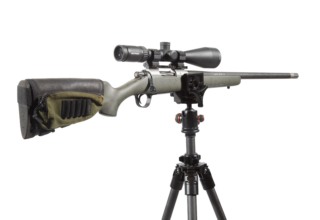
A compact, lightweight spotting scope that heeds the roam-where-you-want hunting creed, Zeiss’ Conquest Apia 20-50×65 is an optical Cadillac.
by Jace Bauserman
I live by the creed: Have tag, will travel. For me, it doesn’t matter what species of big game I’m hunting or where I’m hunting it. I just want adventure; to see new country and put my hunting skills to the test.
Early in my outdoor career, 90 percent of my hunting adventures took place in far-flung western locales. The steeper and rougher the terrain, the better. Backpack weight was always a concern. Still, no matter how far I roamed or how much weight it added, I always toted a quality tripod and a top-end spotting scope.
A spotting scope is an invaluable tool.
Why?
What Is The Purpose Of A Spotting Scope?
Too many hunters think the primary purpose of a spotting scope is to examine the headgear of male animals, and while this is one of the big advantages to having a spotter, it’s far from the only advantage.
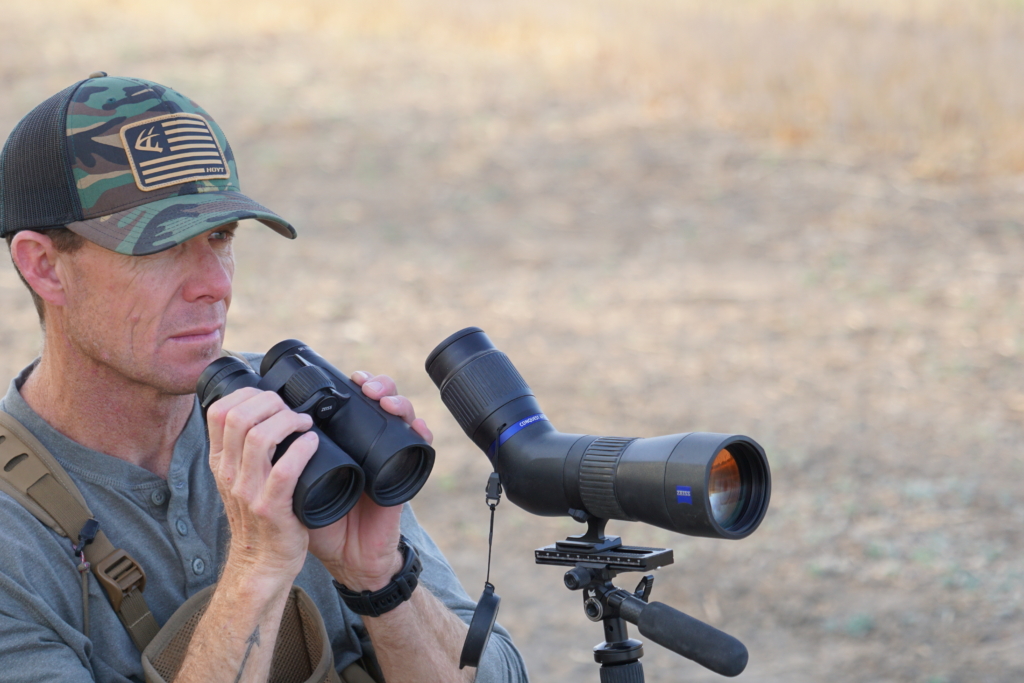
Here’s my system. I’m currently using Zeiss’ Victory SFL 10×50 binos. They are one of the very best binoculars I have ever used. The 10-power magnification is remarkable, and the 50mm front lenses gather maximum light to enhance low-light viewing. The binocular bridge design allows access to the Zeiss-branded cover that sits in front of the focusing wheel between the bridge. The cover is threaded, and removal lets you attach the SFL 10×50 binos to an adapter, which allows you to attach the adapter to a tripod. The binos also provide remarkably balanced offhand glassing. I love the rubber coating and semi-flat sides with defined ridges.
When you’re glassing with a pair of binos that deliver the highest level of detail and reproduce colors with natural fidelity, you find more animals. When those same binoculars are attached to a tripod that eliminates shake and allow you, the user, to pan smoothly over an area, you find even more game. I always begin my glassing sesions with my binos mounted on a tripod.
Where a spotting scope comes in handy is when you think you spy a horn tip, tuft of hair, etc., but need absolute confirmation. A spotting scope provides confirmation by offering increased magnification. For me, this is the main purpose of toting a spotting scope. I can’t tell you how many times a spotting scope has revealed what I thought was a stick to be the antler of a BIG buck or bull. I also can’t tell you how many miles and how much aggravation a spotting scope has saved me. If all you have are binoculars, and you’re certain what you’re looking at is the frame of a big buck, you’re making the stalk. In my BSS years (Before Spotting Scope), I stalked a lot of branches, twigs, and other things.
The Spotting Scope Conundrum
Spotting scopes are big and heavy. Most don’t fit well in side-mounted backpack pockets, and if you store them in your pack’s main compartment, the scope always seems to shift, eventually poking your back and causing discomfort. Weight is another concern. The spotting scope I’ve used for the past four seasons weighs 4.238 pounds. Add the mounting base and my 2.125-pound carbon tripod, and I’m toting more weight in glassing gear than my sleep system.
The Answer To The Spotting Scope Conundrum
I’m a Zeiss fan. I spent three days in Tulsa, Oklahoma, with a group of outdoor writers and personalities, along with members of Team Zeiss. Director of Marketing Kyle Brown brought so much energy and passion; it made me love their products even more.
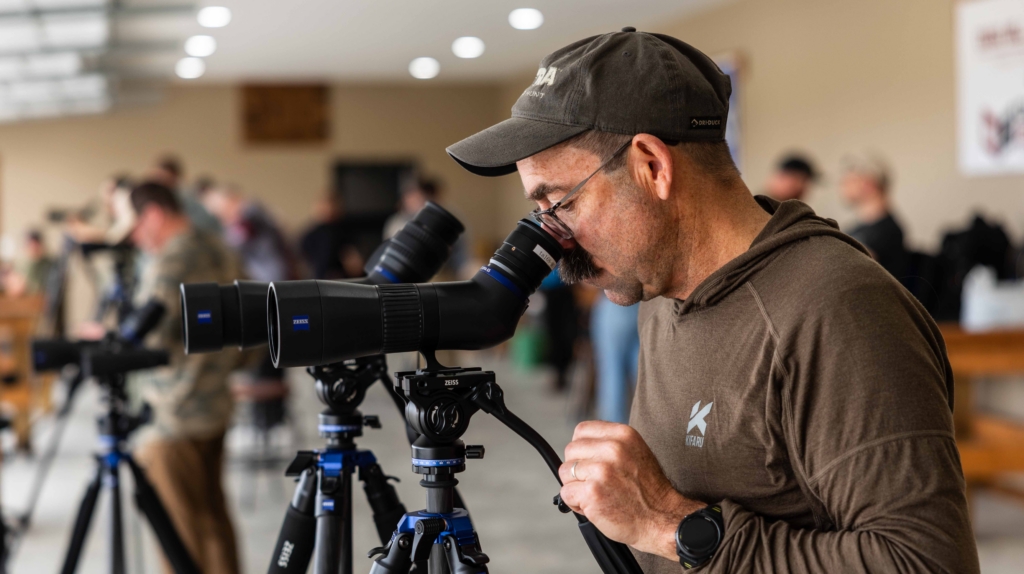
One of the products I got to test and take home was the manufacturer’s new-for-2026 Conquest Apia 20-50×65 Compact Spotting Scope. Zeiss’ tagline with the new spotter: Carry less. See more. This is spot-on accurate. The spotter measures 11.7 inches long and weighs 2.975 pounds. It fits perfectly into the side pocket of my Kifaru Mag 44, and I’m able to lash my tripod to the pocket’s outer. Zeiss created this short, lightweight spotter for backcountry hunters looking for solid magnification, excellent light transmission, and one that will stand up to Mother Nature’s worst moods.
The Zeiss Conquest Apia 20-50×65
Summer big-game scouting missions are a way out. Still, I’ve found so many uses for my Conquest Apia 20-50×65 Compact Spotting Scope, and you will too. This spotter is a perfect in-the-truck or UTV spotter that will serve your turkey, bear, and spring/summer whitetail scouting needs extremely well. It provides ultra-bright and clear images with up to 87 percent light transmission. Zeiss has always made light transmission a high priority, and the Apia 20-50×65 heeds the light-gathering call.
The robust rubber armoring protects the internal optics, and I love that the focusing wheel and magnification wheel are oversized, easy to grip, and feature cut grooves to ensure positive finger contact. This spotting scope was built with the hunter in mind. Both wheels turn like butter but have zero slop, and the 20-50X magnification settings are clearly marked on the eyepiece.
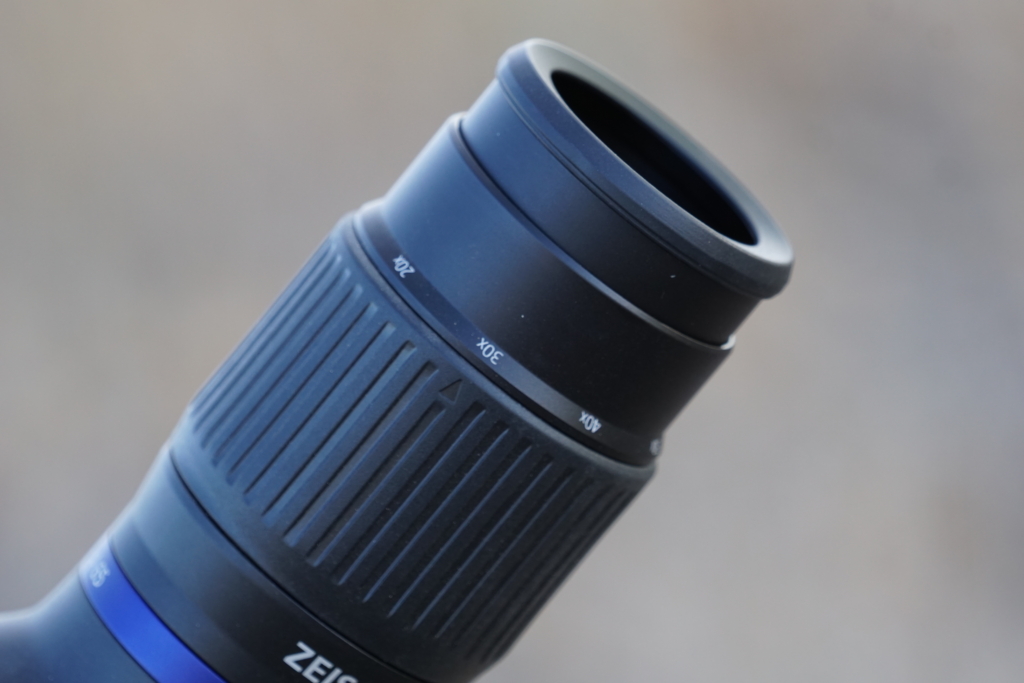
Eye-piece removal is easy. A vertical lever mounted below the eyepiece on the backside of the scope body lets you release and reattach the eyepiece. Zeiss includes a rubbery squeeze-and-situate front lens protector, and the eye-piece lens is protected by an attached-to-the-scope lens guard.
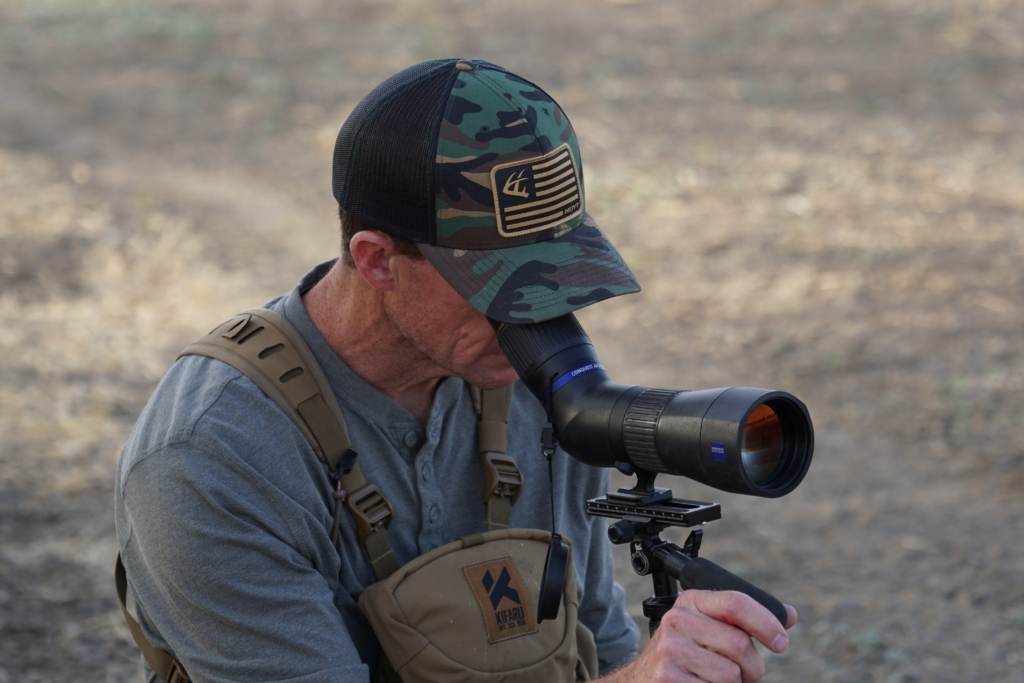
The spotter rotates left or right between 45 and 90 degrees. A twist-turn knob on the rotating collar makes rotations smooth and easy. The Arca-Swiss-compatible mount with a slim profile ensures a robust attachment to any tripod.
Zeiss Conquest Apia 20-50×65 Specifications
- Light Transmission: 87 percent
- Magnification: 20-50X
- Lens Diameter: 65mm
- Field of View at 1,000 m (yds): 48 – 27 m (144 – 81 ft)
- Length: 299 mm (11.7″)
- Weight: 1,350 g (47.6 oz)
Zeiss Conquest Apia 20-50×65 Field Test
I’m a bit of a turkey nut. A big reason for my consistent success on longbeards over the years is scouting and observing bird behavior from a distance. I’ve used the Conquest Apia 20-50×65 Spotting Scope for two months and am overly impressed with it. From its low-light superiority to its ease of handling, Zeiss won’t be getting this spotting scope back from me anytime soon. Instead, they will be getting a check. Two months with the long-eye-relief spotter, which provides remarkable viewing through its premium optics and HD concept, has made it a permanent member of my hunting gear arsenal.
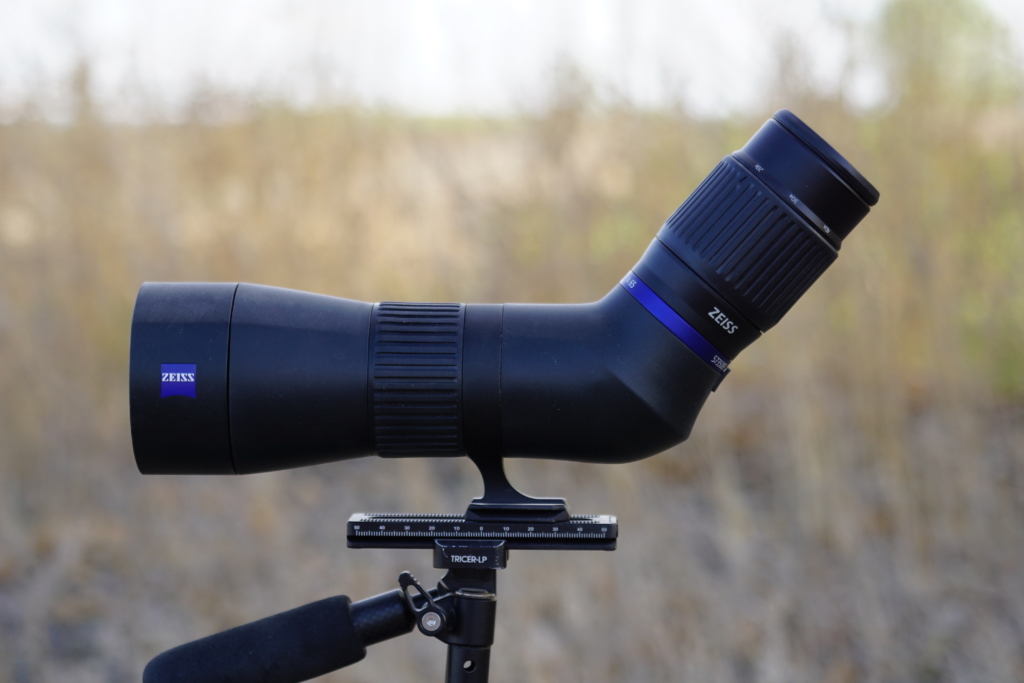
I’ve even used the spotter offhand and balanced against the tailgate of my truck. It balances remarkably well and enhances the viewing experience. Concerning durability, I treat it like I do all my hunt gear: hard. The spotter has ridden in backpacks and bounced around inside my truck. It shows zero signs of wear and tear. I absolutely love the rubber armor coating. The twist-out eyepiece lets you further customize your viewing experience, and when magnified to 50X, this spotter, thanks to its premium-grade optics, delivers no-grain, ultra-clear magnification you must see to believe.
Spotting Scope FAQs
Do I need a spotting scope if I only hunt turkey and whitetail?
Yes. Watching animals and how those animals interact with each other, and their environment will help you fill more tags. The best way to do this is to use a long-distance, hands-on approach. A spotting scope is perfect for this.
How much does a spotting scope cost?
Price depends on the quality of the spotting scope. Most top-end spotting scopes are $2K or more. Zeiss’ Conquest Apia 20-50×65 checks all the boxes and retails for $1,499.99.
What is the best spotting scope for the money?
There are some ultra-cheap spotting scopes on the market. However, cheap equals poor color fidelity, terrible eye relief, and grainy images. In the world of optics, you get what you pay for. A top-end spotting scope will run you between $1,200 and $3,800.
Final Thoughts
The Zeiss Conquest Apia 20-50×65 Compact Spotting Scope delivers exceptional optics, durable construction, and versatile performance. Its sharp, high-contrast images and smooth zoom make distant details easy to resolve, while the rugged, weather-resistant body withstands field conditions. The spotting scope is priced right, and the scope’s reliability, comfortable ergonomics, and strong low-light capability justify the investment for serious users.
Lightweight for its class and pairing well with tripods and accessories, it balances portability and optical power. For anyone seeking a compact, high-performance spotting scope that consistently produces clear, precise views across varied environments, the Zeiss Conquest Apia 20-50×65 Compact Spotting Scope is a top-tier choice.