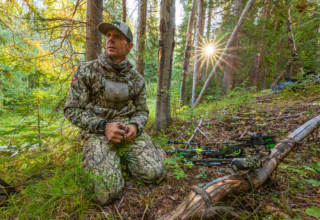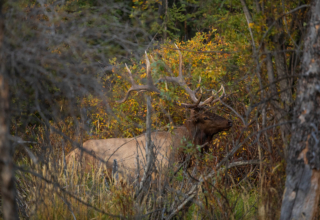
With four decades of turkey hunting under his belt, Scott Haugen has learned a lot, which tells him he still has much to learn.
by Scott Haugen.
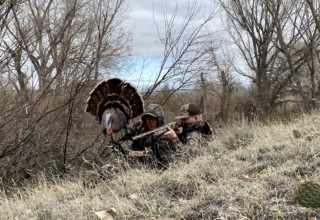
A long hike found my buddy, Austin Moser, and me atop a sagebrush-studded knoll. Quietly, we erected a pop-up blind. Anticipation was high as we waited. When the turkey roost came alive, the effort it took to reach this spot confirmed our move.
The first tree yelps I let out on a diaphragm call ignited even more toms. Over the next 20 minutes, thundering gobbles bounced off canyon walls. It was the most Merriam gobblers I’d ever encountered at once.
Unlike many turkey hunts I’ve had over the years, when birds began hitting the ground, they kept gobbling. For 45 minutes, there was never a moment of silence. A bachelor group sounded off below us, but they were slow to approach. I figured they had a hen or two. From behind, two toms came in slowly, gobbling their way through sagebrush. And from the big timber to our right, what appeared to be a lone tom closed in.
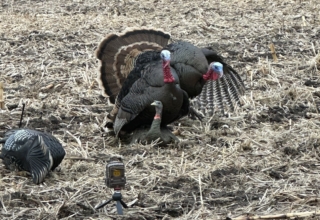
When five full fans approached from below the decoys, my heart raced. Backlit by a rising sun, it was a stunning sight. A big tom abruptly mounted our Final Approach Live Laydown Hen decoy. Two others proceeded to beat up on the Live Flocked Back Jake decoy. On the count of three, Moser and I shot. Two birds flopped in the decoys. The others attacked, as did the three toms on the outskirts.
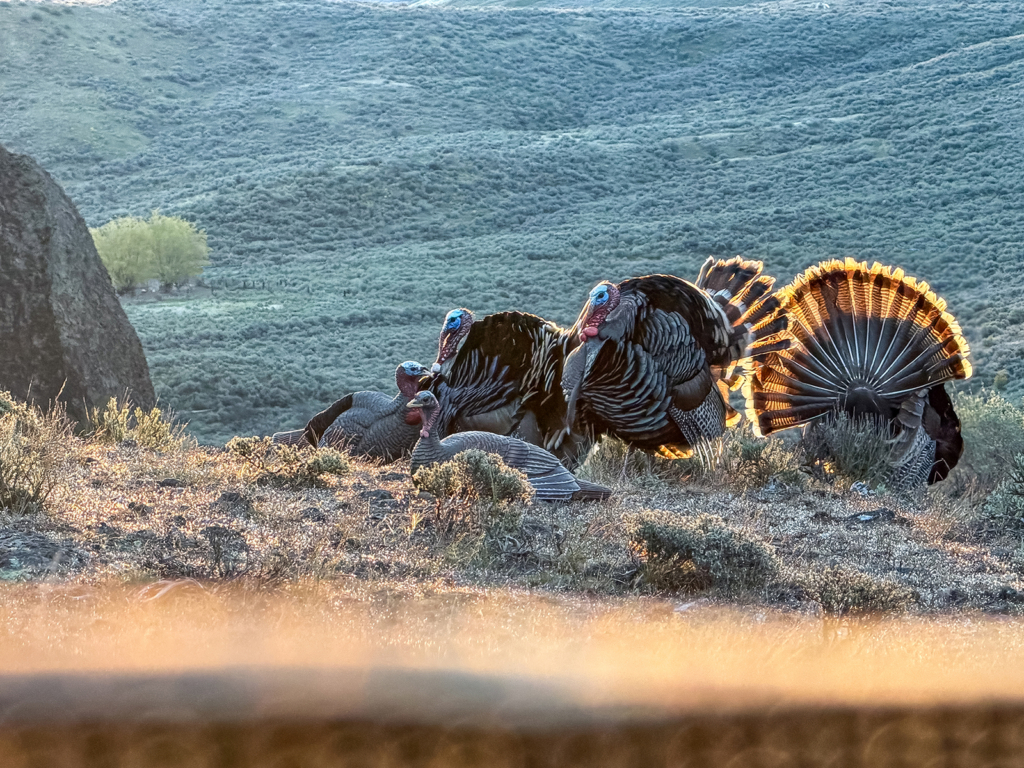
It was our third-year chasing turkeys in the big box canyon, but the first time we were in what we considered to be a good position. Our other failed attempts found us getting toms to answer when we called from the rimrock, but we could never get a bird to move up toward us. We vowed to get up early and hike in from the bottom. It was a lot of effort for a turkey, but it culminated in one of the best turkey hunting moments of my life. It also marked 40 years, almost to the day, when I called in and killed my first turkey. The morning was a special one.
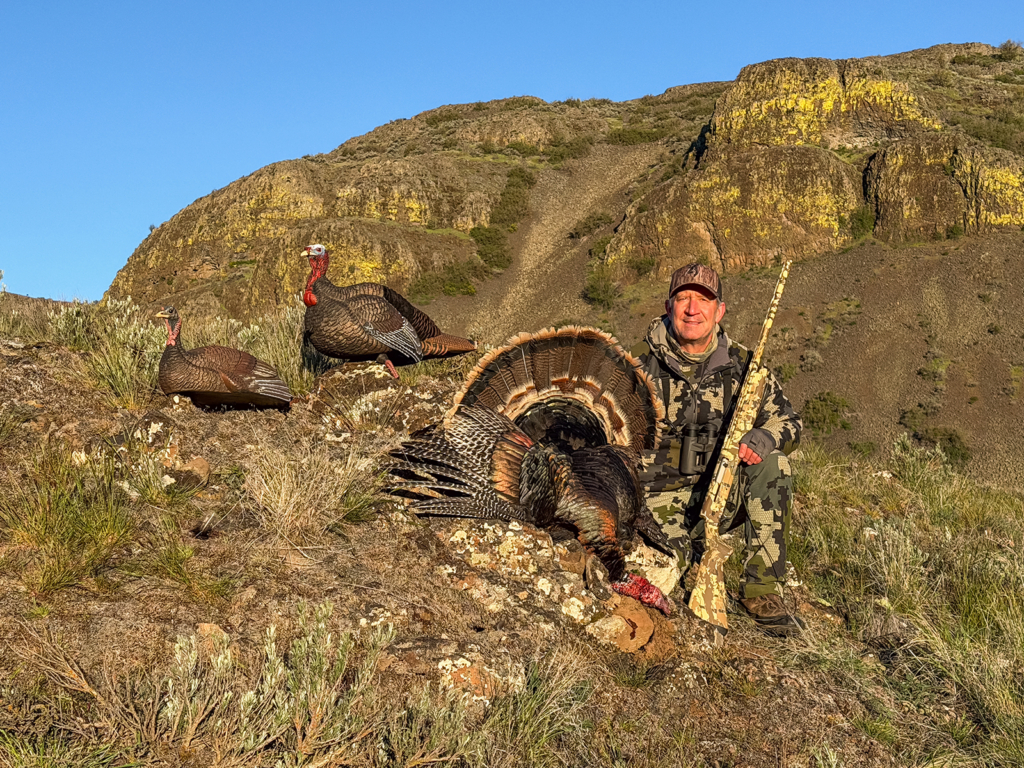
No matter what we hunt, even turkeys, rarely is there a substitute for hard work. That’s just one of the many things I’ve learned over four decades of turkey hunting.
Perhaps the most important lesson I’ve learned is that if you truly want to take your knowledge of turkeys and turkey hunting to another level, there’s no way to do it other than spending time afield. Last year, I underwent an emergency back surgery three weeks before turkey season. The surgeon said I’d be down for four to five months. Turkey hunting wasn’t an option. I took it easy and listened to her.
With a few weeks left in the season, I went in for a check-up. The assistant I met with was a turkey hunter.
“So, you’re telling me if someone sets up a blind for me, carries my .410 and places it in a vice-grip shooting rest so I don’t have to lift it, then packs out my bird and all my gear, I can maybe hunt turkeys this spring?” I asked. The surgeon’s assistant told me that if I didn’t lift anything over five pounds or bend over, it could be done.
With the help of my buddy, Austin Crowson, I shot two turkeys. The final bird came at the end of the season. My wife, Tiffany, packed a pop-up blind into the woods for me, set it up, along with my .410 and a chair. She picked me up two hours later, packed out all my gear, and even cleaned the big tom I called in. I’d been after that bird for two years.
In total, I had less than two hours of hunting time last season. I shot the first toms that came into each set. Given my back situation and the pre-season scouting time I’d invested, the hunts were gratifying. But my time afield was limited. Other than what I’d learned from scouting and trail cameras, I didn’t come away with much more knowledge than what I began the season with. This season has been different.
With a new lease on life due to a back that’s in the best shape it’s been in for decades, I’ve spent a lot of time in the turkey woods this spring. I’ve been to three states, have hunted many days, called in over 100 jakes and two-year-old birds, and more than 30 toms. Simply being out, hearing toms, watching birds, and not being in a rush to punch tags have made this spring one of my most memorable turkey seasons ever. And what I’m observing and learning is surprising.
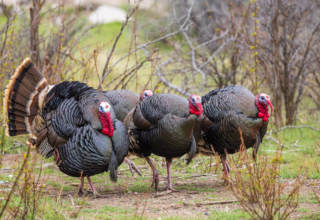
Never have I seen so many jakes beat up and run off toms, thereby impeding the breeding process. Never have I seen so much grass seed so early in the season, nor such a high number of toms more intent on feeding than courting hens. I’ve never called in so many jakes and had toms approaching, only to run away at the sight of so many jakes surrounding a decoy. By the end of the season, I’ll have spent more than 100 hours hunting turkeys, a far cry from last season. There’s no substitute for acquiring experiential knowledge.
Vary Calling Pitch & Tone
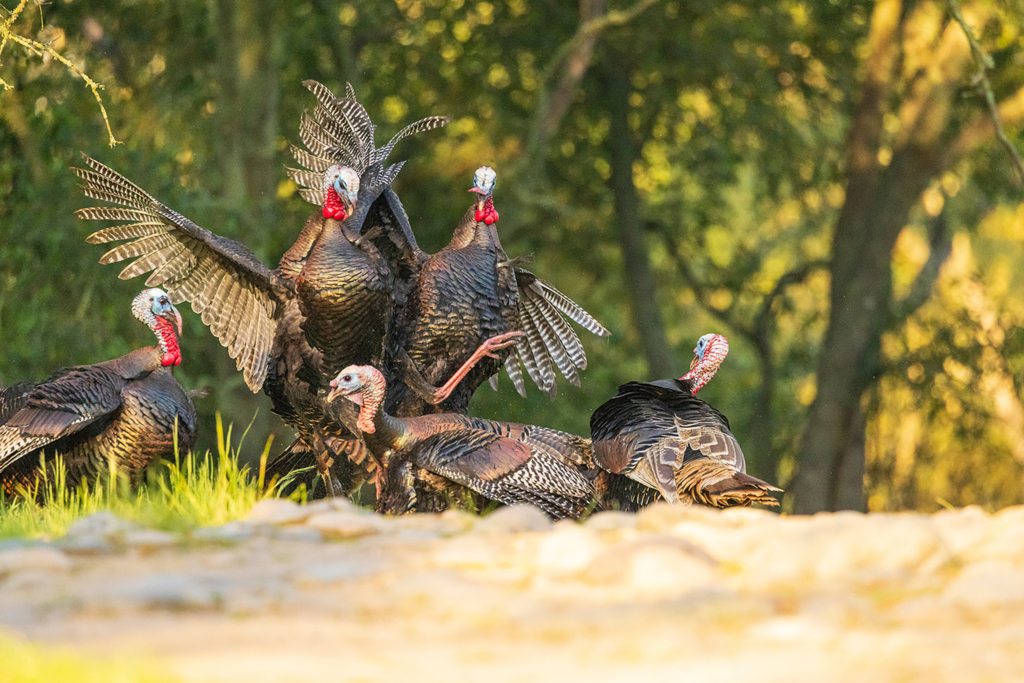
Turkey populations are booming in many places I hunt. Competition among jakes and toms revealed many behaviors. Jakes often can’t reach my calls fast enough. Jakes will readily leave the decoys as soon as a tom approaches. The jake groups will chase the tom down and pummel it, 100 yards or more from the decoys. Toms are reluctant to leave hens, as per usual. But working some of these toms, often for hours, has resulted in them eventually coming in, be it apprehensively. Having a range of calls to find tones boy birds like is the key.
My go-to calls are a box, three pot calls, all with different surfaces and four strikers. I also carry more than a dozen diaphragms. The most productive combination to bring in wary toms this season has been a trusty box call, Slayer’s Wingers Batwing Kit, and their slate pot call. These diaphragms offer a range of sounds, and that’s key to getting toms fired up and moving.
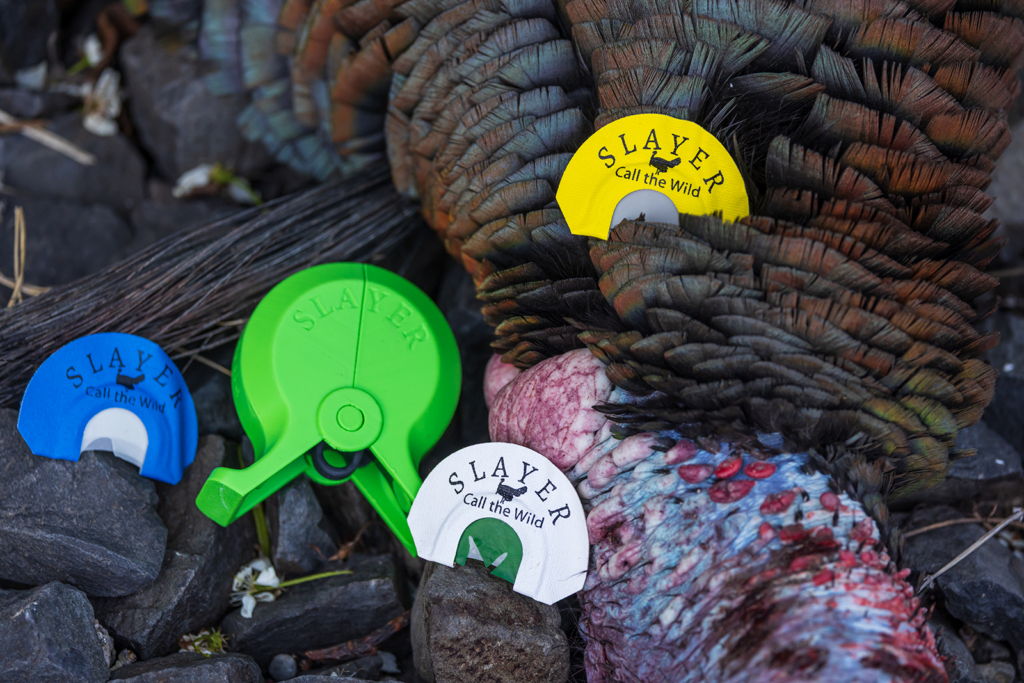
Capitalizing on flock frenzies has worked great this season, given the dynamics of toms and jakes and the high hen ratios. When jakes go crazy, either fighting amongst themselves or attacking a tom, and when hens unleash fury on my homemade stuffer hen decoy, the range of sounds they make usually ignites toms within earshot. The calls I use allow me to create a range of sounds with varying pitches and volumes. This further adds to the frenzy, often bringing in reluctant, wise toms.
Stay Mobile For Longbeards
Being mobile has also been an important part of this season’s success. I’ve moved more this spring than usual. Relocating ahead of toms as they follow a hen through the timber or climbing to reach the same elevation as the mountain birds, pays off. It’s not that toms are lazy, it’s just that they’re often with hens, or on their established strutting grounds from which they won’t budge. Moving to these toms rather than continually calling them often yields favorable results. It’s sometimes easier to convince a tom to move 50 yards than it is 400 yards.
Use Lead Loads For Turkeys
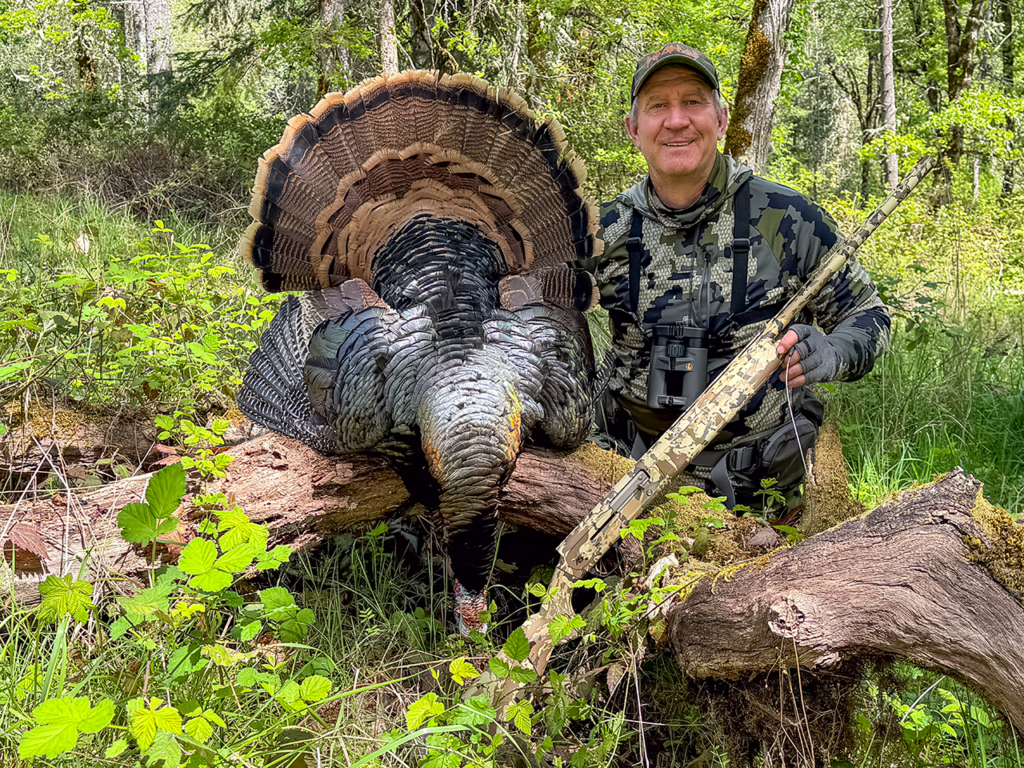
Much of the talk in the turkey world this season has centered on the disappearance of Bismuth and the exorbitant cost of TSS. When I started hunting turkeys in 1986, I loaded my own lead shells, just as I’d been doing for years for waterfowl and upland birds. I shot my first turkey with my favorite shotgun, the same one I used for ducks, geese, quail, grouse, crows, and all other birds. I know how the loads performed.
Lead still kills, and the fact that turkey hunters are scrambling to pay more than $20 for a single TSS load perplexes me. Four seasons ago, I found an old box of lead #6 shot that had been sitting in the back of a safe since the early 1980s. There are two of the 2 3/4-inch shotshells left. I’ve killed turkeys with all but three of the box of 25. Those three shells were used in patterning the three 20-gauge shotguns I used to hunt turkeys with. When done, I will have killed 22 turkeys with that box of lead shells. Each shell cost me .33 cents.
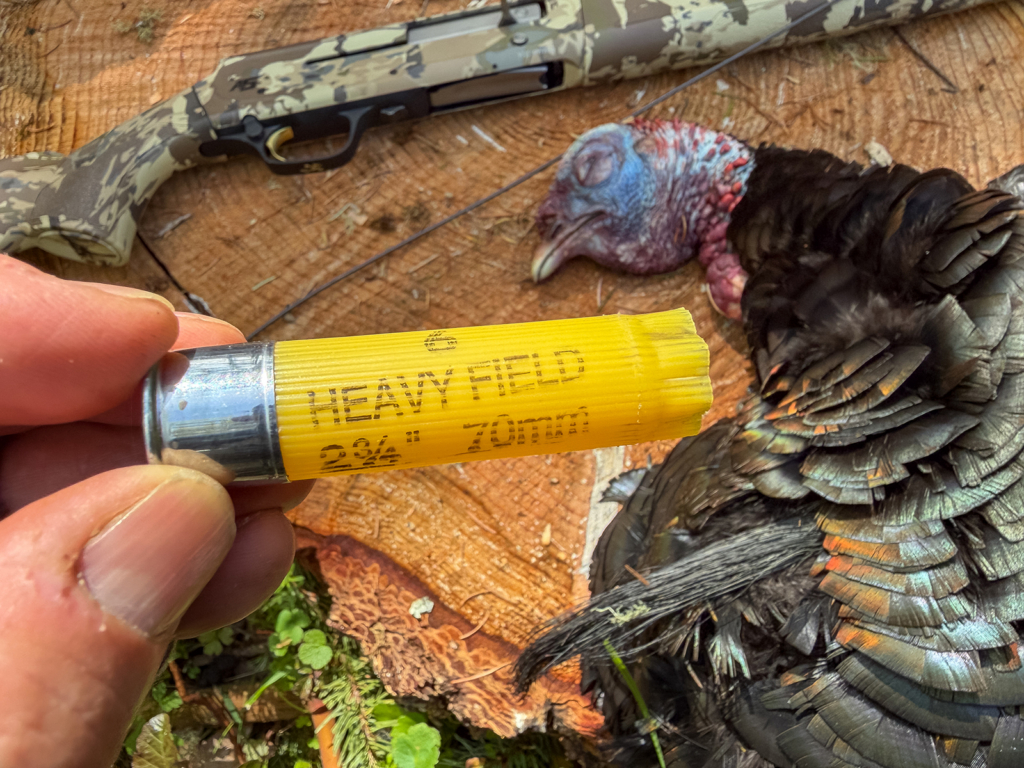
I know this load kills with efficiency out to 32 yards, so that’s my effective range. If in doubt about the distance, I don’t shoot. The art and gratification of turkey hunting are found in calling them in close. Do this with consistency, and you can kill every bird with lead loads. I’ve shot a number using .410 lead loads. It’s not rocket science; it’s dedicated hunting, honing skills, and being patient. Blasting toms at 70 yards with 3-1/2-inch TSS loads isn’t for me. The more turkey encounters we have, the better hunters we’ll be.
Set Trail Cameras To Video Mode
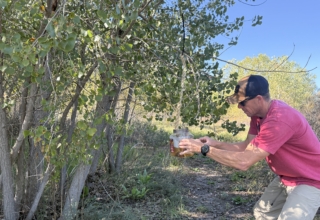
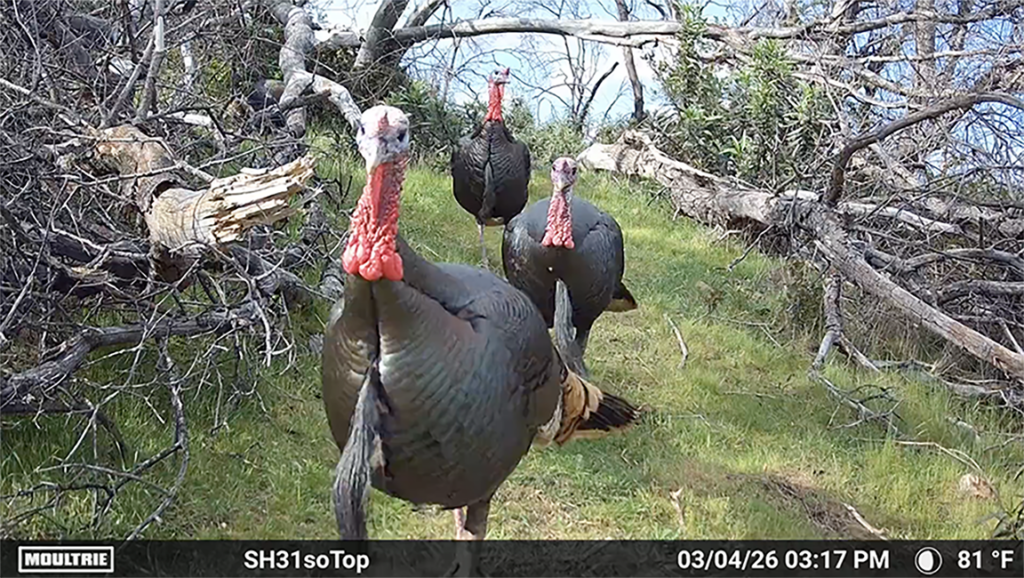
It took 10 months for my back to recover from last spring’s surgery. Due to my increased mobility, I extended my reach and the number of trail cameras I have set for turkeys. I currently have over 180 trail cameras set in three states, spanning just over 800 miles. Where cell coverage is available, I run Moultrie cellular trail cameras. The cameras set far from home are powered by solar panels. Many of those cameras I check only once a year.
In non-cellular areas, I use Stealth Cam DS4K trail cameras. About a third of the turkey land I hunt is in the mountains and heavily timbered terrain where cell coverage is absent. I set all the DS4K cameras to extended video mode and check them once a week to get timely feedback before and during the turkey season. That’s where cellular trail cameras are nice, as they capture continual information and keep you from having to enter the woods.
All trail cameras are set to video mode to capture sights and sounds that still photos miss. The more trail cameras I have out, the more I learn.
I spend a lot of time hunting alone. I do this for the serenity it offers, but also because I want to make my own observations, draw my own conclusions, and make my own moves. I’m not a social guy when it comes to hunting. I thrive in doing my own thing. I like hunting alone where I can be totally focused. Distractions frustrae me. I’ve learned so much when hunting alone. I make my own mistakes and do what I think is necessary to find success. Turkeys are a great bird to do this with, mainly because there are so many of them, which means more mistakes to learn from.
With a month remaining in turkey season and two tags in my pocket, I’ll hunt more days than not. I’ve waited all year for turkey season. Hearing gobbles on the roost and watching big toms strutting in and pirouetting around the decoys does it for me. These are things I’m in no rush to have end, for next season is a long way away.
Note: For signed copies of Scott Haugen’s best-selling book, Turkey Hunting The West: Strategies For All Levels, visit scotthaugen.com. Follow Scott’s adventures on Instagram and Facebook.