Duck season, no matter where you hunt, will soon be over. Use these 12 tips to make the finale a bright one.
by Scott Haugen
It’s hard to believe the end of duck season is nearing. But don’t let depression set in just yet, as the best days of the season are upon us.
No matter where the end of duck season finds you, here are 12 tips to help increase hunting opportunities and bag more birds.
Scouting Missions
Whether you’re targeting migrating ducks or stagnant birds moving around your hunting area, scouting is important. Finding where ducks feed and roost, and studying their travel routes, will reveal a lot. If you can’t hunt the feeding spot or the roost ponds, you might have to try to intercept them.
Note what time of day ducks are moving, even how long they spend on roosts and in feeding areas. Some of my most productive late-season hunts come in the afternoon, not early morning, which was the case a few weeks ago. In cold weather, ducks often feed at night, roost in the morning, and resume feeding the following afternoon. Using binoculars, even a spotting scope, will reveal a lot about duck numbers and the habitats they occupy, which will help determine what your setup should look like and where you should hunt.
Trail Camera Scouting
Because we can’t be everywhere at once, trail cameras are a great scouting tool. And the more you can set out, the better.
Set cellular trail cameras on potential feeding spots and in resting locales. Because water levels will rise with late-season rains, setting trail cameras on creeks and in river sloughs is a great way to pinpoint when ducks start using an area. If it rains for a day or two, then a dry spell hits, these spots might only be huntable for one day, sometimes only a matter of hours. This is where cellular trail cameras come in handy.
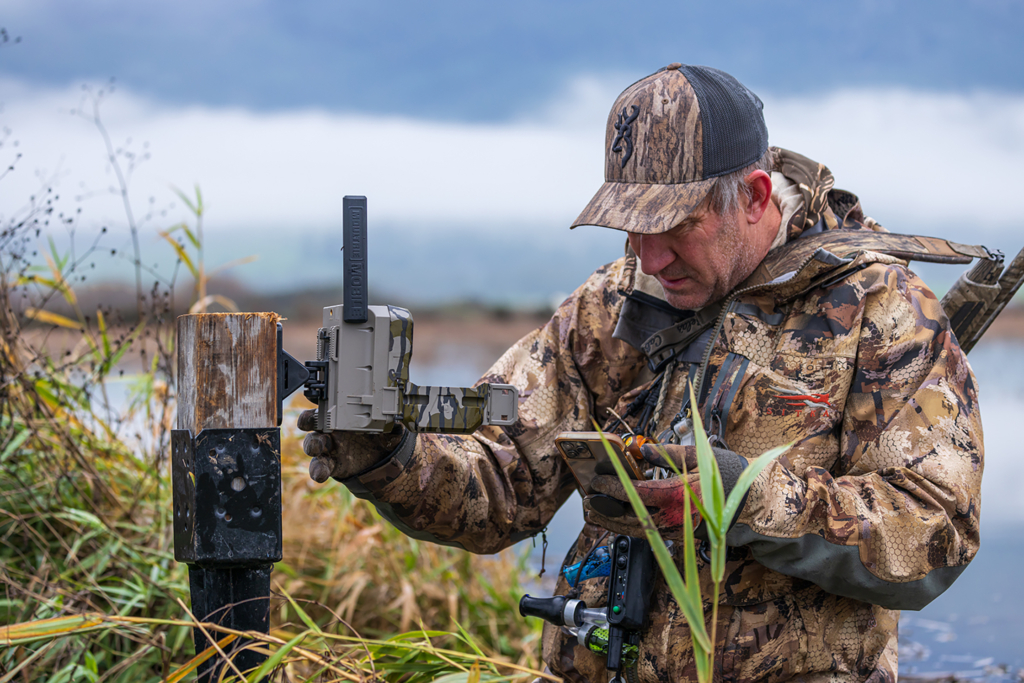
For years, I used non-cell trail cameras, but inevitably, by the time I checked them, the ducks had already come and gone. With cellular trail cameras, you’re assured of getting timely information. No tool has increased my hunting opportunities the past three seasons like cellular trail cameras. Be sure to check your state’s regulations before deploying cell cams.
I like Moultrie Edge 2 Pro cellular trail cameras for their fast trigger speed, wide detection range, and ability to minimize false triggering caused by branches or grass moving in the wind. I run all trail cameras in video mode, as a video with sound reveals much more information than a still photo ever will.
To Read More About How Haugen Uses Cell Cams To Scout For Ducks: CLICK HERE!
Silhouette Power
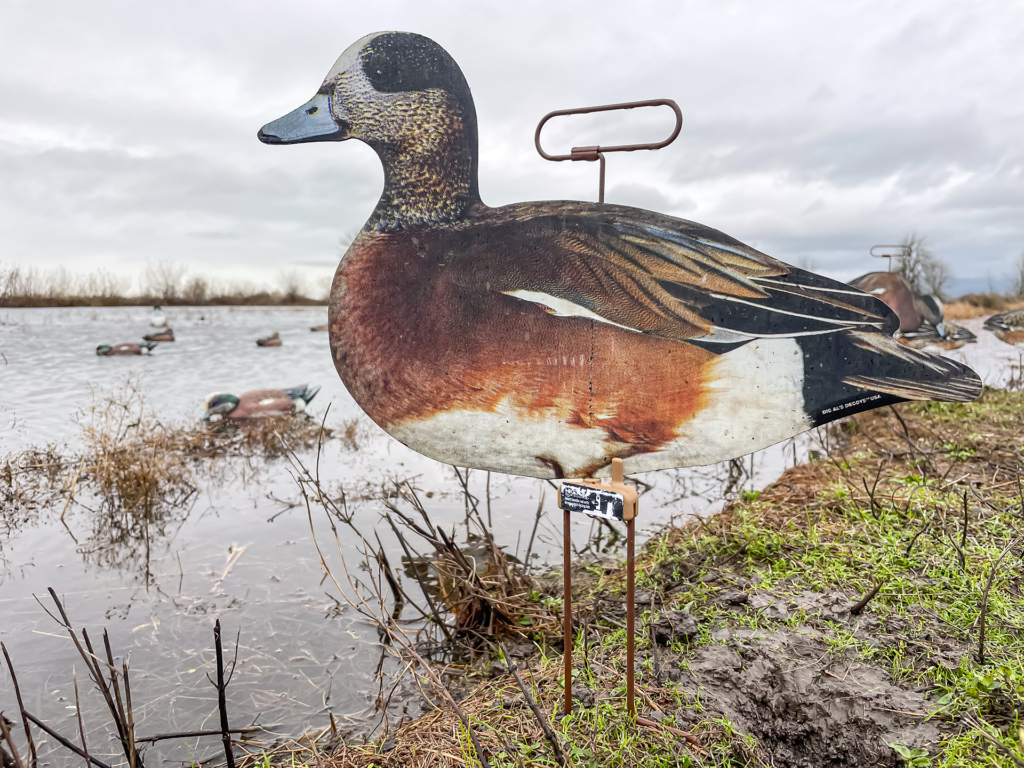
Increasing my use of silhouette decoys has been a game-changer.
Silhouettes are light, easy to pack, and, for the money, will expand your spread like no other decoy can. Silhouettes allow you to create a big, lifelike spread, and they’re easy to move around based on wind direction. They’re also quick to adjust as water levels rise and fall. It’s simple to add and subtract silhouettes, even to break them into small flocks or to sprinkle them amid floaters in shallow water.
My silhouette arsenal consists of over 50 dozen Big Al’s, including pintails, mallards, and wigeon. I keep five to eight dozen at two permanent blinds, all season long, and arrange them differently each hunt to meet the conditions. I have several others stashed in places I routinely hunt. All I have to do is grab them and hike a short distance to set up. I also carry about 10 dozen in the truck. Silhouettes in the truck mean I can be hunting in a matter of minutes, should I find birds.
For More Late-Season Silhouette Tricks, CLICK HERE!
Elevate Silhouette Decoys
If you really want to see how effective silhouettes can be, try staking them on fallen trees. At home, drive one 10-inch circle top landscape fabric stake through each decoy. Take a little hammer on the hunt, as that’s the easiest way to secure them to fallen trees and floating logs.

The purpose is to elevate the decoys above water level so ducks can see them in the early morning or mid-day shadows. In stormy, low-light conditions, these elevated decoys are highly visible, even when floating decoys are barely visible. When it’s foggy, elevated silhouettes really show up. I prefer Big Al’s decoys because they retain their color season after season, and their photo-finish is precise and lifelike.
Silhouette Movers
Late one season, I was hunting stale birds. Early in the year, floating decoys pulled in ducks. Then, as ducks became harder to fool, I added five dozen silhouettes and routinely killed birds. Then, the ducks grew leery and wouldn’t commit. Enter Higdon’s FLATS Motion Silhouettes. I fitted two dozen Big Al’s wigeon silhouettes to the FLATS Motion Stakes. Spread among three to five dozen standard silhouettes, the moving wigeon simulated a feeding flock and brought in late-season cotton tops as I’d never seen. It takes very little wind to get these decoys moving, and the realism they add to a spread is worth the effort.
Be Mobile
Being mobile is one of the most important things in my late-season approach. There’s no worse feeling than being in a big blind with a cumbersome spread that prevents moving to where the ducks are.
My go-to, one-man blind is crafted from panel wire for less than $30. It’s easy to carry, brush-in, and it hides my dog and me. It allows me to quickly move based on wind direction, public hunting pressure, and the X’s location at any given moment. Sometimes I’ll move multiple times in a day, even within a single body of water.
If water levels rise or winds shift direction, birds can start landing in a different spot or relocate entirely. Having a little blind and a dozen decoys ready to go is all it takes to turn a frustrating morning into a great one.
Two seasons ago, a buddy and I picked up a couple of MOmarsh InvisiMan blinds; another great, low-profile, mobile option. These blinds allowed us to move and hunt in a variety of situations we otherwise couldn’t, usually because of water levels and the inability to find ample cover. From flooded fields to timber, sloughs to ponds, and dry fields, these one-man blinds and a handful of decoys brought success we otherwise wouldn’t have known.
Motion Duck Spreaders
Moving decoys on the water is important. Motorized decoys are not legal in my home state of Oregon, so I use aMotion Duck Decoy Spreader. These jerk cord systems allow multiple decoys to be attached to one spreader, thereby increasing the movement and realism of a spread.
At a permanent blind I hunt, I have four mallards clipped to the standard Decoy Spreader, and seven pintails to their Ultimate Decoy Spreader System. I use them all season.
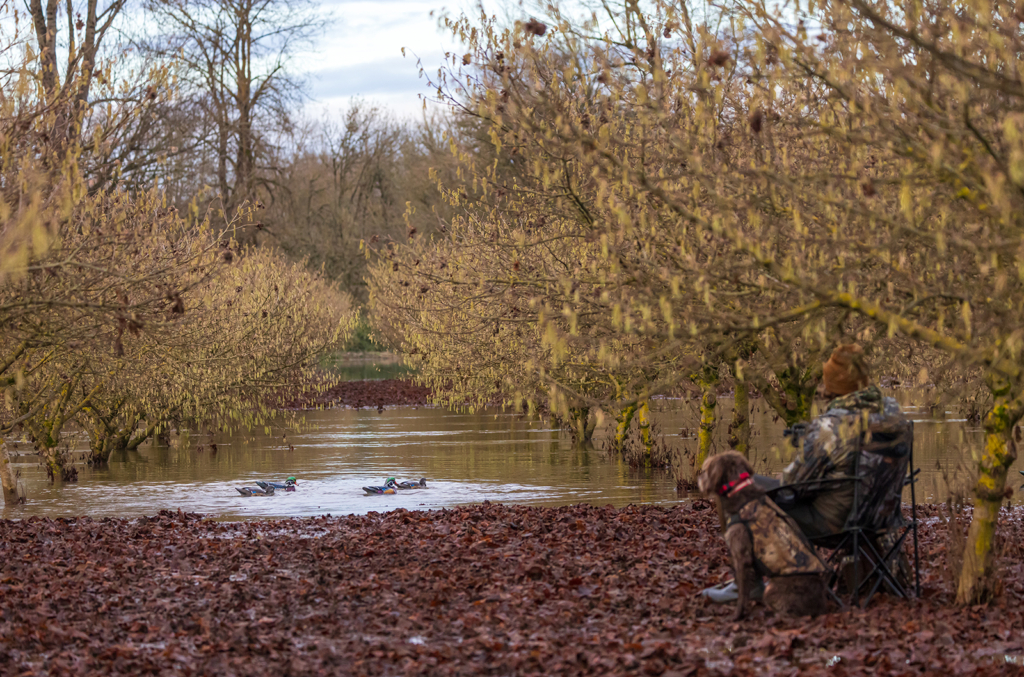
When hunting sheetwater, small pockets on sloughs, narrow creeks, and the edges of flooded filbert orchards for wood ducks, I use their Shallow Water Spreader with four decoys. Oftentimes, there’s only room for these decoys, and the fact that their movement can be controlled is huge. By this time of the season, ducks have seen a lot of moving decoys. When it comes to fooling educated birds, less movement, precisely timed, can be very effective.
New Decoys
Ducks are gullible, not stupid. Be it due to color, movement, or the overall appearance of your spread, you have to do something to make them want to come in.Last summer, I picked up new pintail, wigeon, shoveler, wood duck, and cinnamon teal decoys. I didn’t break them out until the last month of the season. I wanted bright, new decoys to end the season with.
The goal was to have decoys that emulated birds in courtship plumage. The last month of the season in our region sees mallards, pintails, wigeon, and shovelers in brightly colored feathers regularly posturing and performing courtship flights. Decoys, fresh out of the box, capture these colors. I especially like adding new pintail and a half-dozen spoonbill decoys for the simple reason that the white of the drakes, pop.

I also want to catch the ducks’ attention by using decoys not commonly used in my area. I’ve killed five cinnamon teal in 49 years of waterfowl hunting in this place. So, why include cinnamon teal decoys where there’s clearly not an abundance of the species? Because it’s a fresh look. Ducks see in color and have an amazing ability to pick up details, even from a distance. Toss in splashes of color, even cinnamon to a spread, and it can pique a duck’s curiosity.
Situational Calling
I hear a lot of loud, desperate calling by hunters late in the season. Rather than over-blowing calls, think about what you’re saying. Feeding chuckles simulate a calm flock of ducks and are great for bringing in edgy birds. A single hen quack and a drake whistle are also effective for getting ducks to finish in the decoys.
Wigeon and pintail whistles, along with shrill teal peeps, are great for attracting their own species. Mixing in these whistles with a mallard quack, or a spread series of lazy quacks, is a solid combination.
Varying tones and sequences can also fool late ducks. Going from high-pitched tones to lower-pitched tones by using less air pressure often appeals to wise ducks. Combining feeding chuckles with drake whistles and lazy hen sounds can also be good. Mimicking the sounds you hear ducks make is a safe approach.
Shoot A Sub-Gauge
Not only will hunting with a sub-gauge develop shooting skills, but it’ll also provide more hunting opportunities. One stream a buddy and I hunt is a classic example. Five years ago, we’d hunt it two or three times a season. We’d go in with 12-gauge shotguns and blaze away. It took weeks for the ducks to start using the spot again. Once we hunted it with .410s, that changed. Now we’re hunting that same spot two or three times a week in the final month of the season. It’s a roost location, so we wait for duck numbers to build. We go in early and shoot fast with sub-gauges. The goal is to shoot and get out before most of the ducks arrive. The quietness of the sub-gauge goes a long way in not educating birds, thus providing more frequent hunting opportunities.
Get In & Out!
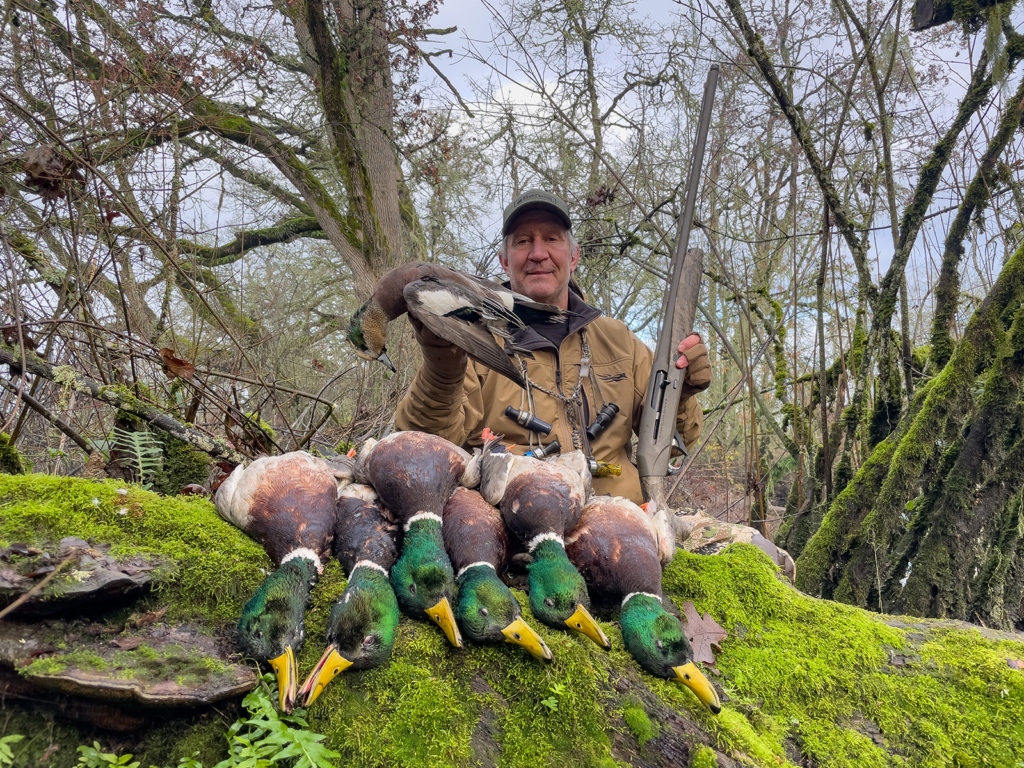
Some late-season spots see ducks trickling in to roost sites and feeding areas. Because more birds keep arriving each day, hunting these spots quickly is important. Don’t linger at these spots all day long, picking off birds for six hours, and making them wise. Instead, shoot a fast limit. If the hunting slows and there’s a lull, get out of there. By getting in and out fast, you’ll alert fewer birds and allow them to congregate in the area more quickly. As long as numbers keep building, you’ll have more hunts, sometimes only a day or two apart from one another.
Hunt All Day
If hunting an area you’ll only hit once a week or so, spending the whole day afield can pay off. These are usually feeding places where ducks trickle in, all day long. But these spots typically require specific environmental conditions that will move ducks and make them want to be there.
Wind speed and direction are two major factors that impact duck movement. Temperature is another one, and the colder it is, the more food ducks have to consume. Water levels are another factor impacting duck movement. By paying attention to these factors and learning when ducks move based on them, you’ll be able to figure out the best times to hunt. Then again, if water levels are rapidly fluctuating and winds are constantly changing, ducks might not show up for hours. Sometimes, sticking it out all day is the only true way to shoot ducks.
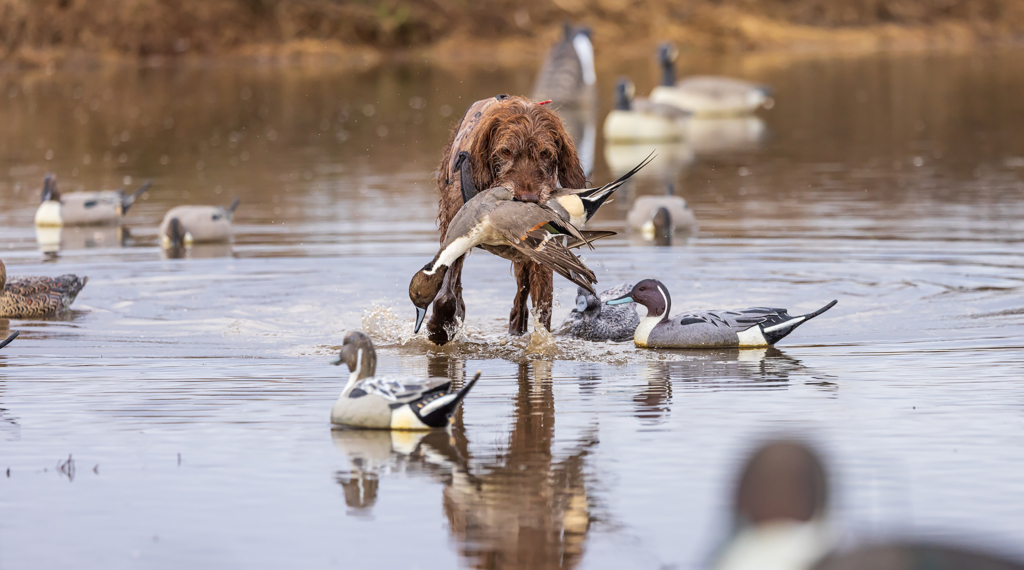
With the season winding down, gear up accordingly and make the most of each passing day. You can rest when the season is over.
Note: For copies of Scott Haugen’s popular line of hunting and fishing books, and Tiffany’s cookbooks, visit scotthaugen.com.