Explore summer training tips for hunting dogs, emphasizing water workouts and safety measures to keep your pups healthy and active.
by Scott Haugen
Summer is a challenging time for owners of hunting dogs. Days are hot, which can make safe training tough. Grass seeds, ticks, and snakes are just a few of the noxious things we avoid. And hyperthermia is a very real thing, claiming many more dogs than hypothermia.
However, there is a saving grace for summer dog training. Water. From training to simply having fun, water is what will keep your dog in shape, happy, and safe.
BOTE Paddle Board
The popularity of paddle boards began to gain traction at the start of this century. Our family got into them around then, for both fun and exercise. I don’t know how many paddle boards we’ve tried, owned, and passed down over the years, but the number is staggering. Then, in 2014, we got a hunting dog. Two years later, we got another pup.
Both dogs are pudelpointers. From waterfowl to shed antlers, squirrels to forest grouse and more, this versatile breed does it all. For them, there is no off-season. This means they have to be in shape year-round.
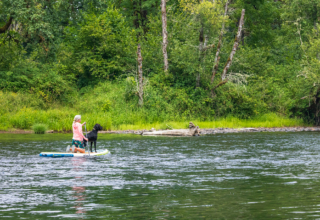
Since they were pups, swimming and paddle boarding workouts have been a part of their lives. In addition to offering a fun change of pace, paddle board workouts give your pup intellectual stimulation, which is as vital as physical workouts.
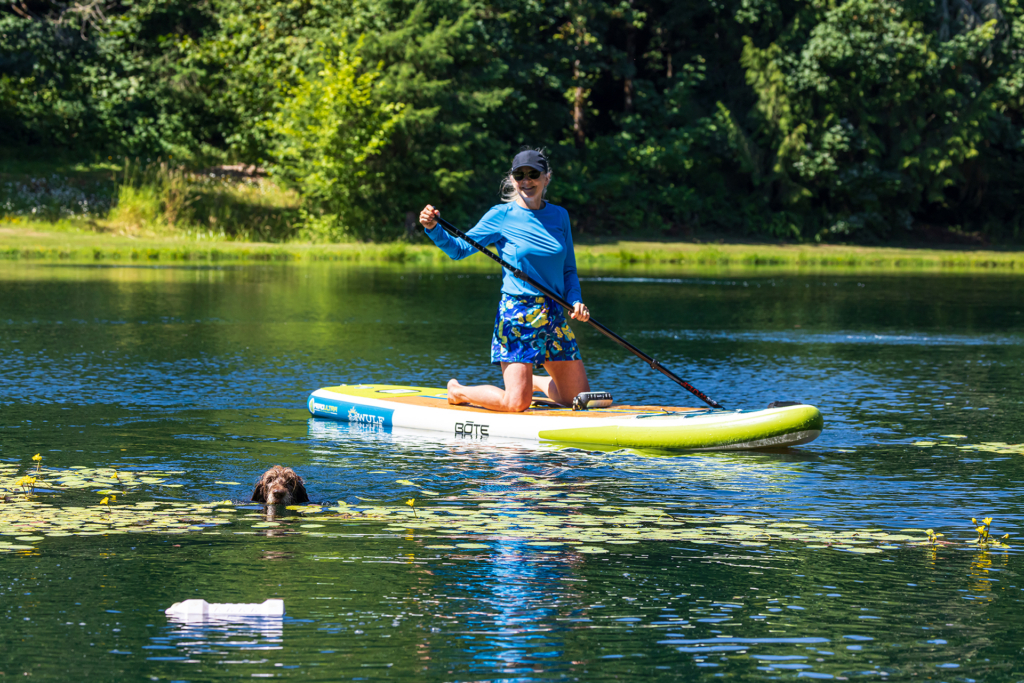
Swimming is the best, low-impact workout for your dog, period. Having your dog swim alongside as you paddle is one of the best workouts possible for a dog. I’m referring to extended swims of 10 to 15 minutes; not short burst training that you can get from shore. This isn’t a race, and it’s not about you getting a workout. This is strictly for the dog. It’s important to pace yourself to keep your dog motivated and moving at a comfortable speed. Think distance running versus sprinting. Having your pup swim alongside a paddle board is like a distance runner’s workout. If this is new for your pup, work up to longer swim times. Always keep in mind that even though they’re in cold water, your pup can still overheat.
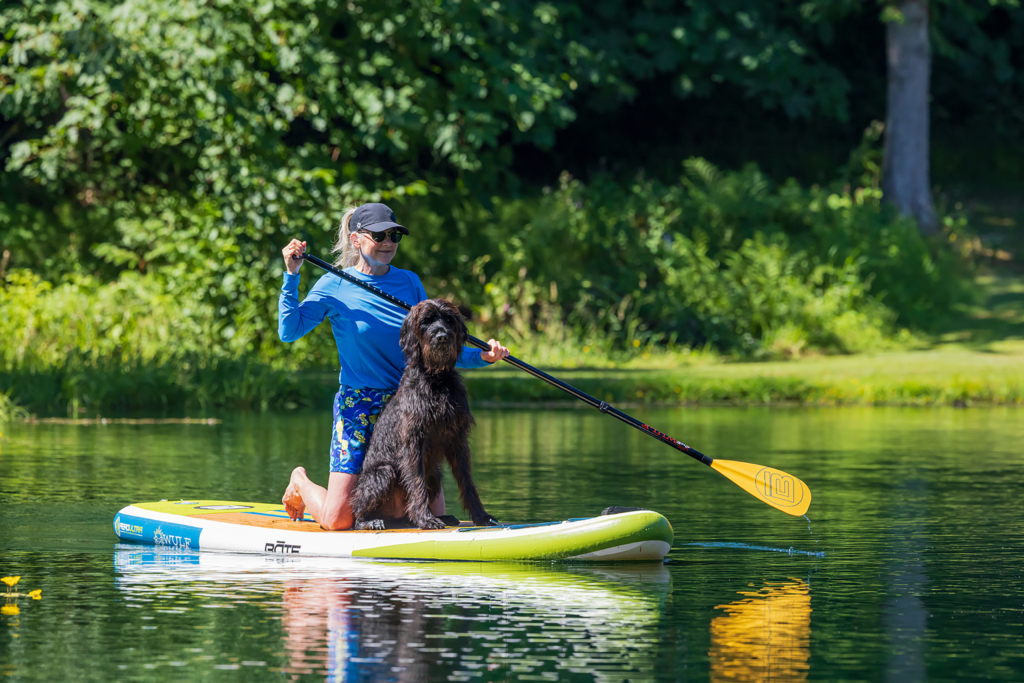
We recently picked up a WULF AERO paddle board from BOTE. Slugged as an entry-level board, it’s perfect for dog training, and that’s the main reason we got it. We have some advanced paddle boards, including hard shells, and they’re not as dog-friendly because they’re faster and harder to control with a dog on or near them.
The WULF is tough and offers exceptional stability while maintaining an easy flow with quick-reacting maneuverability. From standing and paddling while having a dog swim alongside you, to kneeling and tossing bumpers or pulling the pup up for a breather, the WULF is perfect.
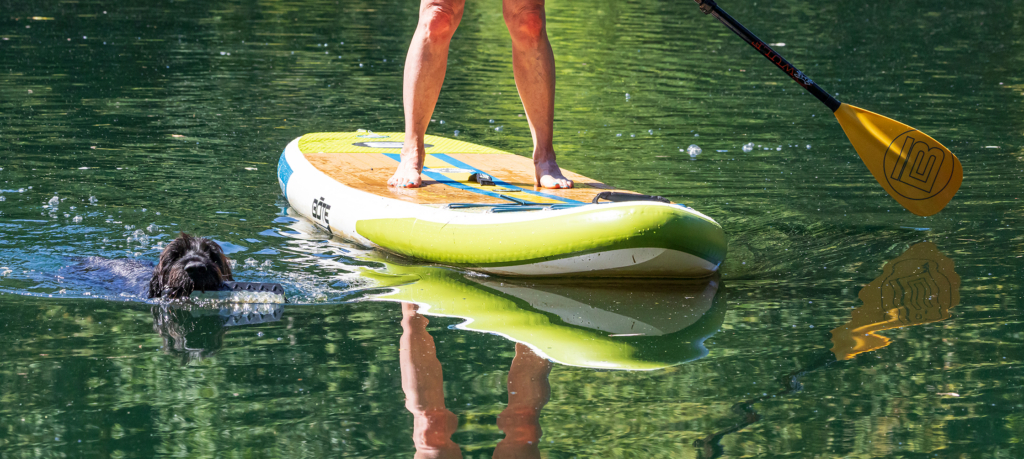
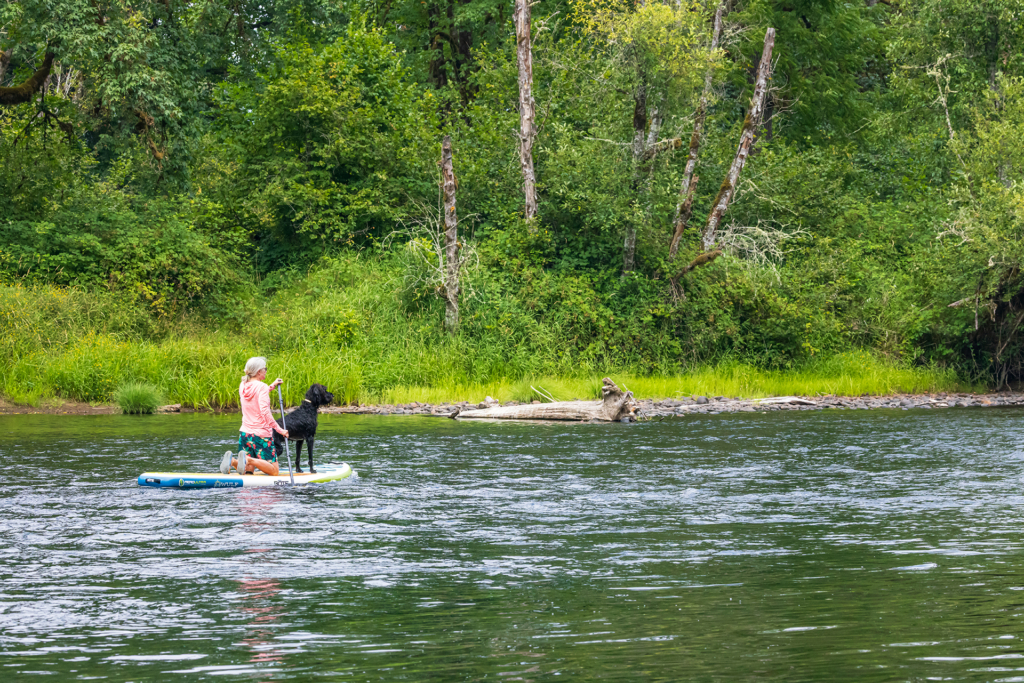
For extended swim workouts in lakes where your pup might be climbing onto the paddle board for a break, be sure to trim their nails. I like using an electric rotary sander to keep the edges of the nails rounded. This reduces splitting and snagging. Also, make sure your dog is wearing their waterfowl vest, and that the vest has a handle on the back so you can help them out when needed. Trimmed nails will ensure there are no scratches to the board, and the vest lets you assist your dog aboard for a breather. It’s much easier lifting your pup onto the surface a paddle board than into a canoe or kayak, which is why this is my preferred exercise vessel in lakes, ponds and slow-flowing rivers.
Remember always to try and keep your dog horizontal in the water because once they get vertical, they may panic as it’s hard to swim in this position. This happens when your pup grapples for the side of the board, so be prepared to either help them up or keep them swimming. The quicker you can grab them and assist with a lift, the better. Do this with a soaking wet dog that’s 65 pounds when dry, and the WULF’s sturdy design is instantly realized. Even my wife can handle our dogs with ease.
If you want to toss bumpers from the WULF, its stability makes it easy. Even multi-bumper retrieves are simple. It’s best to be on your knees so you can bend down and your pup can deliver the bumper to hand. This position also allows you to give a quick “back” command along with a hand signal so they can make a fast turnaround. Having your dog swim alongside with the bumper in its mouth is also good practice, as is tossing it in weed beds, tall grass, or lily pads to swim through. This in-the-water training, complete with commands and hand signals, will pay off come duck season.
We got the 11’4” long WULF, which fits a person and a dog perfectly. It gives them room to turn around and shake, or take a joy ride on. It barely weighs more than 20 pounds, and the backpack/travel bag makes it easy to pack into lakes.
The 11’4” WULF is rated for a 315-pound weight capacity. The hand pump takes a bit of effort, especially when you inflate the board to the max suggested inflation of 15 PSI. On all the lakes, ponds, and bays we’ve used it in, 10-11 PSI was sufficient, as the sleek 6-inch diameter results in negligible drag. For rivers, a stiffer board is nice, meaning you should inflate to 14-15 PSI. For this, I picked up an aftermarket adapter to fit an electric pump, and this made inflation easy. Deflating is simple and fast.
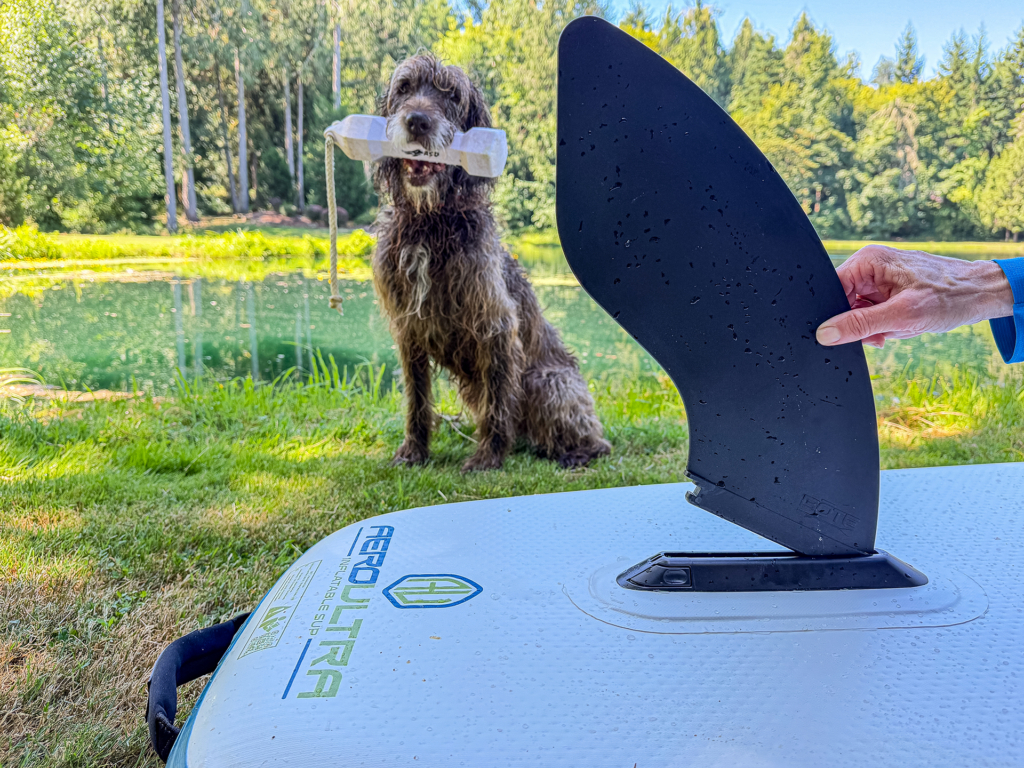
When it comes to paddle boards I’ve used over the years, a pet peeve has been the fin or rudder. This may sound like a simple thing. It’s not. But BOTE nailed it. The WULF’s fin not only easily slips in, locks, and is removable without any tools, but it’s also 10 inches long. The result is a board that’s simple to steer and quickly reacts to your every move of the paddle. This is important when working in currents and maneuvering the board into a precise position for your pup.
The three-piece paddle is well designed and holds its adjustments. The surface makes standing and moving on the board easy, even for your pup.
River Work
In rivers, paddling across gentle currents is a great way to offer resistance training for your pup. This is where the coiled leash comes in handy, for you, not your dog. It’s easy to connect and strap on.
If you want more of a resistance training workout for your dog, position the board on the outside of the main current between the current and the bank, and get your dog on the inside of the current seam. This will allow you to easily make your way upstream while your dog swims in the faster water. If your pup tries to hop onto the paddle board, quicken your pace so the dog must follow you. However, don’t get so far ahead that the dog retreats to slack water. This is a good situation to work on both verbal commands and hand signals.
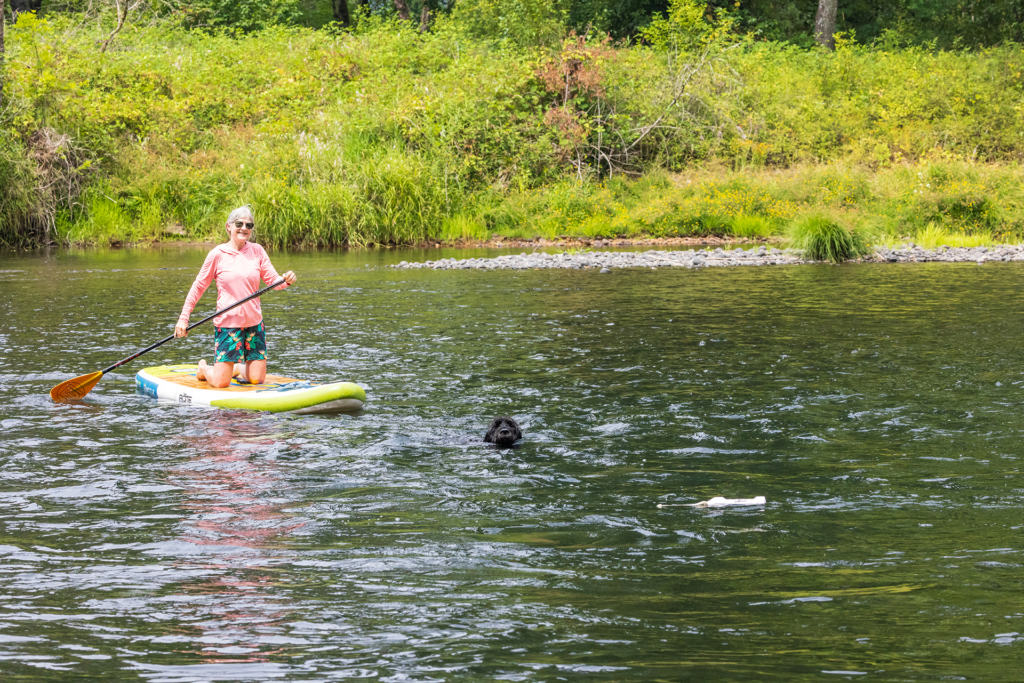
If the main river current is too fast for a paddle board, have some fun swim time with your pup in calm water for 10 minutes or so. Before your dog gets too tired, toss some bumpers into the faster-moving water to end the workout with some speed training. If the river is small, bumper training can be done from the shore. If it’s a big river, you can hold the paddle board in calm water and toss the bumper into the current. This can be a great option if your pup has trouble marking the bumper in waves and ends up downstream, allowing you to paddle closer to it.
Remember, we see a bumper from an elevated position on the paddle board, which is far different from your dog’s point of view. The dog sees only an inch or two above the water’s surface. Again, this is all a great opportunity to reinforce voice commands and hand signals.
The Cool Down
If your dog has a fuzzy undercoat, like one of my dogs, know that this kind of coat can retain heat. I don’t let my dogs swim then run them on land, as this can trap heat and lead to hyperthermia. When we’re in the water, that’s where the training takes place. When done, I towel them off, then let them run around to air-dry before loading into the truck. Even putting a wet dog into a kennel can lead to overheating. Watch your pup’s eyes, body language, and tongue to know the current state they’re in. If the tongue is long, flat, wide, and relaxed, and they’re panting hard, stop because they’re beginning to overheat.
Be sure to hydrate your dog, even when swimming. My female dog takes in quite a bit of water when water training. My male holds his head high and doesn’t ingest as much, so I have to make sure he stops to drink. Be aware of any algae bloom warnings that may be in effect.
WaterPORT
Earlier this month we were paddle boarding on a small lake with muddy edges. The water was great, but the dogs were in mud up to their knees. Toweling them off didn’t do the job, so I broke out the WaterPORT and hosed them down.
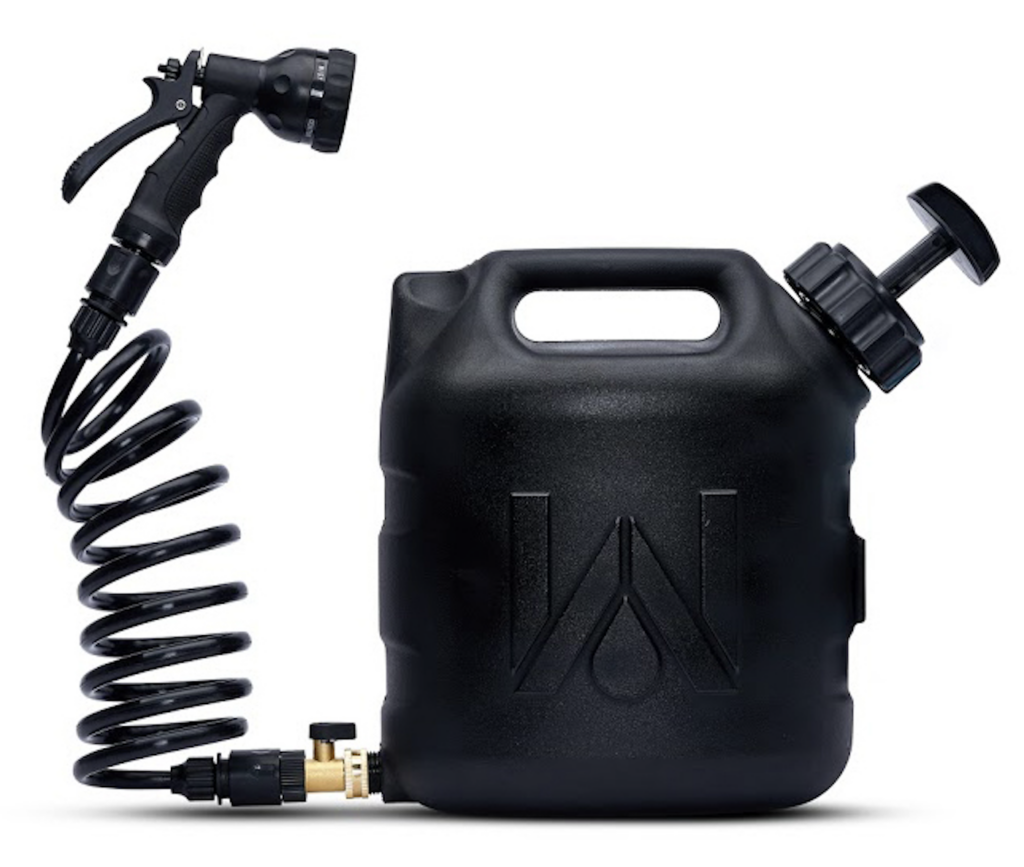
The WaterPORT is a self-pressurized tank that I originally got for showering and washing dishes in hunting camp. But it’s been great for cleaning my dogs and for cooling them down after workouts on dry land. They love drinking from the nozzle, too. A pressurized squirt to the belly, between the legs, and under the ears is way more effective, and much easier to do than with a water bottle or jug.
I got the two-gallon WaterPORT, which is a good size for camping or dog work. The last place I used it, the WaterPORT served a dual purpose: washing muddy dog legs, then hosing off dirt and grass from the paddle board.
Earlier this month I took our dogs to the vet for their annual checkup. The vet said the dogs looked and acted half their age. Echo is 12-1/2, Kona, 10. The clocks are chasing them. But for now, I know they’re as healthy and happy as can be, and much of the credit goes to proper summer water training.