When the string drops or the firing pin hits a centerfire cartridge, the work begins. Build a kill kit and be ready for the moment of truth.
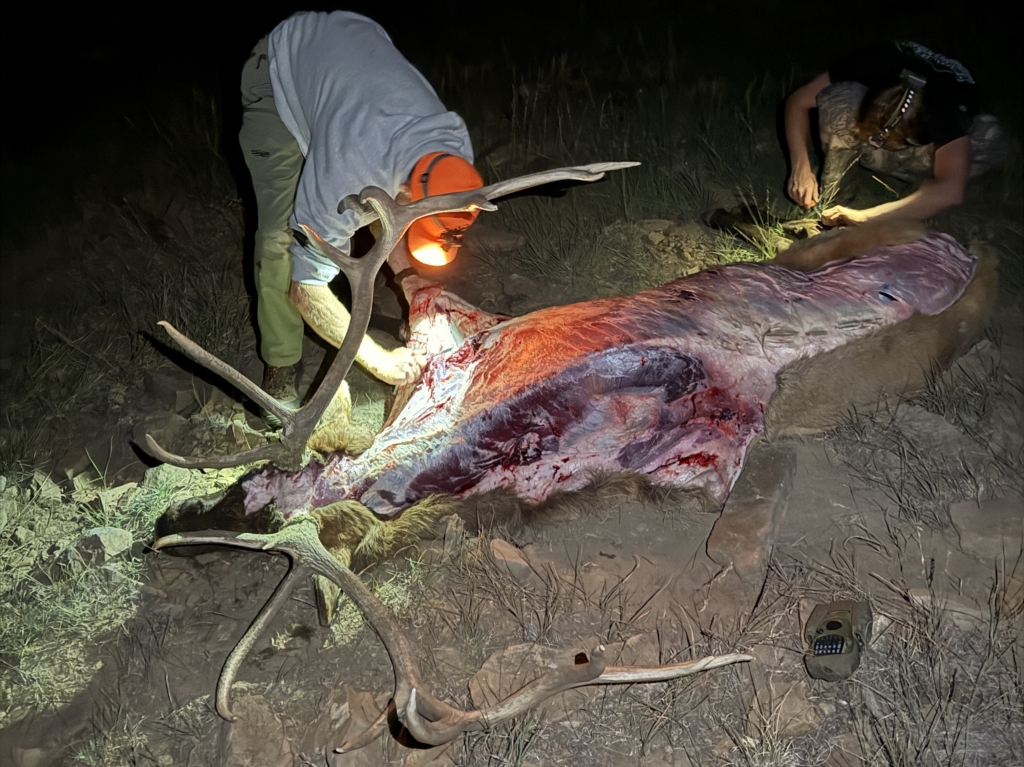
“Did you go to work for the Manson Family?” were the words of my buddy when I returned to elk camp that evening. It was a morbid comment, but I’d earned it. I was covered, head-to-toe, in elk blood.
In my defense, I was 18 years old. It was my first big-game hunt, and my buddy was 46 years old. It wasn’t his first big-game hunt. He had killed many, many elk. However, he wasn’t about to show me. It was trial by fire. I got the job done, but it was miserable. If memory serves, I squeezed the trigger at 3 p.m. and finished hanging the last quarter at 1 a.m. That’s unacceptable. However, it was necessary, and looking back, wouldn’t have had it any other way.
Thirty years later, I’ve refined and built the ultimate kill kit. You need to do the same.
What Is A Kill Kit?
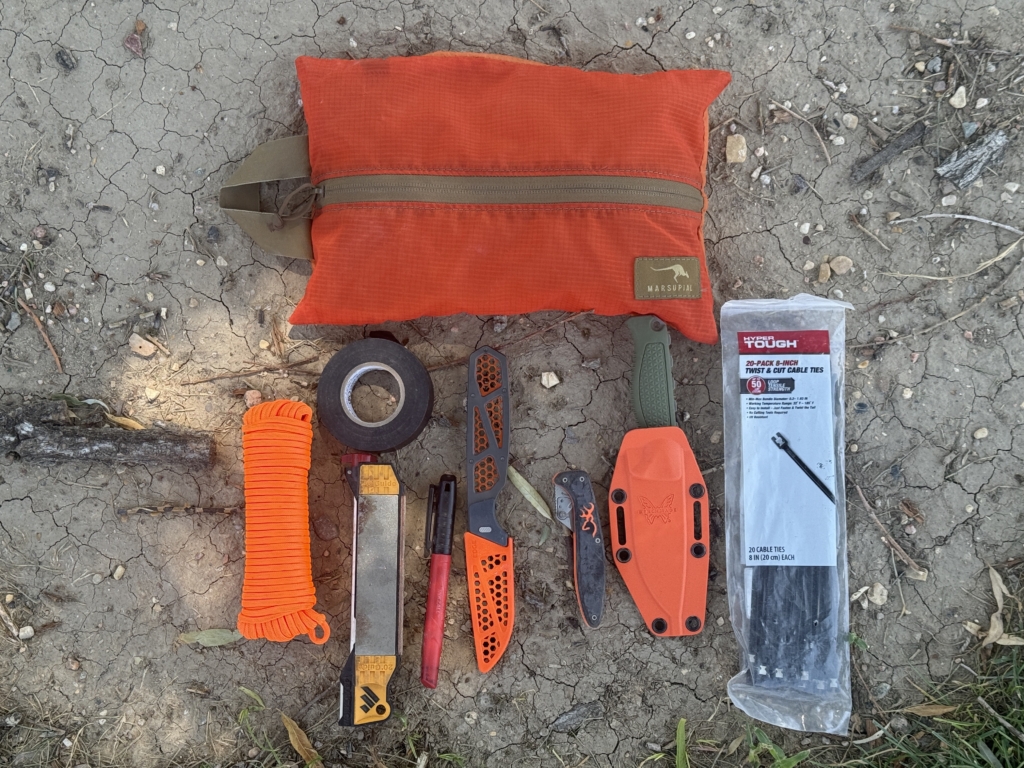
A kill kit is just what it sounds like. It is a kit you pull from your pack after you walk up on your critter and snap your pictures. The first piece of the kill kit is what you use to store your after-the-kill items. My go-to is Marsupial Gear’s Zipperoo Pouch – Mesh Large.
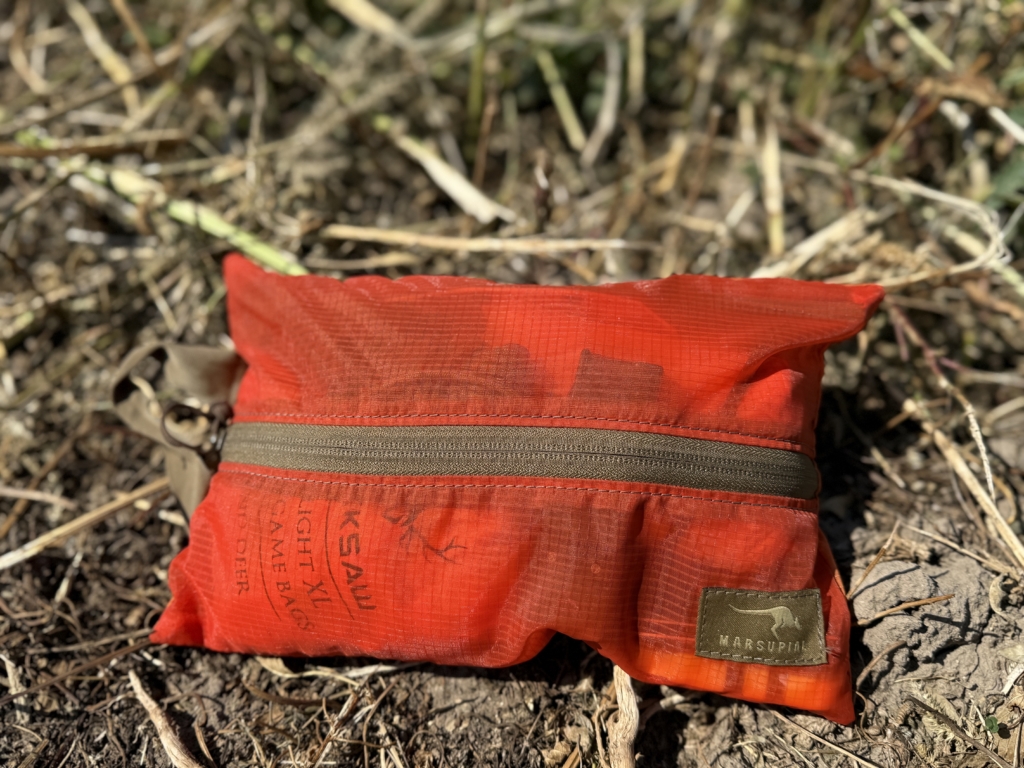
Marsupial mesh isn’t standard mesh. Instead, it’s a durable transparent mesh blended with ripstop fabric. I like the Blaze Orange color. It’s easy to find in your backpack and easy to see on the ground. The Large-size Zipperoo weighs 0.8 ounces, has a single front zipper, and measures 7.5” x 12”. The pouch is awesome, and it holds a lot of gear.
What’s In My Kill Kit
I spend much of my fall living out of my backpack, so weight is always a concern. When I’m roaming the West, these are the items I put in my kill kit.
Outdoor Edge
My kill kit always contains a few replaceable blade knives, and for the last several years, Outdoor Edge has been one of my go-tos. Currently, I’m using the 3.0” Razor APX Hunting Knife. This is an ultralight push-button knife that accepts 3.0” Japanese 420J2 blades. I like the skeletonized handle, and the integrated handle scales hold four 3.0” blades via magnetic retention and silicone covers.
Browning
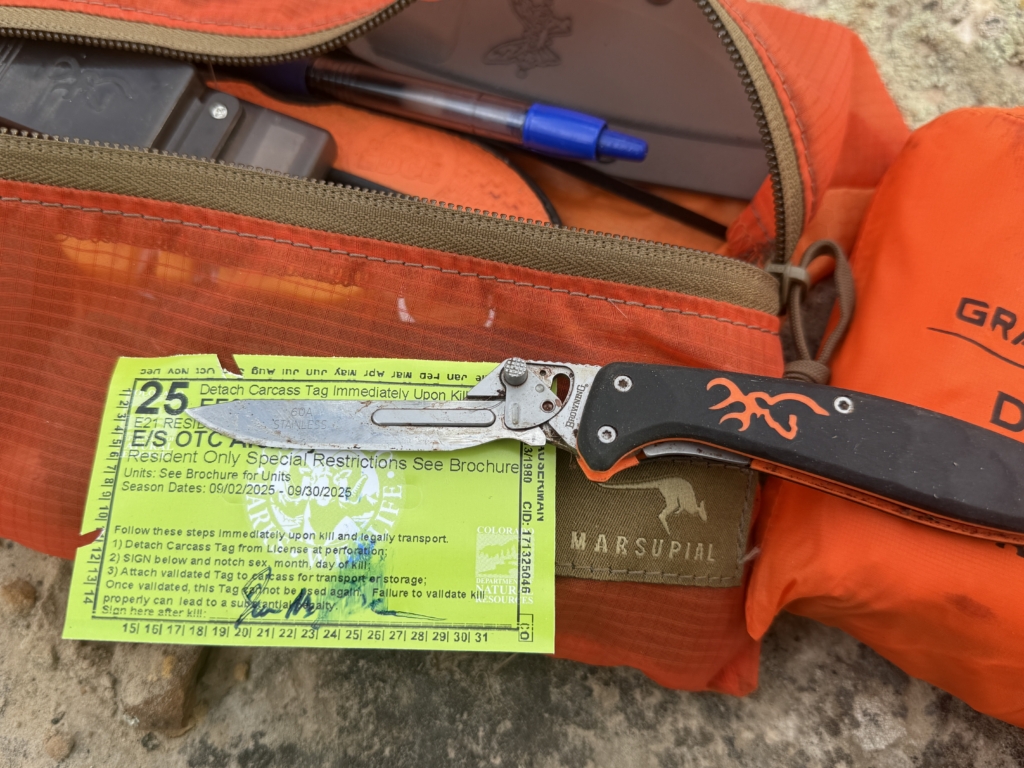
Another small, lightweight knife to consider, and one that regularly finds its way into my kill kit, is Browning’s Primal Scalpel. The knife is compact and lightweight, and I love the swing-and-lock blade containment system. It boosts safety and, I believe, adds strength to the scalpel-style blades by providing support to the blade’s backend. I snap off fewer blades when I use the Primal Scalpel.
Benchmade
Benchmade makes great knives, and their Steep Country Drop-Point is my go-to fixed-blade knife. I do believe that every western hunter should carry a bulletproof, easy-to-sharpen, fixed-blade knife in their kill kit. Replaceable-blade knives are great; however, I prefer a heavy-duty fixed-blade knife when working around joints and heavy bone. This knife holds an edge, is a breeze to sharpen, and stores in an included hard case. I’ve put this knife through hell, and it’s always ready to answer the bell the next time I need it. The handle feels great in hand and is easy to grip.
Works Sharp Guided Field Sharpener
Work Sharp makes the best knife sharpeners that I know of. Their Knife & Tool Sharpener MK.2 Kit sits on my workbench, and I use it multiple times each week. In the field, my go-to is Work Sharp’s Guided Field Sharpener. Yes, it’s a little bulky and adds a little weight, but it will sharpen anything: knife blades, broadheads, fishing hooks, etc. From coarse repair to a fine polish, this sharper is a kill-kit must-have.
Paracord, Zip Ties, and Fine-Tip Magic Marker
These items don’t take up much room, weigh almost nothing, and can save you a lot of frustration when you’re breaking down a big-bodied animal in the field.
I always carry a few feet of lightweight paracord. When working on steep angles, tying an elk’s legs out of the way makes cutting and quartering much easier. Large animals have a way of sliding, rolling, and fighting you when you’re trying to make precise cuts. A short piece of paracord lets you secure a leg to a tree, shrub, or another solid object, keeping it where you need it. It’s a simple solution, but it can make a miserable job much more manageable.
A lighter is a natural companion to paracord. I use it to burn the ends of the cord after cutting, which keeps them from fraying and unraveling. I also carry several heavy-duty zip ties to attach my carcass tag to the animal. They’re fast, secure, and easy to use with wet, bloody hands.
Finally, I pack a fine-tip permanent marker and a short roll of electrical tape. The marker lets me fill out my carcass tag clearly, while electrical tape handles a variety of quick repairs and field tasks. These small items earn their place in the kit.
Argali Large Game M.O.B. Pack Game Bag Set
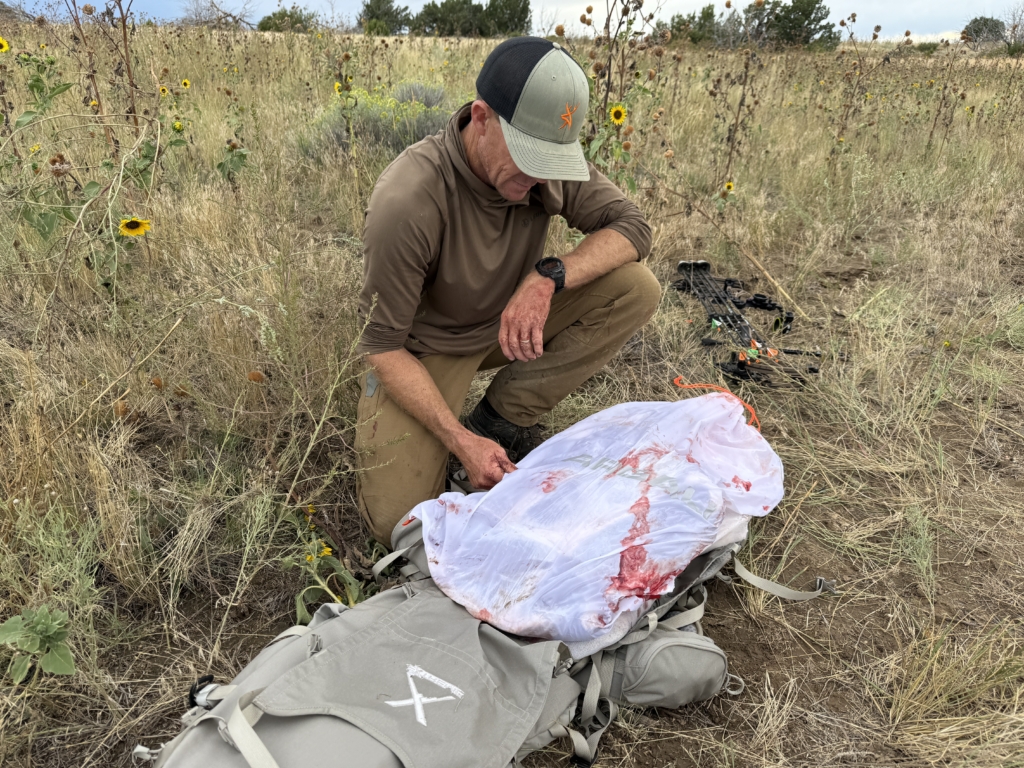
Durable, reusable game bags are worth their weight in gold, and my current go-to is Argali’s Large Game M.O.B. Pack Game Bag Set. To date, I’ve packed out four elk, one bear, and two pronghorn using these bags. While they don’t fit inside my kill kit, they sit right next to it in my backpack. All the bags fit inside the included black storage pouch. The total weight is 15 ounces, and the kit includes 4 24” x 40” quarter game bags and 1 17” x 29” spare meat parts bag.
Final Thoughts
I’ve learned the hard way that the kill isn’t the end of the hunt. It’s the beginning of another job—one that demands patience, preparation, and the right equipment. A successful shot can quickly turn into an all-day ordeal if you’re forced to improvise with a dull knife, inadequate game bags, or gear scattered throughout your pack.
A kill kit doesn’t need to be complicated, and it certainly doesn’t need to be heavy. The goal is to assemble a compact collection of dependable tools that help you work efficiently, protect the meat, and keep the process organized. A quality replaceable-blade knife, a stout fixed blade, a sharpener, paracord, zip ties, marker, lighter, electrical tape, and durable game bags cover most of the challenges you’ll face in the field.
Before each season, I inspect every item and replace anything worn, dull, or missing.
The work will never be glamorous. You’ll still get bloody, tired, and frustrated. However, with a well-built kill kit, you’ll spend less time fighting your equipment and more time doing what matters: honoring the animal by getting quality meat out of the backcountry.