Great cell cams, stellar optics, and an new load from Winchester make for an epic double-down adventure in Oregon.
by Scott Haugen
Last year I held a coveted tag for Columbia white-tailed deer in my home state of Oregon. I filled the tag on the last day of the hunt but fell short of my goal. Many times during preseason scouting, we saw two world-class bucks, but come season, they eluded me.
Good friend and noted guide, Jody Smith, secured a landowner tag for me again this year. We were determined to finish the job.
Starting in July, we set baits and trail cameras.
“I really like the clarity and speed of the new Reveal Pro 4.0 trail cameras,” shared Smith as he secured one to a fat oak tree. “I’ve never had video requests pop up so fast, and the new Pro 4.0 Solar model is performing great so far.”
I’m used to hunting Columbia blacktails near home, where capturing one or two good bucks a season on trail camera is a success. But with these little whitetails, Smith was routinely catching a half-dozen good bucks a day.
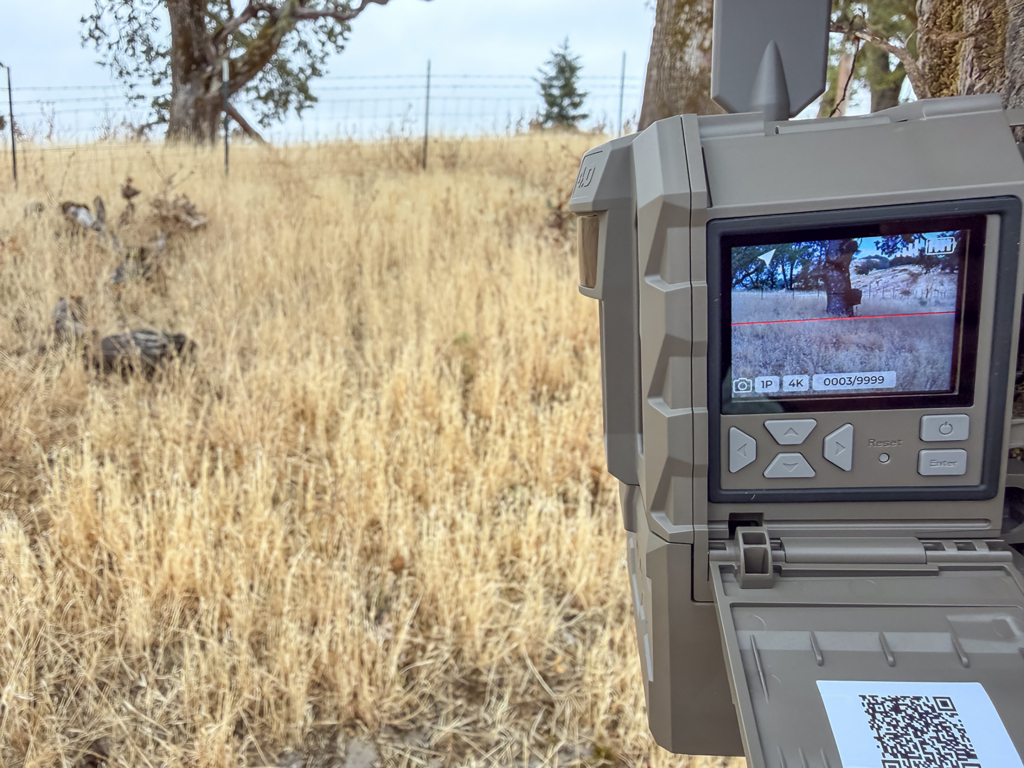
“The timber company’s land we’ll be hunting sprayed it heavy and all the poison oak is dead this year,” Smith noted on our first scouting mission. “I just hope there’s enough cover to hold deer this season.”
Smith placed bait in front of each Tactacam. Like whitetails around much of the country, Columbia whitetails flock to nutritious food. Smith placed one bait in a Moultrie feeder set on a timer, used two Moultrie Feed Bins in other spots, and placed a block and loose food on the ground at the last spot.
“There are a lot of deer in the area,” Smith said, “and between the whitetail and the blacktail, these baits get hit hard. Sometimes 30 deer a day will hit these baits. They can go through it fast.”
Despite two and a half months of scouting and running trail cameras, neither of the big Columbia white-tailed bucks from the year prior appeared.
“I’m afraid the lack of bedding cover forced those big bucks out,” Smith told me, a week away from the early October opener.
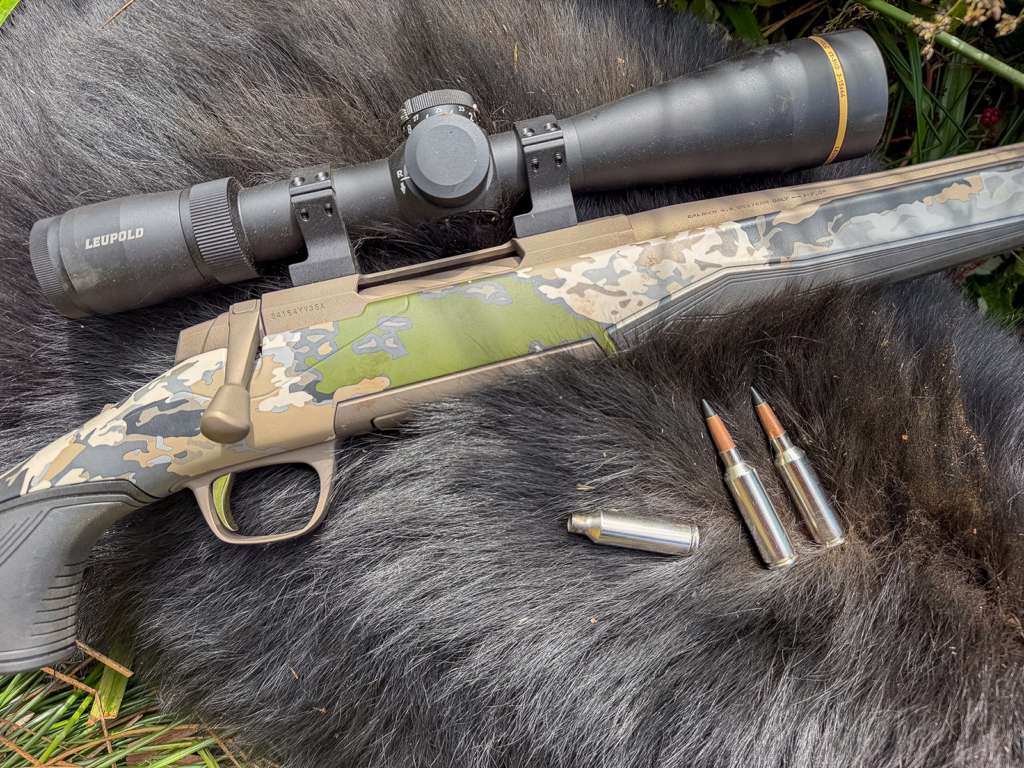
A mutual friend of ours, Mark Korpi, also had a prized tag and joined us on this hunt. Korpi passed two bucks on opening morning. On the second morning, Smith spotted a heavy-racked buck with double eye guards on each side, bedded tight against a blackberry thicket. The two made a downhill stalk, and Korpi connected. The Winchester 6.8 Western Long Range 175 Grain BC Max bullet fired from a Browning 6.8 Western anchored the buck on the spot.
Redemption…Almost
Three days later, Smith and I spotted a buck we’d seen on the Reveal trail cameras a few times in recent weeks. It was at the bottom of the property. When it moved into thick cover, we closed the gap. For five hours we sat. The buck never budged.
We hiked over the hill to hunt another draw but saw nothing. When we returned to check on the buck, it was up feeding amid a tall, dead, poison oak thicket. Smith stayed put, watching through his spotting scope while I began stalking. Dropping into a ravine, I cut the distance from 550 yards to just over 300. The wind blew hard, right to left. I wanted to get closer.
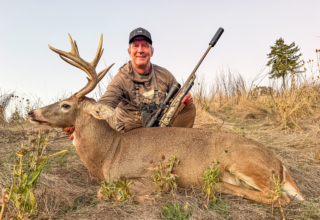
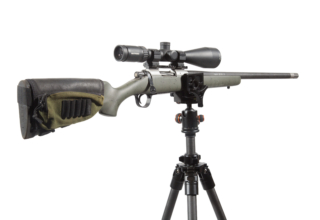
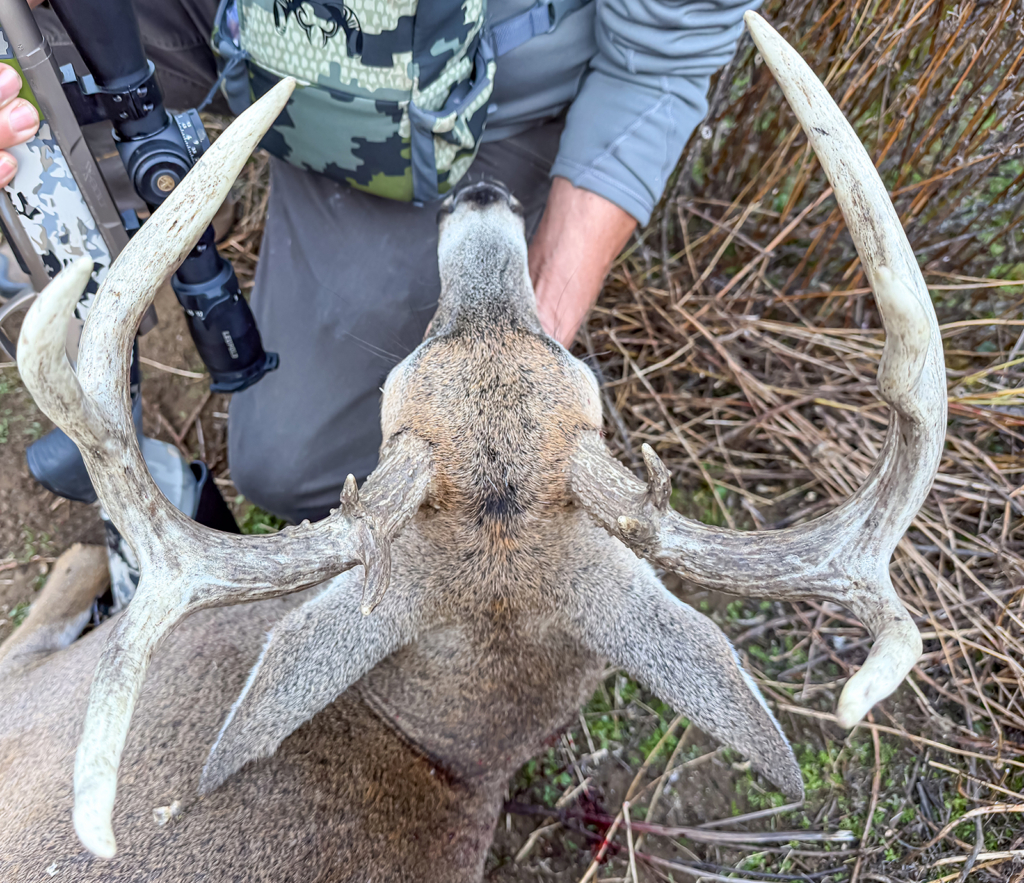
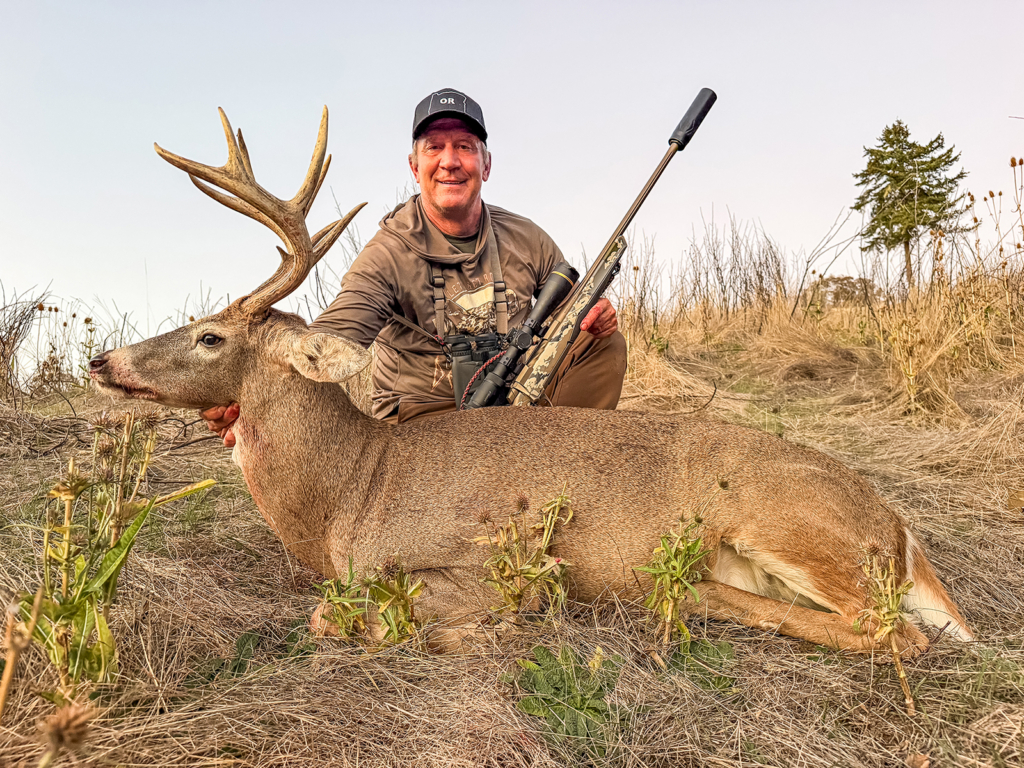
I moved in the shadow of an oak tree, rifle secured in the tripod shooting sticks. Slowly I inched forward, scanning the land in front of me, inch by inch as it revealed itself. I was surprised to find the buck 75 yards to the south of where I’d last seen it, nibbling on green grass. It had no idea I was there. With daylight waning, I wasted no time placing the FireDot reticle high on the buck’s shoulder. The 236-yard shot from my Browning 6.8 Western X-Bolt 2 Speed was simple. The Browning Long Range Pro Hunter 175-grain Sierra Tipped Gameking bullet dropped the buck on the spot. The more I shoot this combination, the more I like it.
In five full days of hunting, Smith and I saw 18 different Columbia whitetail bucks, only three of which we’d consider shooters. The year prior, we saw 54 bucks in five days of hunting, and over half were mature bucks.
“That’s one thing these Reveal trail cameras prove, and that’s how many deer are really out there,” said Smith as we gathered cameras and feeders. “We caught over a dozen mature bucks in the last two months that we never even saw, and some of those were coming in every single night. They’re moving off the property to bed in daylight, coming to the baits at night, and that makes for tough hunting. But the confidence these trail cameras give you by just knowing bucks are near keeps you working.”
He was right, and our long scouting efforts and four days of hunting, daylight to dark, paid off. It wasn’t one of the two big bucks we’d hoped for, but the nine-point buck was the biggest Columbia whitetail I’d ever shot.
Black Bear On The Coast
Five days later, Smith and I were on the Oregon Coast. I help him with deer and elk hunts here throughout the fall. This time we were bear hunting: just us, no clients.
Together, we run over 100 trail cameras on this expansive piece of private timber property and combination of state forest land. Deer are plentiful. Roosevelt elk are thick. And it’s among the highest black-bear densities I’ve ever seen anywhere on the West Coast. The challenge is finding bears, then getting to within shooting range before they get swallowed up in the rainforest-like jungle of the Coast Range.
Smith was up first. We saw seven bears in the first two days. We made a move on a dandy, but just as Smith got ready to shoot, the bear vanished. Then another appeared farther down the same hillside. It fed on huckleberries. When the bear disappeared into tall bushes, Smith dialed in. With a rifle in the sturdy Leupold Tripod Shooting Saddle set atop his Pro Guide Tripod, Smith dropped the bear at 217 yards. The Winchester 6.8 Western Long Range 175 Grain BC Max did the job on the nearly 300-pound bruin. This new bullet is worth a serious look.
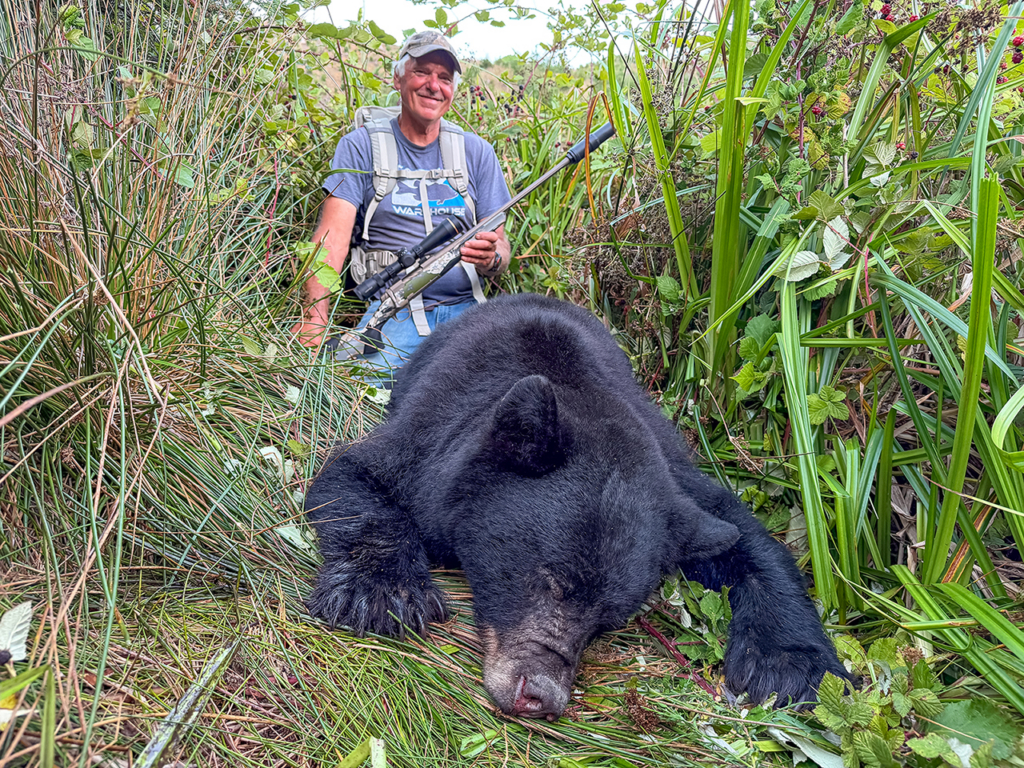
“It’s fun to pull the trigger finally,” Smith smiled as we walked up on his plump bear. Smith had never shot a bear. In our nearly 30 years of hunting together, it was an honor to be a part of this special moment. He’s one of my favorite people to hunt with and one of the most genuine men I know.
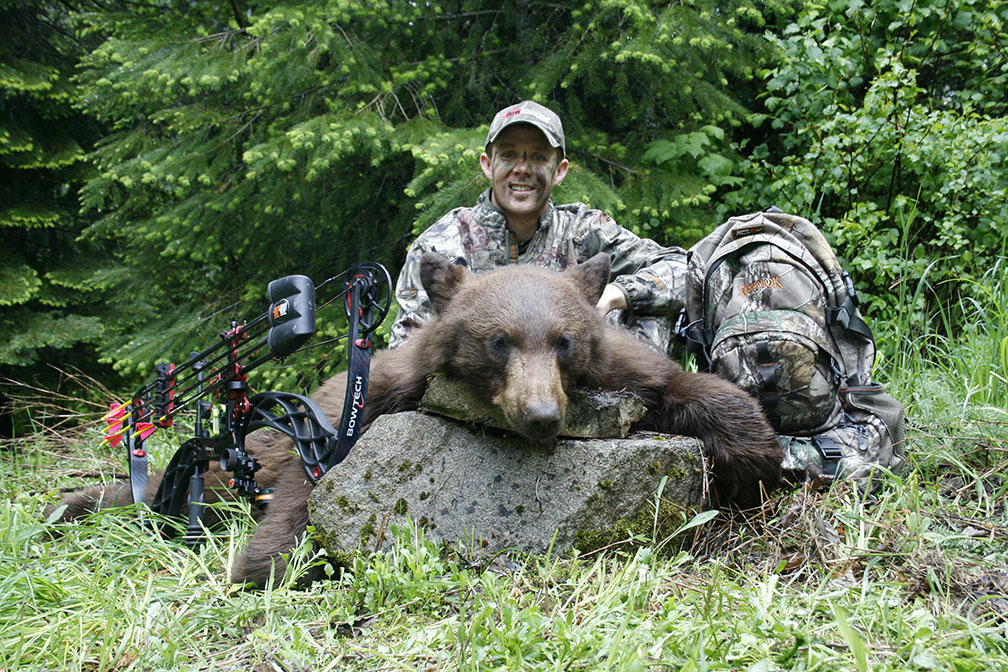
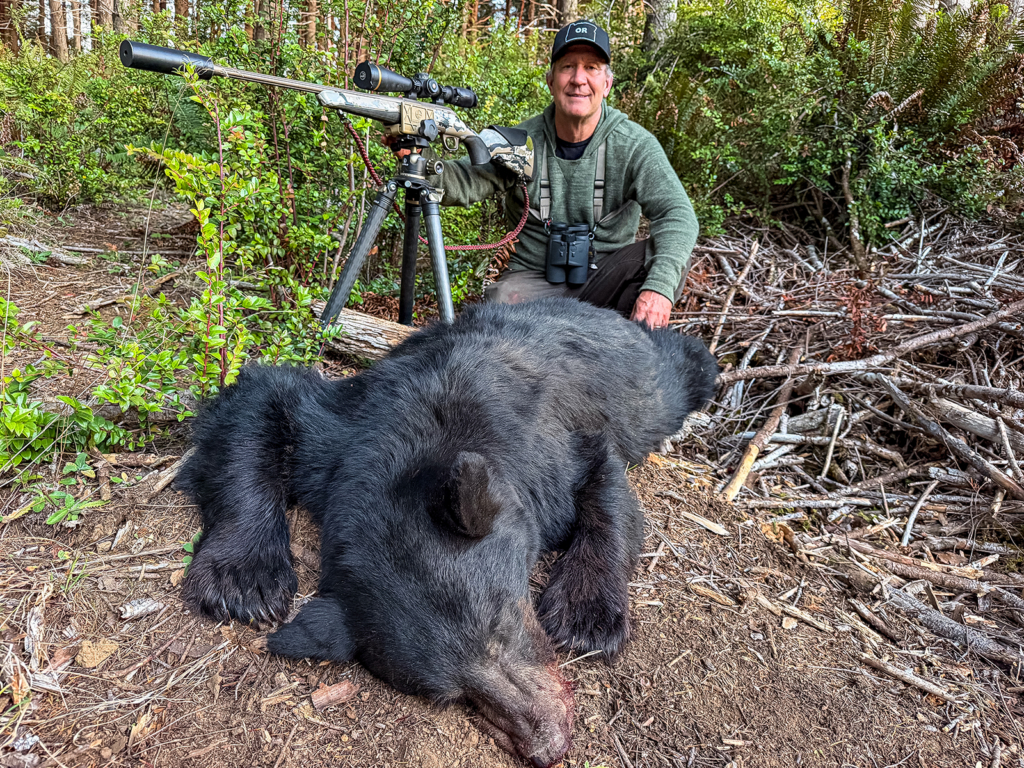
After two more days of hunting, my opportunity arrived. The bear cruised up a draw, plucking huckleberries from low-growing bushes. Again, I made a solo stalk as Smith kept a watchful eye from the high ground. A half-mile stalk found me right where I wanted to be. That’s when the evening winds shifted.
The cool breeze slapped the back of my neck. I knew the consequences. I still had 50 yards to go before reaching my designated shooting spot, so I quickened my pace, not worrying about the noise, but about my scent carrying to the bear.
While moving, I secured the 6.8 Western into the saddle and fully extended the tripod’s legs. I prefer shooting from a knee, with my elbow solidly anchored into the same-side knee, but with the wind I knew I’d likely need to shoot fast and use all the elevation I could get.
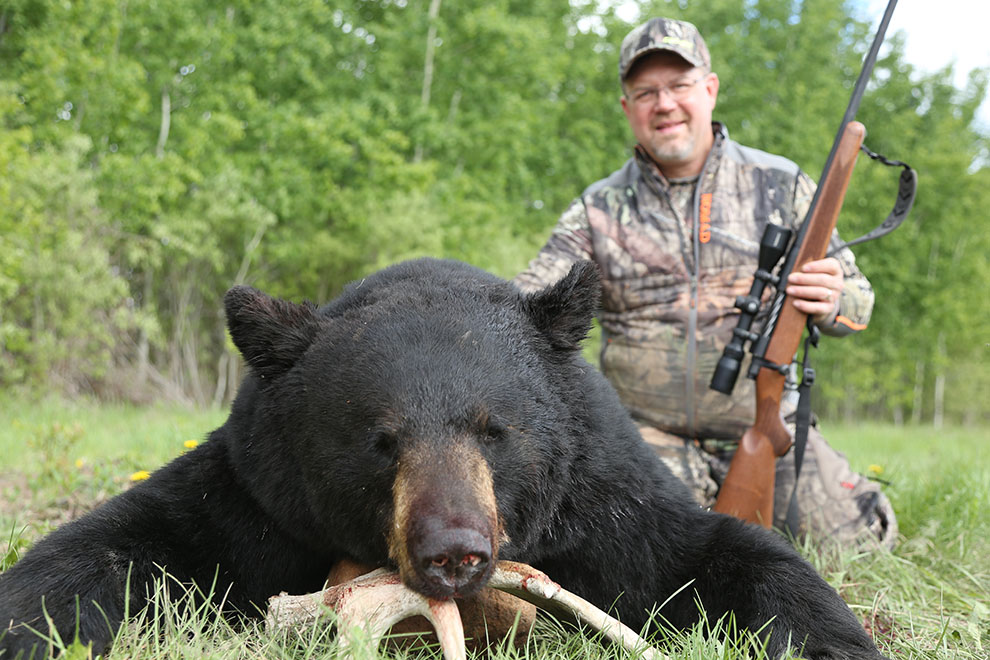
When I reached the target spot, the bear had already smelled me. It was running up the draw, toward the timber. The instant I got set, the bear turned and ran up the timberline. The shot was quick. At just under 150 yards, the bear folded at the shot.
We skinned and quartered the bear, finishing in the dark. In the distance, Pacific waves hammered the sandy shoreline. In the timber, elk bugled with captivating frequency. It was a fitting end to a blessed week. Next month I’ll be hunting elk here with Smith, the first time I’ve held a bull tag in this magical land.
The Optics
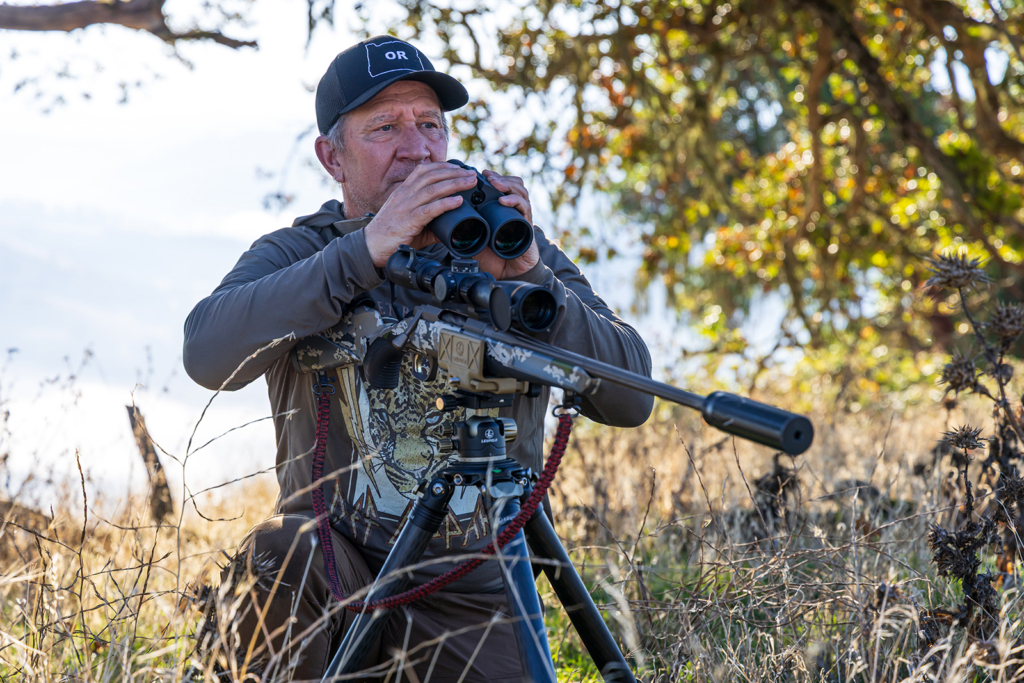
On each of these hunts, Leupold’s BX-4 Range HD GEN 2 12×50 mm was my binocular of choice. I like the 12x for the long hours of glassing amid expansive country. The rangefinder is incredibly fast and very precise.
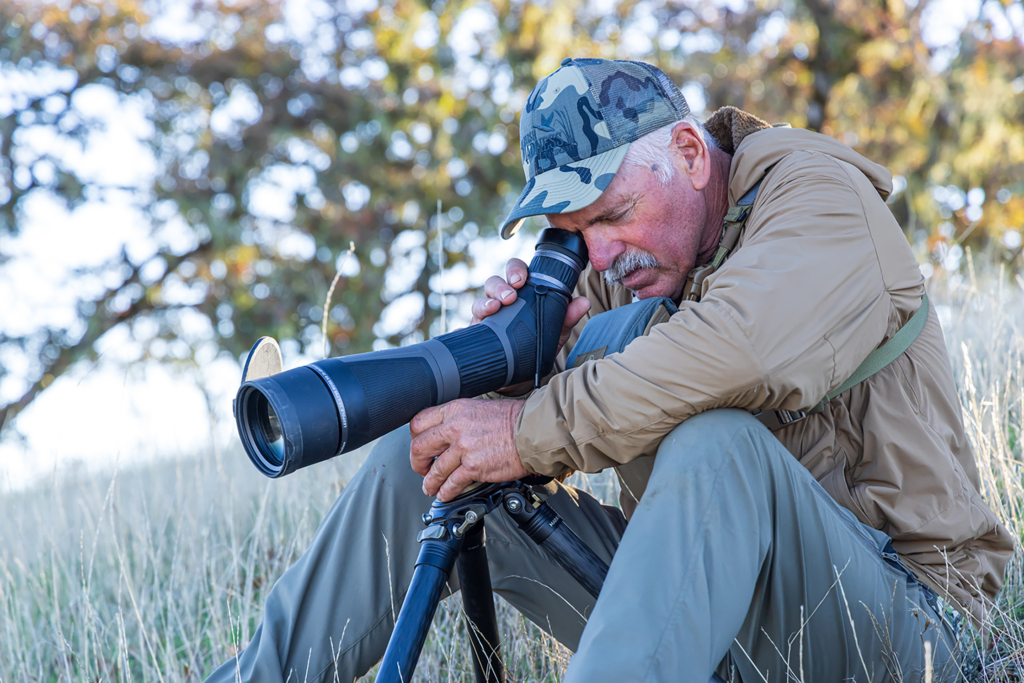
Jody Smith spends four months a year guiding big game hunters in Western Oregon for deer, elk, and bear. He uses a Leupold SX-4 Pro Guide HD spotting scope in 20-60x85mm. When you devote 8 to ten hours a day to glassing in early fall, quality optics are a must. This is a great spotting scope for sizing up bears from a distance and picking apart brush searching for parts of bedded whitetails.
My go-to rifle scope on the Browning 6.8 Western is a Leupold VX-6HD 3-18×44. I had a Custom Dial System (CDS) made for the bullet I shoot and combined with the scope’s ability to perform in low light and heavy shadow, the result is a reliable, quick-handling optic. When I acquired the bear running through shadows in waning daylight, I lost the crosshairs in the black pelage. All I saw was the red FireDot glowing against the black hide.
Of all the hunting camps I’ve been in around the world over the past 50 years, black bears are the most missed and crippled animals. A glowing reticle removes all guesswork about where the crosshairs are, and should be, before you pull the trigger. This was my 54th bear, and I can attest to the importance of fast, accurate target acquisition on these animals.
Note: Signed copies of Scott Haugen’s new book, Elk Hunting The West: The Experience, are available at scotthaugen.com
“