Here are several pointers to help you extend your effective hunting range and make longer rifle shots in the field.
by Darron McDougal
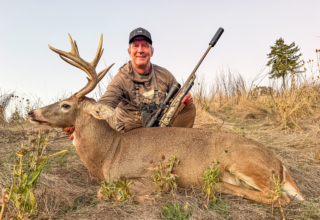
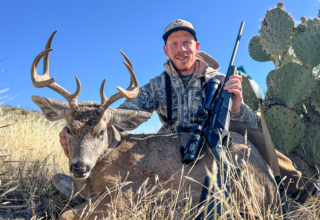
The mature but diminutive Coues buck posed like a portrait, quartering away at exactly 400 yards. In his world, nothing existed but the doe he was guarding. Still, getting closer wouldn’t be an option. She could drag him away in seconds, plus the brushy slope below was far too thick to negotiate on the dead-calm morning.
I got prone and propped my rifle on my pack. My crosshairs bounced rhythmically with my heartbeat; I was shocked by how swiftly my heart was beating for this little deer. A few times, I wanted to shoot, but I held off. I had never fired a shot at a live animal at this distance, but I had shot targets much farther and knew I had the skill. I calmed myself down, adjusted my pack, and finally was steady enough. Boom!
The buck bolted 15 yards and paused. I worked the bolt and quickly issued a second bullet, dropping him instantly. Upon retrieving my handsome little buck, I noticed side-by-side bullet holes behind the shoulder. Both hits were perfect, which doesn’t happen by accident.
Setting the Stage
I grew up in Wisconsin, where most rifle shots at deer are within 100 yards. A long shot in the Badger State timber is 125-150 yards. It’s not surprising, then, that I was skeptical when I squeezed the trigger on a doe antelope 240 yards away back in 2015. I was well-practiced before taking that shot, but seeing is believing when you begin stretching out your rifle’s legs on live animals. The heart shot yielded fast results, and I knew right then that I could become effective at beyond-average distances, given more experience and better equipment.
I’ve never worked with a mentor or shooting coach, so the tips we’ll discuss are things I’ve learned through trial and error. I must, however, give Roger Raglin credit for hammering home in his VHS tapes (which I practically wore out during my teens) the fact that the shot must surprise you. Now, let’s get to the tips that have helped me.
1. Shoot a Caliber You Can Handle
Like most, I was flinchy in my teens. Shooting a .410-bore shotgun or a .22 LR was one thing, but shooting a .30-06 Springfield was another. I shot it well enough to kill deer from a bench at the rifle range, but my anticipation mounted before each shot.
While a .30-06 isn’t necessarily too big for a teenager, starting smaller is wise. The 6.5 Creedmoor and PRC weren’t around back then, but a light-recoiling .243 Winchester would have helped calm my anticipation and tendency to flinch.
Age and stature are irrelevant. You can only handle what you can handle. There is a false perception that a larger caliber is better, but I can assure you that a .223 bullet placed perfectly through the lungs is deadlier than a .300 Winchester Magnum bullet that hits well off the mark. Shoot a caliber you can handle, and you’ll shoot more accurately. Accuracy kills, not power.
2. Shoot Equipment Made to Reach Out
Hunters have dropped more deer and elk with heritage rifles such as the Remington 740, 7400 and 742 Woodsmaster topped with average 2-7x32mm or 3-9x40mm scopes than modern rifles with turreted scopes. Those vintage setups are highly lethal within their limits, but there are better options for pushing the envelope beyond 300 yards.
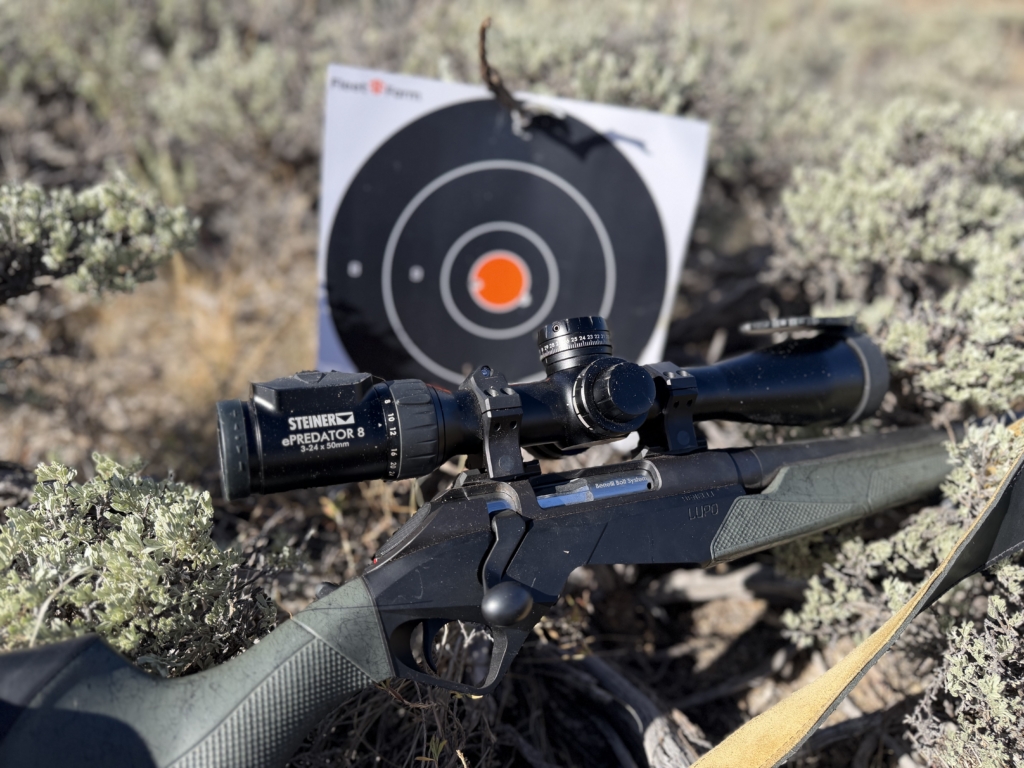
My current rifle of choice is a Benelli Lupo in flat-shooting 6.5 PRC — ideal for deer, elk and antelope. The Lupo offers superior comfort, thanks to its Perfect Fit shim kit, allowing for a customized fit and feel; no gunsmith needed. The rifle shoulders naturally and balances inconceivably well. It features Benelli’s integrated Progressive Comfort System, which reduces recoil to practically nothing. I can shoot a box of cartridges and not have a sore shoulder the next day. That helps me to focus more on the target and not on shot anticipation.
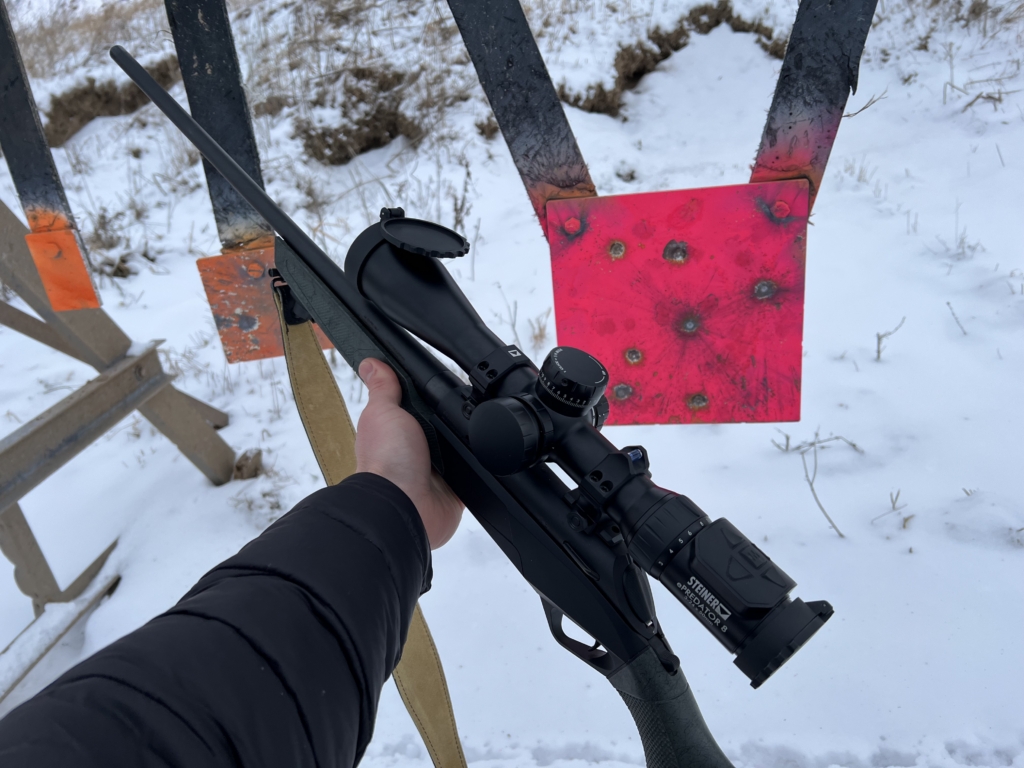
Finally, the barrel is cryogenically treated to produce a more uniform surface, thereby increasing accuracy. It’s also a highly durable, robust gun with an outstanding chassis system and a high-quality bolt. Add a three-shot sub-M.O.A. guarantee in there, and this rifle makes a great choice for any hunter looking to shoot well beyond average ranges but who doesn’t have thousands to spend on a custom rifle.
If you’re like me and don’t have tons of time to spend at the range, a scope with a turret that produces a digital range reference near the reticle is very slick. My Lupo is mounted with Steiner’s ePredator 8 scope. The scope gets digitally programmed through the Steiner Connect app. Connect the scope to the app through Bluetooth, add ballistic info, and you’re off to the races.
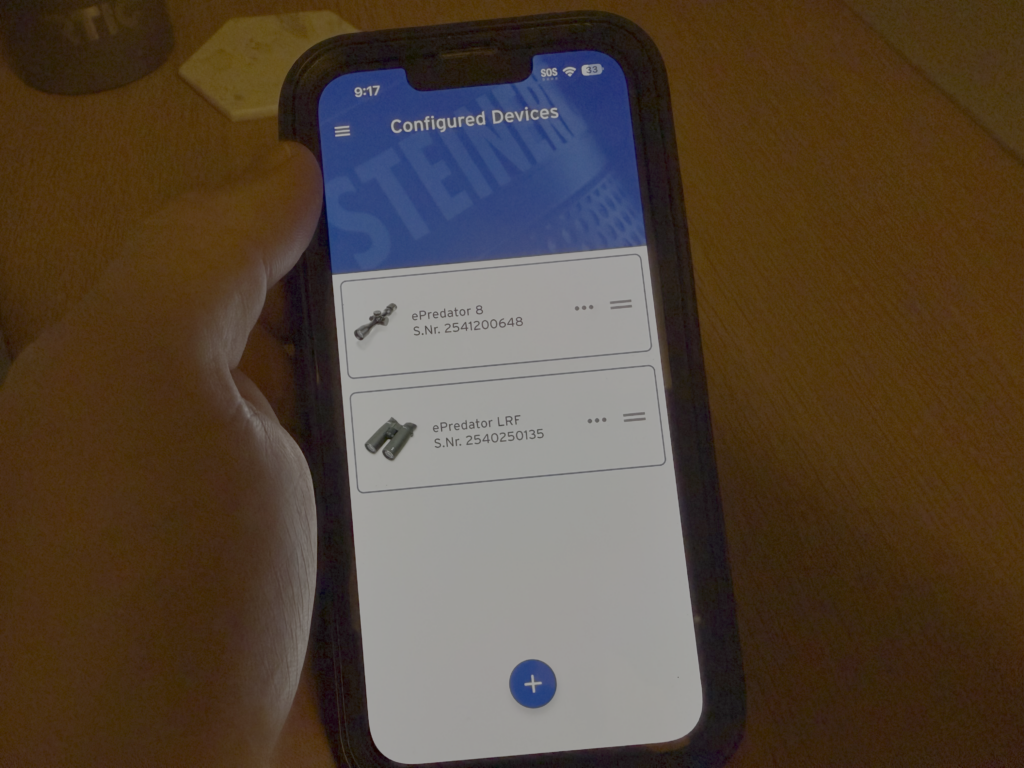
During programming, I found the Norma Bondstrike bullet (designed for long-range performance) that I shoot within the app’s ballistic library. The app and scope make for an easy plug-and-play experience. I sighted in at 100 yards and set the turret to zero. Then, I shot at 200 and made a minor windage tweak. I shot awesome groups at 300 and 400 yards. I also shot the farthest target at the range, which was 573 yards. Two shots rang a 12-inch steel plate. Impressive, considering that 300 yards was the farthest I’d previously shot. This system removes the guesswork. Range, adjust, hold dead on, squeeze the trigger.
While a great rifle and scope help, they don’t automatically make you a 300-yard-and-beyond hunter. Several other things go into being deadly at distance.
3. Take Some Deep Breaths and Relax
When you hit the range to practice, always take a moment to settle in and relax. I always say that a busy range is good practice, given the other people watching and the reports of other firearms. Be aware of your surroundings, but take some deep breaths and relax despite the commotion surrounding you.
Now, to the field. Many hunters can make 100-yard shots really fast. Very few can do the same at 400. So take your time, just like at the range. Inhale deeply, hold and exhale. Feel your nerves and your mind relax. You have to be in the right frame of mind and get your breathing under control before attempting a poke.
4. Always Range the Animal Multiple Times
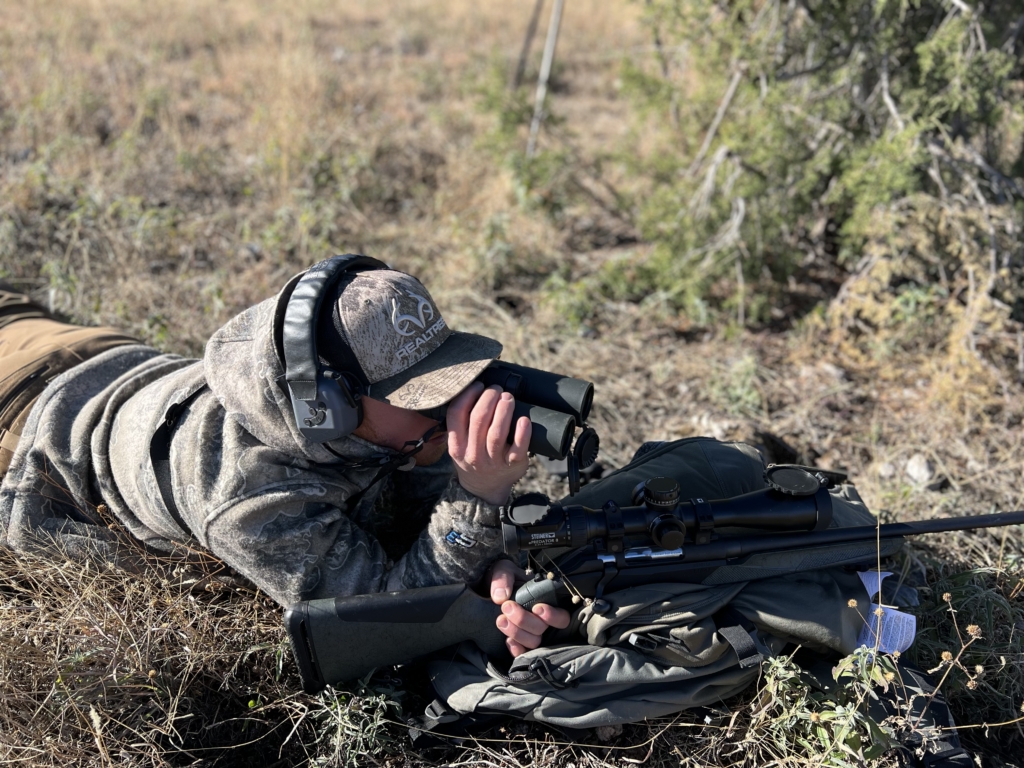
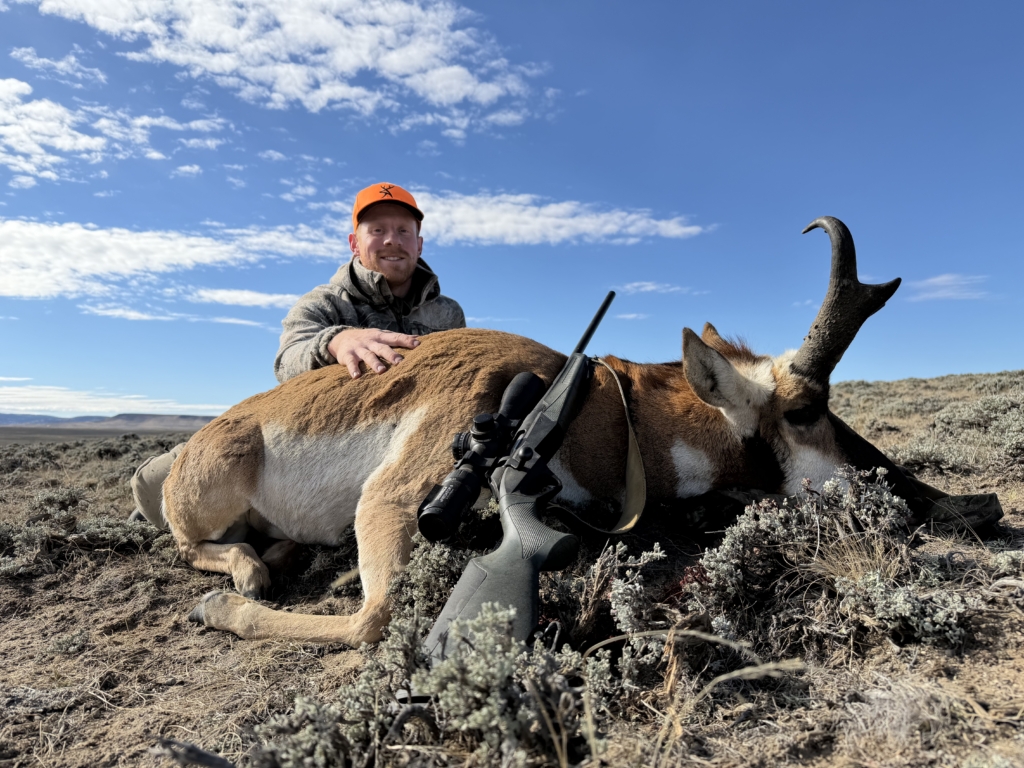
Rangefinding is critical to lethal long-range shot placement. Steiner makes the ePredator LRF rangefinding binocular to pair with the ePredator 8 scope. When paired, the yardage will appear in the scope so that you can reference the distance to the animal as you twist the scope’s turret. Once the turret distance and the rangefinding distance align inside the scope, you’re ready to shoot. I recently took a Wyoming antelope at 380 yards. I ranged him at least six times to make sure I had the correct distance. Once you reach a distance where the bullet is dropping off rapidly, you must be 100 percent certain of your range and set the scope accordingly or know your holdover precisely.
5. Achieve Solid Front and Back Contact
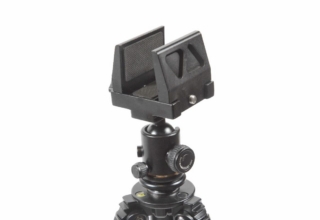
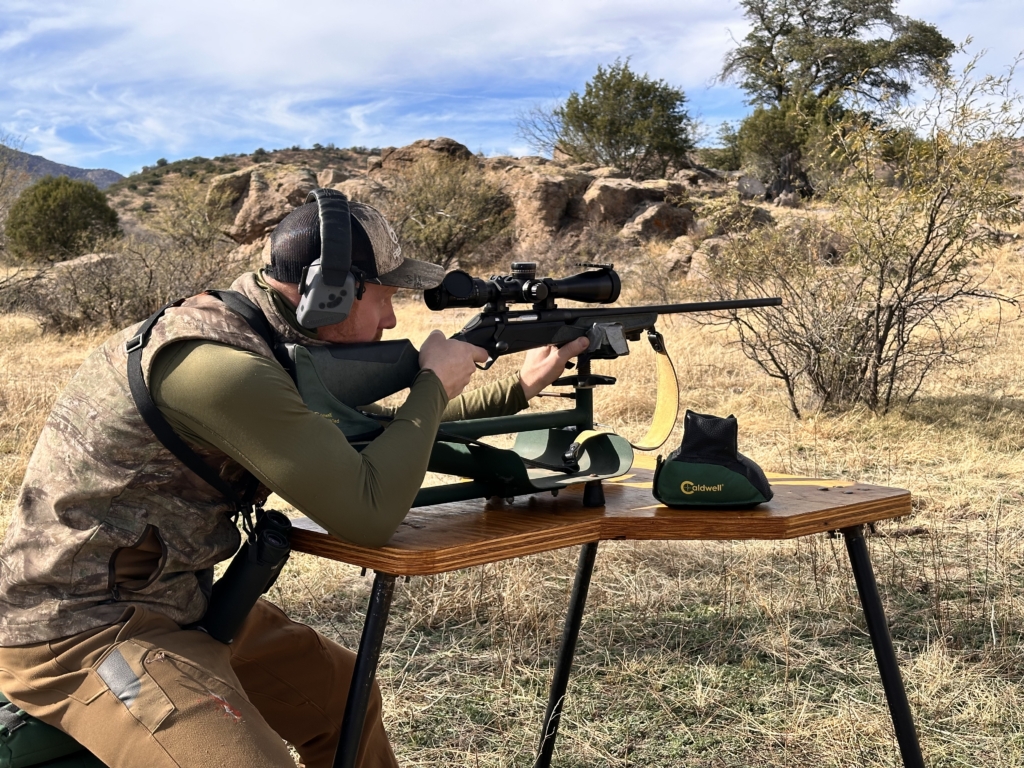
I like the Spartan Precision Equipment SpringBok tripod, which attaches directly to my Lupo. It can be used for kneeling all the way down to prone shots. But on my Coues and antelope hunts, I shot prone from my backpack. In general, the lower you get to the ground and the more points of contact you have against a solid surface, the steadier you’ll be.
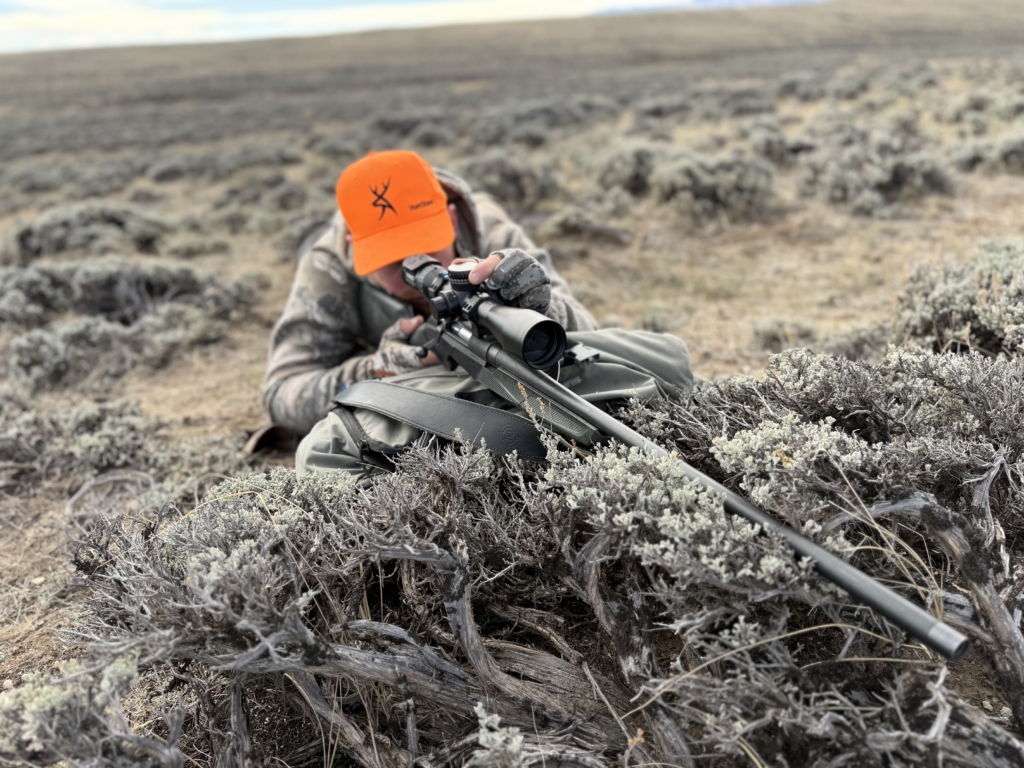
I couldn’t quite achieve zero crosshair movement on my Coues buck, but the crosshair was moving very minimally. On my antelope, I put my pack under my barrel and then wadded up a jacket to place under the stock near the butt. It took a minute or two, but with lying prone and having the front and back of the rifle supported, my crosshair was locked. If the only support had been my shoulder, the crosshair would have bounced due to my heartbeat. My perfectly solid rest yielded a bullet that struck exactly where my crosshairs were before the rifle recoiled. Amazing.
6. Exhale, Squeeze, Be Surprised
As you prepare to shoot, sometimes nervers return with vengeance Once you’re really steady on the animal, inhale deeply, exhale and then begin squeezing the trigger. Once you begin squeezing, leave the outcome fully up to your practice, skill and equipment. You’re not going to change the outcome for the better if you peek. Always let the shot surprise you, and do nothing further until you recover from the recoil and prepare for a possible follow-up shot.
7. Respect Your Limits
Whether your limit is 800 yards or 300 yards, always respect what you’ve deemed to be your maximum effective hunting range. You should know what that is through regular range time. Whatever it is, don’t shoot if the animal is 50 yards beyond it. A big reason I was comfortable with shooting my Coues buck at 400 yards is that I had shot out to nearly 600 yards at the range and did well. That’s another point: always practice farther than you’ll plan to shoot at an animal. It is a confidence-booster.
A Few More Things
Bullet drift is a real element that can affect your bullet’s impact. The bullet manufacturer can provide wind drift in inches per 10 mph of wind at each hundred-yard interval. I’ve always referenced the forecast to get a prospective wind speed. If I’m shooting into or away from the wind, I hold dead-on. In a crosswind, I hold off the amount specified by the bullet manufacturer relative to the shot distance. That has worked well for me, but the farther the shot, the more impact wind has.
If your idea of increasing your effective distance is to be able to dump an antelope at 1,000 yards or an elk at 1,200, that’s entirely different than what we’re discussing here. I was born a Wisconsin whitetail guy, where 150 yards is a long shot. Drawing western tags forced me to hone my skills so I can confidently take and make longer-than-average shots, out to and beyond 400 yards. My gun can probably do at least double that, but I have zero interest in shooting animals from 800 yards because it detracts from the hunt.
I still want to get as close as I reasonably can before shooting. But for those instances when getting closer isn’t an option, carrying the right equipment and being skilled enough to take a longer-than-average shot is awfully nice. The details we’ve discussed here helped me get to that point, so why not give them a try?