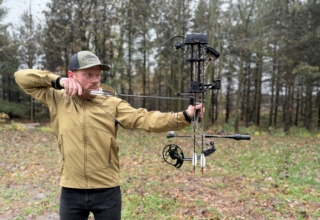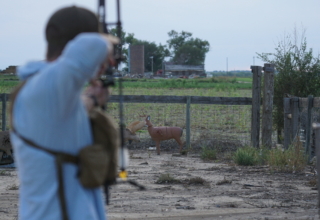
While hinges, thumb buttons, and resistance-activated releases are all the rage among hunters struggling with target panic, the tried-and-true index-finger release still has its place in the field.
by Darron McDougal
The huge eight-pointer was locked down with a doe in a Kansas thicket about 125 yards away. I’ve never grunted and snort-wheezed to a buck more aggressively. Twice he turned to assess the assailant but continued tending the doe. One more snort-wheeze put him over the top. In he came.
I remember whispering from my elevated perch, “Come over here so I can kill you,” hoping the mantra would overshadow an underlying problem that had already cost me a bull elk earlier that fall. But when the massive buck posed broadside 23 yards away, the would-be chip shot crumbled at my thumb’s command. That punchy-natured extremity missed the trigger, and my muscles began “following through” as if I had shot. Worse, that motion caused my release hook to slip from the D-loop. The shot surprised me, but obviously not in a good way. The arrow drove into the dirt beneath the buck. He trotted back to the sumac thicket, unscathed.
I. Felt. Like. An. Idiot.
Struggles and a Solution
Missing that Kansas buck was the final straw. Misses or poor hits had become normal, not exceptions. It was time to either quit bowhunting or make a big change. Here’s the shocker: I switched to an index-finger release, which is very countercultural. Most folks who’re rushing their shots and punching their triggers settle on a hinge, resistance-activated, or thumb-button release. Conversely, I opted for the most “punchable” release type.
Here’s why. My Carter Hunter handheld thumb-button release had been my “ol’ Betsy” for 14 years. With it, I’d successfully taken dozens of critters, including some with longer-than-average shots. But I’d adopted some bad habits with that release. Switching to an index-finger release made sense because it felt completely different than my thumb-button, and I desperately needed to disrupt the cycle I was caught in.
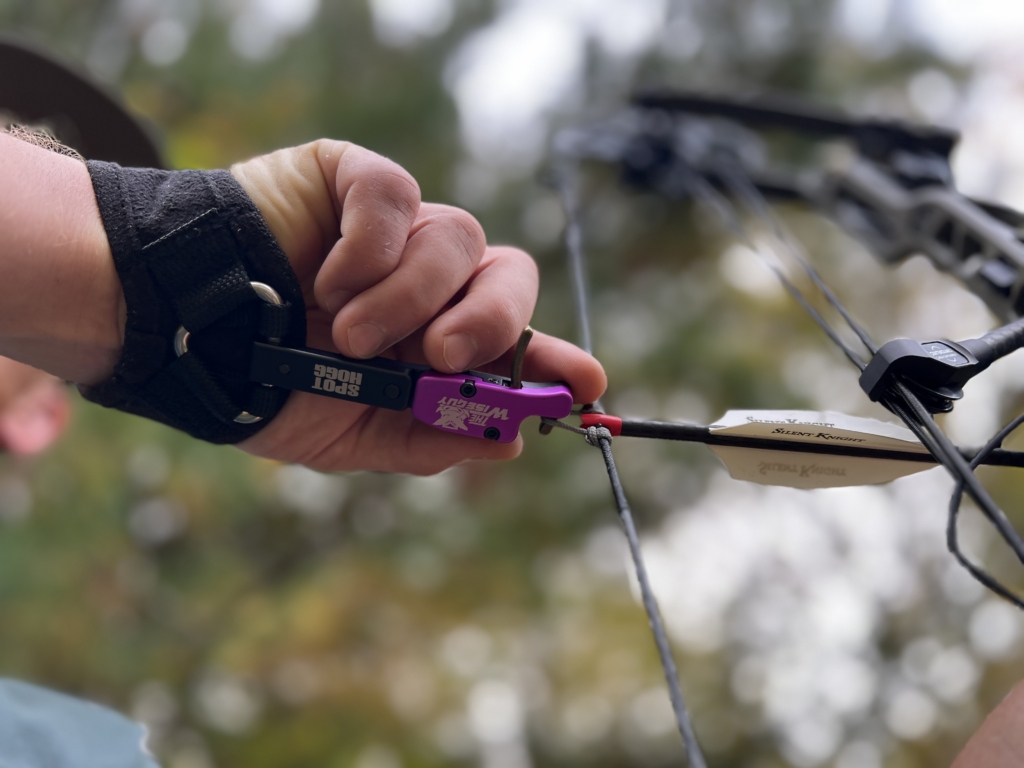
Another reason I opted for an index-finger release is that three years before the Kansas hunt, I attended a hunt for outdoor writers in South Dakota. On that hunt, I shot an index-finger release because a company that makes them sponsored the hunt. I took two whitetail does and a muley buck on that hunt, all with good shots. I left that hunt feeling very confident.
Humans can be stubborn, however. I returned to my thumb-button afterward, and the struggles ensued. Through the ups and downs, that South Dakota hunt was the proverbial “rock in my shoe.” I knew I should be switching to an index-finger release, but it took more failures before I committed.
The Pros of an Index-Finger Release
Now that I’ve hunted with an index-finger release for 10 years, I feel well-positioned to present the pluses and minuses of hunting with one. Let’s begin with the pros.
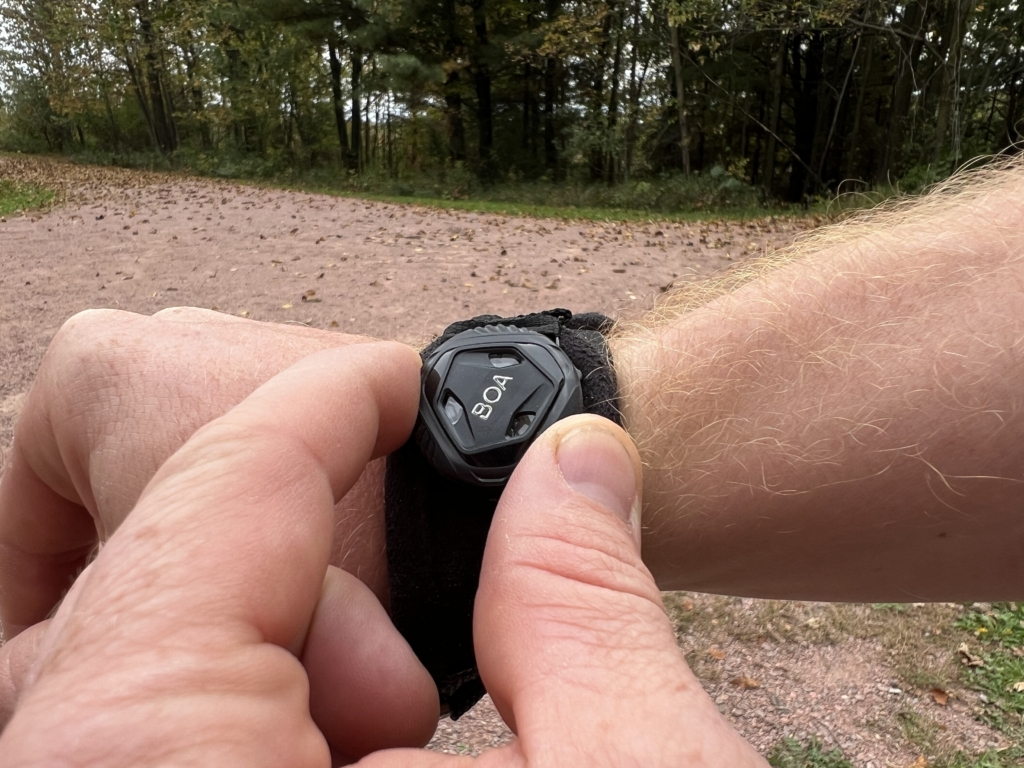
In 14 years of shooting a handheld thumb release, hand-on-metal contact always froze my hand, especially from November through late season in the Midwest. But I found it difficult to shoot the release with gloves. The release was smooth, but I couldn’t get enough hand traction. I also didn’t like how difficult it was to feel the trigger. Contrarily, I am very comfortable wearing gloves while shooting my Spot Hogg Wiseguy index-finger release. The wrist strap alleviates the need for a positive grip, and I often wear a fingerless glove so I can feel the trigger.
Along those same lines, a wrist strap provides an extra sense of control. I had to hold at full draw for more than a minute in -30-degree conditions while waiting for a big North Dakota buck to present a shot, and it was no problem.

An index-finger release is also generally quieter to cock. It can be faster to hook into a D-loop, especially when transitioning from ranging an animal to taking the shot. I also don’t have to worry about losing it by setting it down or having it fall from a pocket or bino harness while stalking. It’s always on my wrist and ready to go. The Wiseguy’s BOA strap is comfortable, and the folding feature lets me wear it even when I’m climbing into a stand or rattling. The convenience is astounding.
Now, here’s the main reason I didn’t switch from my thumb button to a hinge or resistance-activated release. Hunting is highly unpredictable, especially in tight cover with minimal shooting coverage, or when animals are rutting. In other words, things happen fast, making a controlled release superior to a true surprise shot. A buck dogging a doe you mouth-grunt to might stop for a second, then take off running again as you pull through your shot, with a hinge or resistance release. This will cause a gut hit rather than a double-lung shot.
I’ve had enough now-or-never hunting scenarios over the years to put my bet on a controlled shot. A controlled shot isn’t a fancy way of saying “smashing the trigger.” It’s firing intentionally in a smooth motion, with no jerking or flinching. Of course, given ample time, it’s still best to pull through the shot using back tension, but when there’s not enough time, a controlled shot is best. I’ve found that easiest to do with an index-finger release.
The Cons
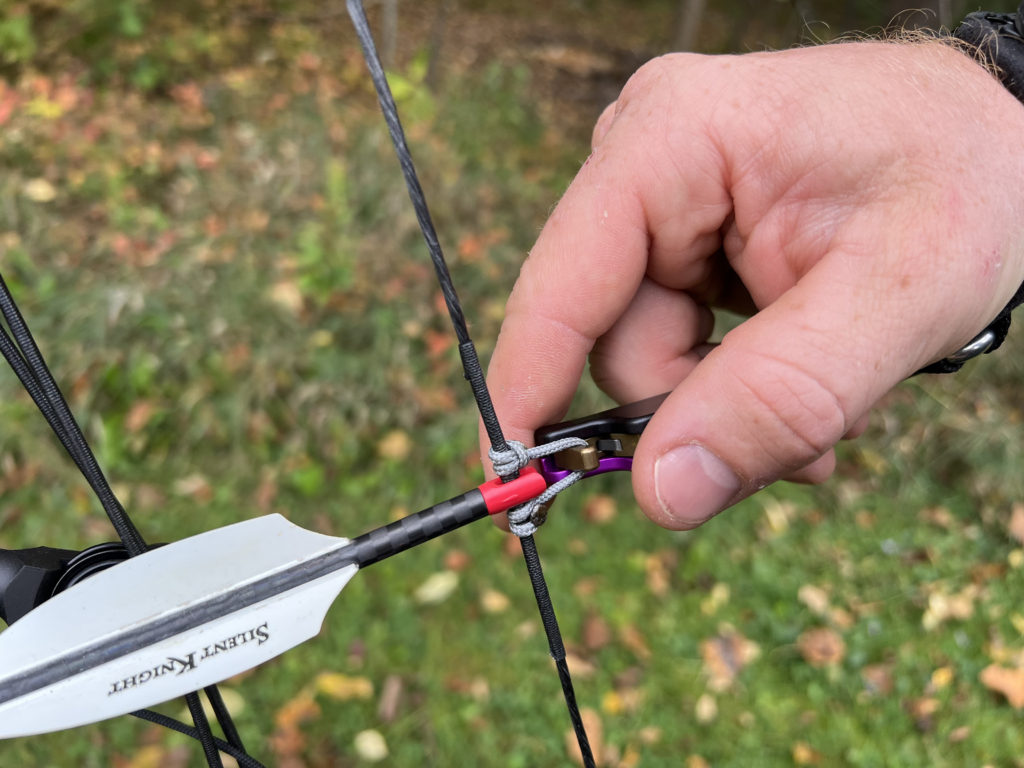
Nothing in bowhunting or archery is guaranteed to work flawlessly every single time when operated by a flawed human. There is no way around it. An index-finger is still the punchiest release type, and if you’re currently struggling with one, look for another solution. However, if you’re punching a thumb release — like I was — perhaps an index-finger release can be a good reset and put you on track toward better habits.
Besides being easy to punch, some archers report that index-finger releases aren’t as accurate at long distances as handhelds. That hasn’t been true with my Spot Hogg Wiseguy. I practice during the summer out to 120 yards and beyond, and I’ve never shot better, even when I had my Carter thumb button mastered. A high-quality index-finger release should be just as accurate as anything, but some archers might be more comfortable with a handheld and thus shoot it more accurately.
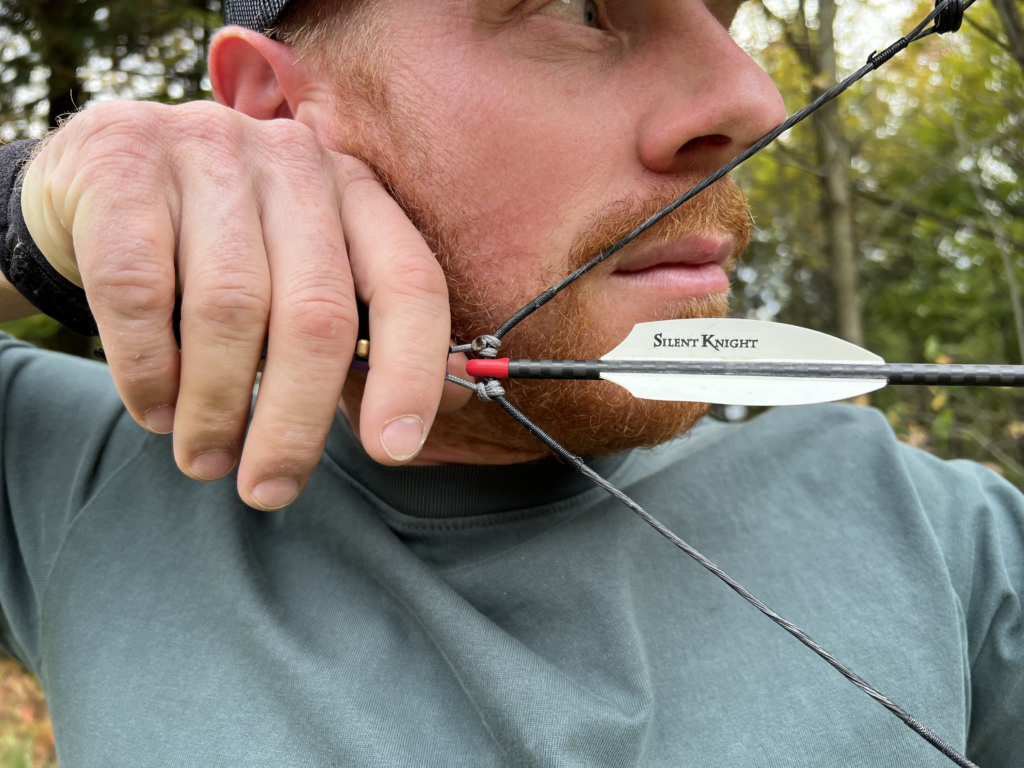
Because it is easy to rush a shot with an index-finger release, a hinge or resistance release will probably yield more consistent accuracy because it slows the shot process. These release types encourage you to take that extra split second to bury the pin where it needs to be.
Making Sense of It All
As more information becomes available, more bowhunters are venturing from index-finger releases to hinges, thumb buttons or resistance-activated releases. There is absolutely nothing wrong with this, but don’t use a release just because it’s the “in” thing to do, and certainly don’t make a big switch during bow season. Only switch if you’ve identified poor habits or low confidence.
Lastly, I want this message to be loud and clear: A release alone will not cure target panic or buck fever. Proper shot execution inevitably involves mental components, and a simple release change doesn’t eliminate them. If you truly have target panic, I absolutely suggest trying a different release, as it can disrupt your bad habits. But it won’t reduce the stress of pin movement or keep you from rushing a shot and punching the trigger. Those are separate issues that you’ll need to work on regardless of the release you’re shooting.

Every release — even a hinge — can be fired correctly or incorrectly. To that end, I hope my countercultural release story inspires some of you not to see the index-finger release as the source of target panic, misses, and poor hits. Under the right parameters, an index-finger release is arguably still the best bowhunting release. It might not be for everyone, but it has certainly helped me find more success.