The gutless method is the easiest, cleanest, and most effective way to break down western big-game animals like elk. Learn to do it, and you’ll never gut another animal again.
by Scott Haugen
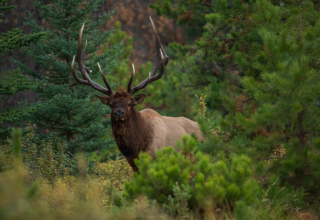
Elk are crepuscular, meaning they are most active in the early morning and evening hours. The final hour of the day is my favorite time to kill a bull. This is when bulls come out to feed or pursue cows. They’re entering the open on their own terms. Elk are relaxed, confident, and easy to put a move on. That is if the wind holds. Plenty of shade and low light conditions offer ideal cover for hunters, and the feeling of evening puts bulls at ease.
Many elk and other big game species get shot in the closing minutes of daylight. Hunters will need to field dress and properly take care of the meat in the dark.
Over the years, we’ve packed out dozens of elk in the dark. Elk are big animals with heavy bones. Leaving them overnight to recover or field dress will result in meat spoilage, even if it’s cold. Elk winter coats are thick, so they retain heat even better than their sleek summer coats. Ideally, these bulls should be quartered right away, but sometimes gutting and removing the skin will suffice to get the meat cooling quickly.
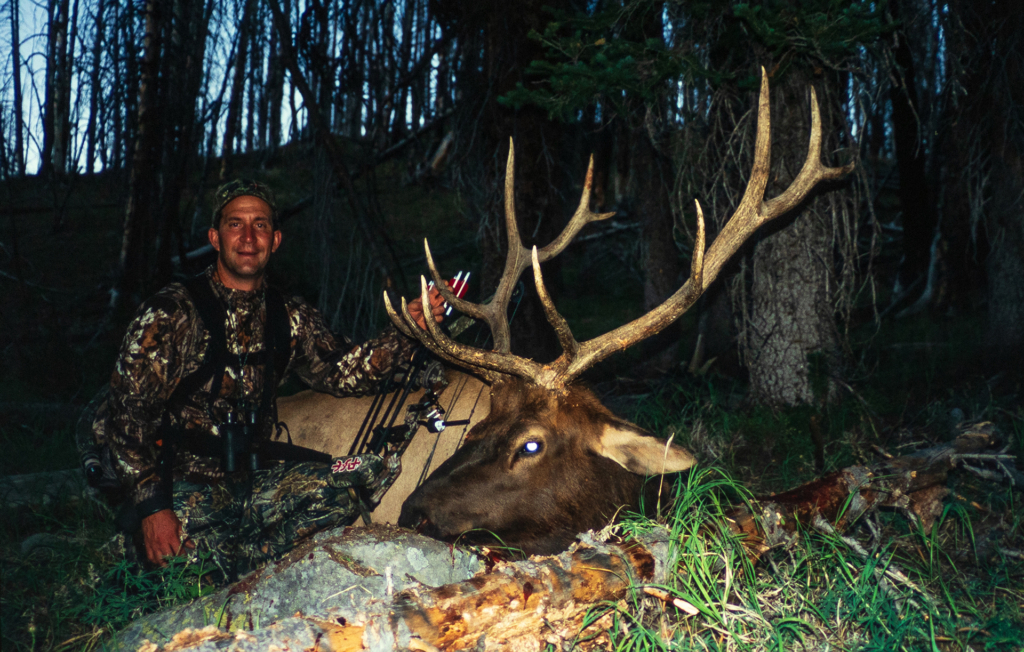
Proper field care is essential to every big game hunt and requires pre-hunt planning. Have knives, a sharpener, pack, game bags, rope, and headlamps with extra batteries ready to go. Quickly breaking down an animal not only prevents spoilage and overly gamey flavors, but it also optimizes the end product, which is why we hunt. Elk meat is amazing.
The most efficient way I’ve found to break down a big game animal is the gutless method. I’ve done this on hundreds of big game animals around the world for decades, including giraffe and Cape buffalo in Africa; moose and brown bears in Alaska. No saws are needed, as every cut is made at the joints. A 4-inch bladed knife and a steel are all you need to break down any North American big game animal. The only time you’ll need a saw is to remove the skull cap of an elk, moose, or caribou, and you can do that easily with a compact folding saw.
The gutless method of breaking down an elk and all other big game animals keeps all internal organs inside the body cavity, and it’s very clean. You’ll have minimal blood on your hands when done.
Starting with the animal on its back is ideal, though not always possible in rugged terrain. Because of their size and how they come to rest, elk breakdowns often start with a dorsal cut, removing meat as you go: backstraps first, then the quarters and neck meat.
If you can get the animal on its back, start the first cut at the genitals and run it under the skin up the stomach to the brisket. If you’re not keeping the cape, continue cutting to the base of the neck. Be careful not to cut too deep and puncture the stomach.
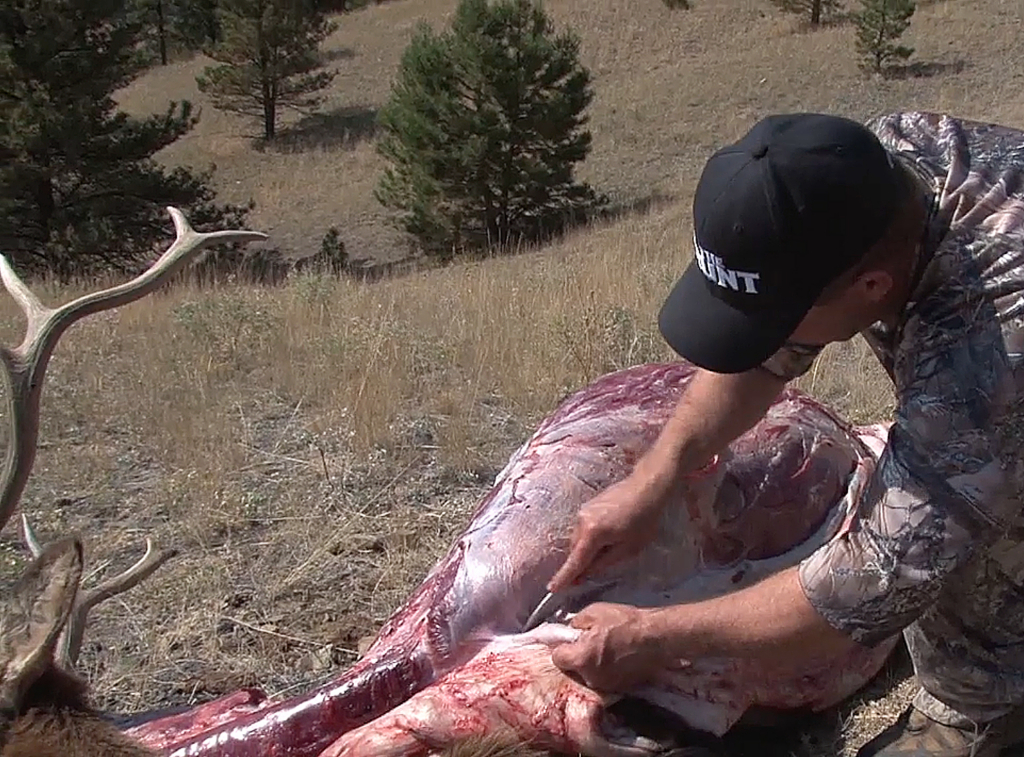
Next, grab a foot and insert the knife on the inside of the knee joint. Lift and slide the blade down the inside of the leg to the center of the body, meeting the initial mid-section cut. Repeat this cut on the other legs.
Make all cuts from the inside of the hide, out. Cuts through hair will dull a knife and leave too much hair on the meat, which creates an off-putting flavor.
Next, cut the hide around each knee joint. Leave the lower legs attached for leverage while skinning the rest of the animal. The lower legs are convenient for handling, packing, and even hanging, and you can remove them later.
With all four leg cuts joining the initial cut up the center of the body, it’s time to start skinning. It’s usually easiest to skin one side of the animal, then the other, but sometimes body position on bigger game puts the hide in a bind. When this happens, cut where necessary to relieve pressure on the hide. Lift and cut around the legs, along the stomach and down the neck, all the way to the spine. Repeat on the other side. When you finish skinning, the entire hide will lie flat on the ground and surround the carcass, providing a clean work area. This also allows heat to escape.
The hide is attached to the carcass only around the neck. You’ll cut it away after you get the bull broken down. Remove the four quarters. Start with a hind quarter, as this massive muscle group needs to cool the quickest.
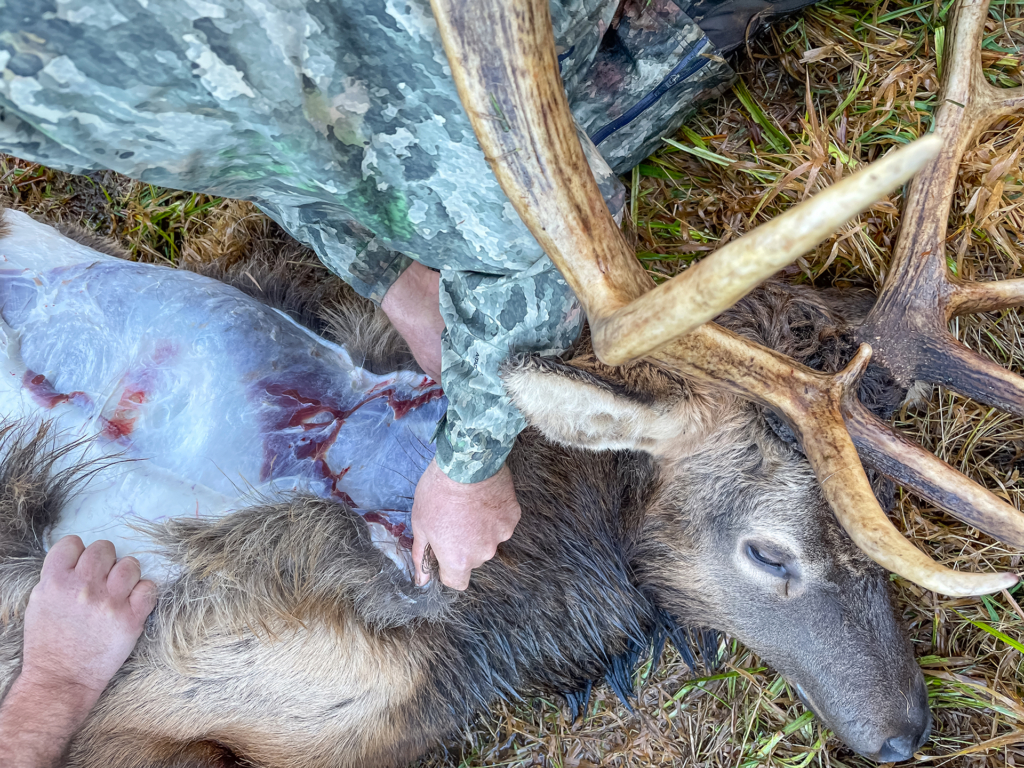
As you cut around the back of the hindquarters and near the tail, the skin is firmly attached. Keep cutting at the points of most resistance, peeling the hide as you go.
To remove a hind quarter, cut down the inside of the leg, through the muscle, keeping the knife tight against the pelvic bone so as not to puncture the stomach. The only blood released in the gutless method happens here, when the femoral artery is severed. Let the blood drain down the hind end. Once the bleeding stops, cut through the muscle until you reach the ball-and-socket joint. The socket tissue is cartilaginous and easy to cut through. Continue cutting against the pelvis to the backbone until you remove one hind quarter. Repeat on the other side, then hang the quarters in the shade to begin cooling.
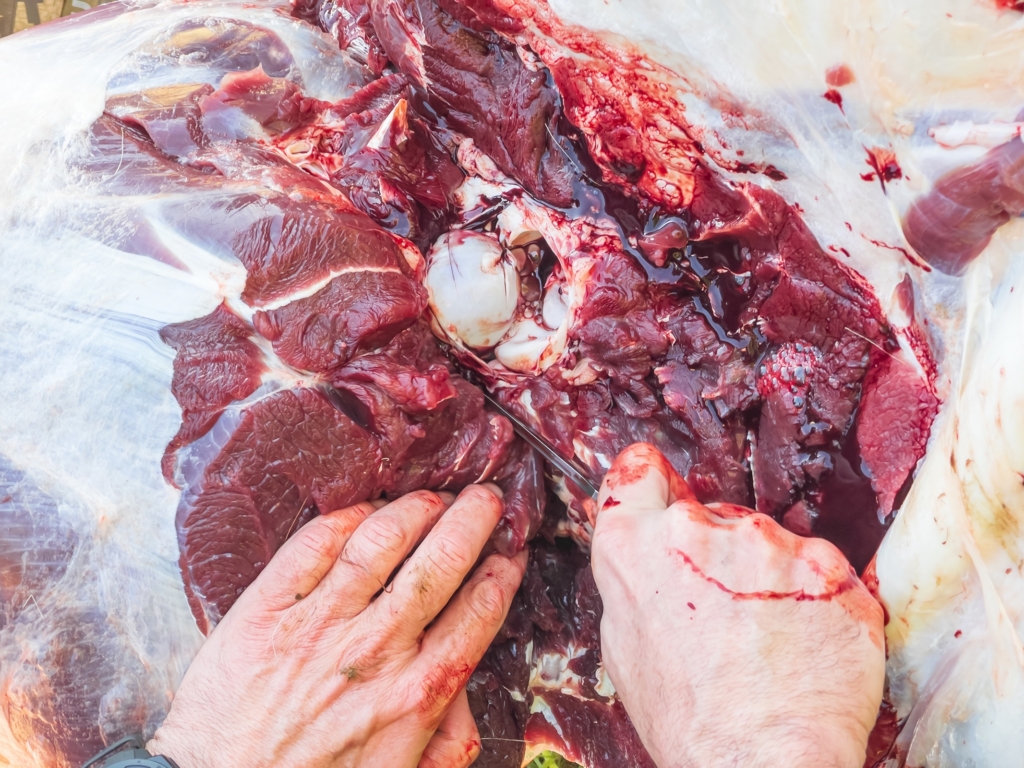
Front shoulders are simple to remove as there are no bone-to-bone connections. Lift the leg away from the carcass and cut from the underside to separate it from the ribs. As you reach the scapula, don’t cut too deep, as it can compromise the backstrap.
With both front legs removed, carve out the backstraps. The backstrap runs from the upper portion of the neck, under the scapula, to the pelvis. Slide the knife blade down each side of the spine to free the backstrap. Peel the silver skin, or fascia, off the backstrap, from the spine down toward the ribs. Once the silver skin reaches the ribs, it won’t peel any further. Go to the hip joint and crosscut the backstrap at what’s called the H-joint, where the hip meets the backbone.
Grab the severed end of the backstrap, lifting and cutting all the way to the neck. Make an “L”- shaped slice with each stroke of the blade, going from the top of the spine to the ribs, or vice versa. Keep the blade against bone with every cut until the entire backstrap is free. The further you cut up the neck, the more sinuous the backstrap becomes. Don’t go too far or you’ll get tough cuts that are hard to cook. Save those cuts to slow-cook with the neck meat.
Remove the neck meat from the bone by cutting down the spine, filleting one side at a time. Neck meat is some of the most flavorful on wild game, so keep it clean for slow or pressure cooking. Neck meat makes a great meal, and you’ll get several if you harvest the neck meat properly.
You can remove tenderloins with the guts still in the cavity. There’s a fused section of spine that’s thin and sharp, called the finger bones. They start right behind the last rib and extend to the front of the hip. Slip your blade under the thin stomach muscle and cut along the finger bones. If the stomach is bloated, make a small hole wherever there is space so gas can escape and provide more room to work your hands. Reach inside the incision, run your fingers along the tenderloin, then insert your knife and keep freeing up the loin. If desired, cut more stomach muscles to expose the area. The more you do this, the easier it becomes.
Now it’s time for the rib meat. Cut the strips of meat from between the ribs, along with any meat on the outside of the ribs. You can fillet the meat off the outside of the ribs, then disarticulate the meat left between the ribs. If you want to cook ribs with meat on the bone, remove the ribs entirely by cutting up through the cartilage at the brisket and disarticulating each rib at its joint on the spine. This is easy to do on deer, but with elk, removing two or three ribs at a time makes the process easier because their bones are thicker.
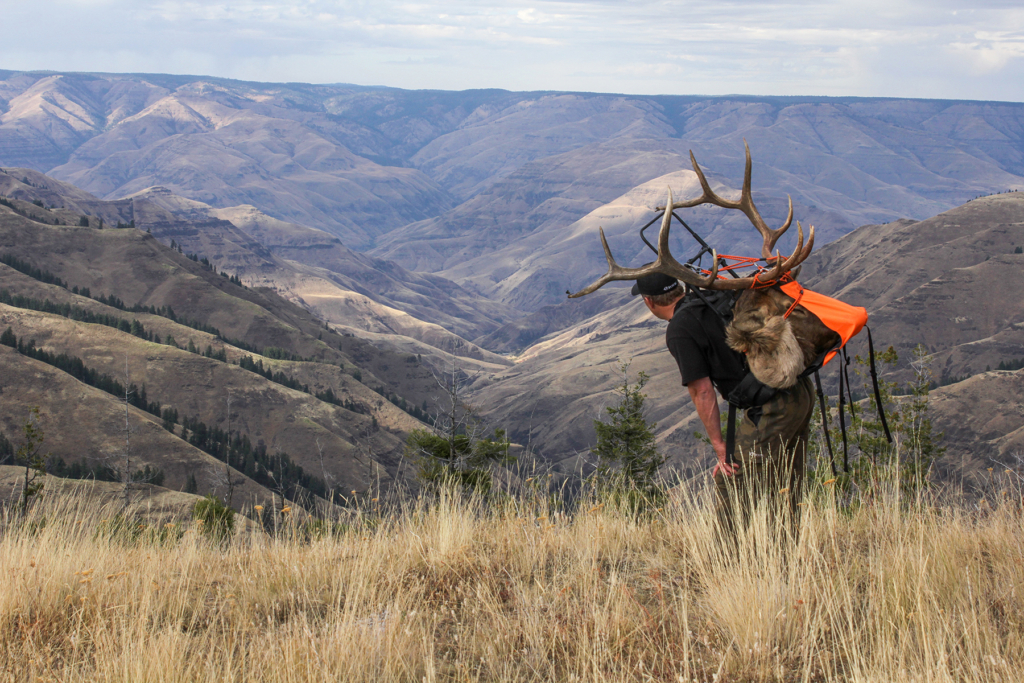
If you’re hunting elk with buddies, have a meat plan. It’s not uncommon to kill bulls in a short time. This is especially important on early-season archery hunts when it’s hot.
On one archery hunt in the Rockies, it was sizzling hot. A buddy and I killed bulls on opening morning. We quartered his bull first; it died in a meadow that was exposed to the sun. We bagged quarters, neck, and rib meat and removed the backstraps and loins. In short order, we loaded his bull onto the pack string. He led the horses more than 12 miles to the trailhead, loaded them into the trailer, and drove to the nearest town where we’d arranged for cold storage.
Fortunately, mine died in thick, cool timber. He made it back to camp in the middle of the night. He got three hours of sleep, then we loaded up my bull and camp and got off the mountain. It was a lot of work, but we didn’t lose an ounce of meat. Stories like this go on and on. It’s part of elk hunting. Preparing for meat care is a top priority.
Cooks typically take the blame for the gamey flavor of wild game when the real culprit is improper field care. I began using the gutless method of field dressing in 1990, when my wife and I lived in Arctic Alaska where subsistence hunting for moose, caribou and Dall sheep made up our diet. Today, it’s still my go-to approach.
Note: Signed copies of Scott Haugen’s new book, Elk Hunting The West: The Experience, are available at scotthaugen.com