A dual between optics made by the same manufacturer, here’s a full review of Sig’s 16×42 HDX and 16×50 HDX Pro binos.
by Zach Bowhay
In the optics world, the competition has always centered on clarity, brightness, and glass size. If you wanted a handheld binocular, you were usually limited to powers between 8x and 12x. If you needed more power, something in the 14x to 20x range, you had to mount it on a tripod to keep the image steady.
SIG set out to change that. Their answer was a lineup of image-stabilized binoculars that stayed steady regardless of magnification. They now offer two systems, the Zulu6 HDX and the Zulu6 HDX Pro. The Zulu6 HDX line includes 10×30, 12×42, 16×42, and 20×42 options. The Zulu6 HDX Pro series comes in 14×50, 16×50, and 18×50.
For this review, I wanted to compare the two systems at the same power level. I chose the Zulu6 HDX 16×42 and the Zulu6 HDX Pro 16×50 to see how they stack up in real use.
Technical Specifications
Before getting too far into how these binoculars perform in the field, it’s worth taking a quick look at the numbers.
The Zulu6 HDX 16×42 features 16x power magnification and a 42mm objective lens. They measure 7.08 in. x 2.75 in. x 4.72 in. and weigh 21.9 ounces, which is pretty light for a stabilized bino. Eye relief is 14 mm, the field of view is 3.8 degrees, and the close focus distance is 13.1 feet. The stabilization runs for about 30 hours on a single AA battery, which is simple to replace if you burn through one in the field.

16×50 HDX Pro
The Pro version also runs at 16 power but uses a larger 50 mm objective. It is a noticeably bigger binocular at 8 in. x 2.63 in. x 4.79 in. and weighs 33.91 ounces. Eye relief is 16.4 mm, field of view is 3.7 degrees, and close focus is 18.04 feet. The stabilization system lasts about 40 hours on two AA batteries. It is a heavier setup, but the extra run time and bigger objectives come with the territory.
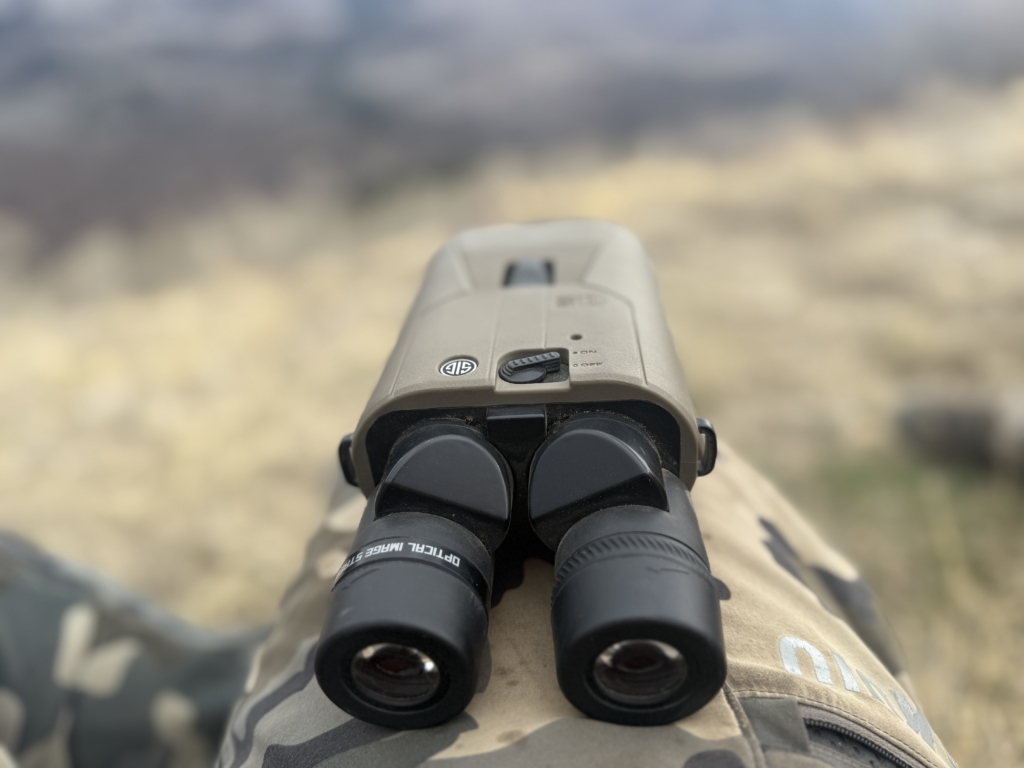
Both models use Schmidt–Pechan prisms built to handle rough conditions. They carry an IPX7 waterproof and fog-proof rating. The Pro model also gets the upgraded HDX Pro glass and coatings, which improve light transmission and color accuracy when the light starts to fade.
Optical Performance
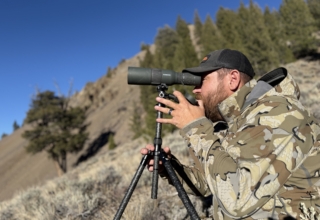
What really drew me to these binoculars was the idea of carrying a higher-powered optic without needing a tripod. I still enjoy putting a set of 15s on a tripod to pick apart country, but the thought of having a true handheld binocular in the 16-power range always felt out of reach.
The more affordable option between the two is the 16×42 HDX at around $990. That is not cheap, but in today’s market, it is a fair price for a 16-power binocular. Because of the price difference, I assumed clarity would fall well short of the Pro model. It did not. The HDX glass is surprisingly good. It is not on the same level as the top-tier European optics, but it is clear, bright, and very usable. Once stabilization kicks in, the view stays steady and sharp without a tripod. The smaller 42mm objective brings in less light than the Pro’s, but I am used to running 42mm binoculars, so it did not feel like a significant downgrade. In extreme low light, they are not the brightest option, but in most glassing situations, they perform well.
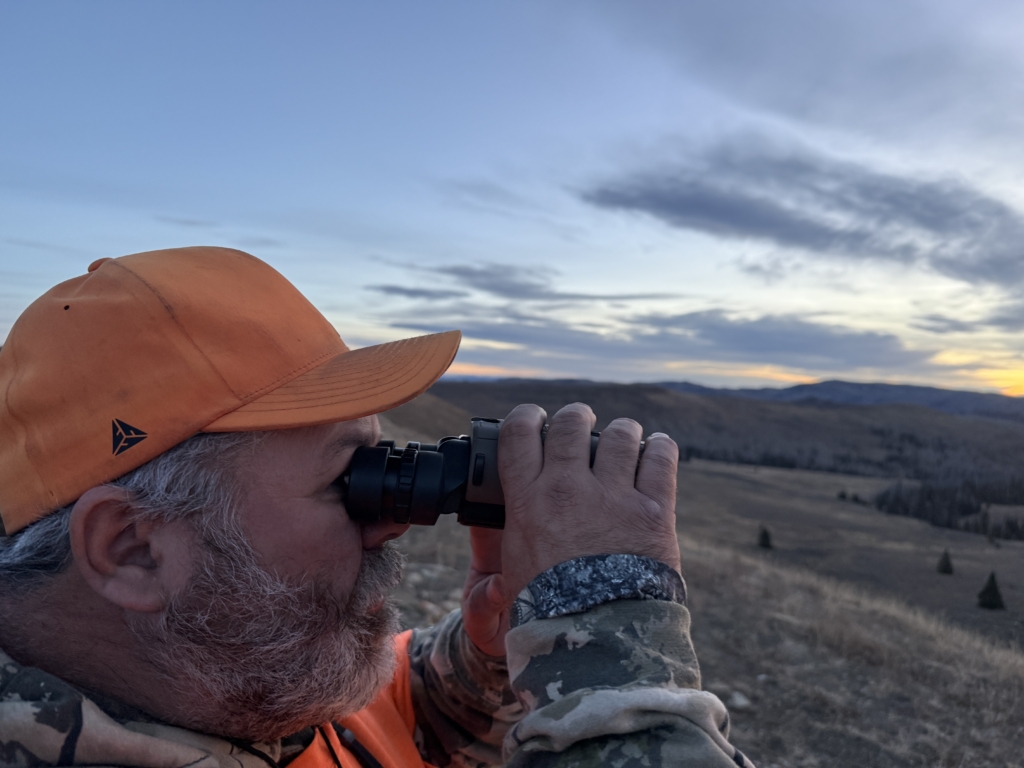
The 16×50 HDX Pro comes in at $1440, so I expected a noticeable jump in performance, and it delivered. These are brighter in low light, and the edge-to-edge clarity is better. The overall image has a cleaner, more refined look, likely due to the upgraded coatings and improved HDX Pro glass. When the light starts to fade, you can tell the difference.
One thing that stands out with both models is the narrow field of view. This is normal with higher magnification. However, most hunters are not used to that in a handheld optic. It is expected, but it still takes a little time to adjust to the tighter window you are looking through.
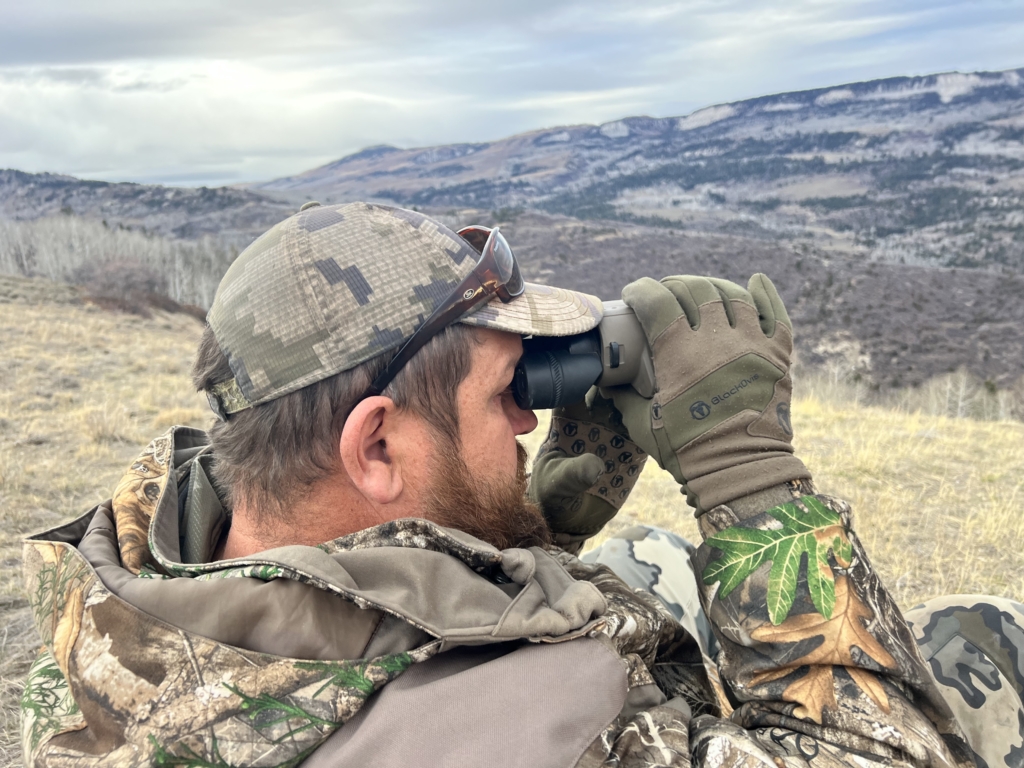
Image Stabilization
The most prominent feature that sets these binoculars apart is the stabilization. The first time I turned it on, the stabilization feature blew me away. All you need to do is flip the switch, and suddenly, everything slows down.
It’s hard to describe, but when you hand them to someone in stabilization mode, many don’t notice at first. I usually have people adjust the eyepieces, focus the binoculars, and then flip the stabilization switch while looking through the binoculars. When they do, they are always floored by the difference.
The two models handle stabilization a bit differently. The standard HDX offers two modes: Scan Mode, which smooths general shake while you glass, and Target Mode, which increases stabilization by roughly 50 percent when locking onto a single spot.
The Pro model uses a more advanced system called OmniScan, which relies on a digital accelerometer. It reads your motion and automatically adjusts stabilization. Sit still, and it ramps up; start scanning, and it adapts to your movement. At first, you might notice tiny adjustments as the system works, but after spending some time behind them, it becomes seamless, and you barely notice the micro-corrections.
Ergonomics and Handling
Beyond stabilization, the look and feel of these binoculars is what users notice first. When you’re glassing for long periods, handheld comfort matters.
The 16×42 HDX weighs just under 22 ounces, which is light for an optic of this power. It’s relatively long, but slim, with minimal bulk. In the hand, it feels very different from conventional binoculars.
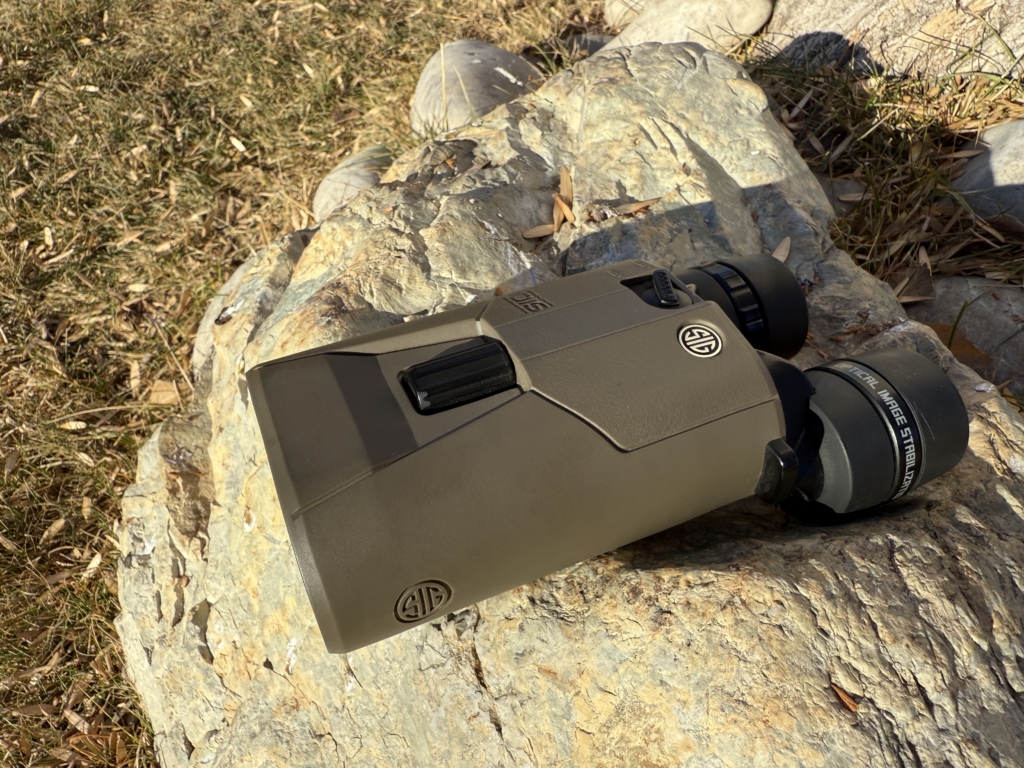
The HDX Pro, on the other hand, is heavier and looks more substantial, but it feels more like a traditional binocular. I don’t have small hands, and for extended glassing sessions, I actually prefer the Pro ergonomically. The extra weight does make a difference, though, and even with stabilization, I often find myself leaning on my knees, a stump, or the truck’s hood when glassing from the road or sitting for a long time.
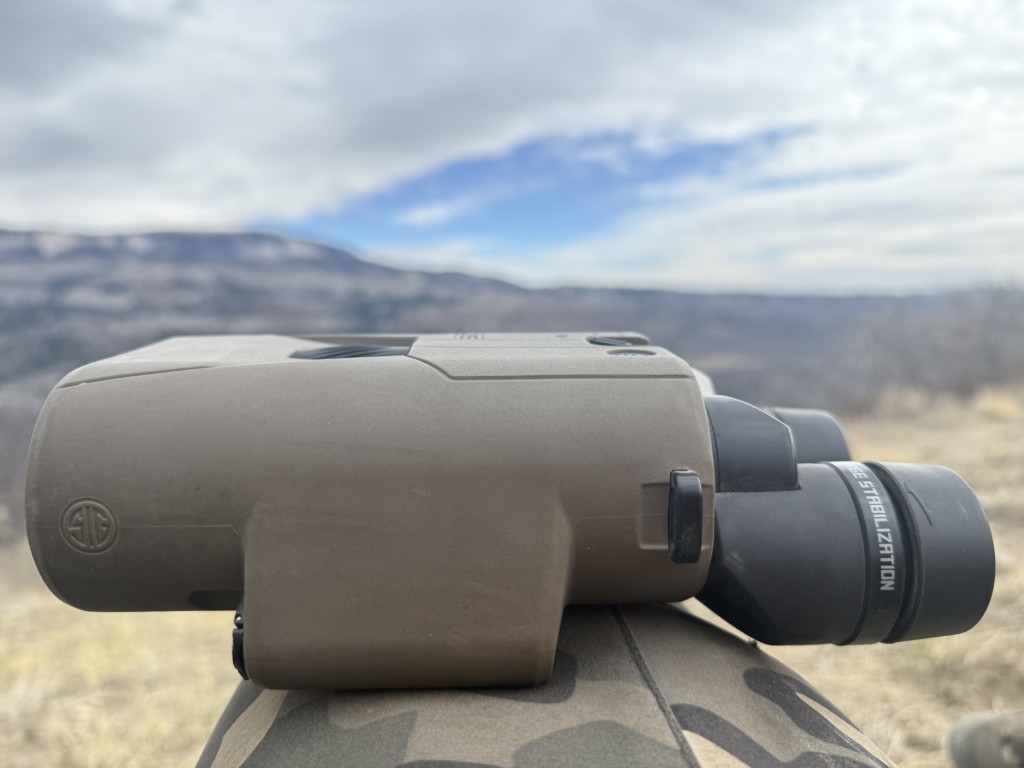
Battery setup is simple. The 16×42 HDX runs on a single AA battery, while the Pro uses two, one on each side of the housing. Both have a 10-minute auto-shutoff to conserve power. It’s not a significant inconvenience, but as the batteries drain, the time between auto shutoffs gets a little shorter. I’ve been using these binos since early spring. I swapped batteries at the end of October, which is impressive.
Real in the Field Use
I spent the season putting these binoculars to work, and here’s what I found. During turkey season, I carried the 16×42 HDX. I was testing out the new Finisher Chest Pack | Blocker Outdoors, and with all my calls and gear, the Pro model wouldn’t fit. By the end of turkey season, I was convinced the HDX would be my go-to optic for bowhunts in the fall.
Once archery elk season arrived, I spent time in tighter timber chasing elk. The 16x was a bit much for that type of hunting. In close quarters, I prefer a lower-power binocular with a wider field of view. If I were to use a stabilized binocular in the timber going forward, I’d likely stick with the 12×42 or even try the 10×30.

When rifle season rolled around later in the fall, I was ready to get back to these binoculars. At first, I planned to use only the larger HDX Pro, but after picking up the new PRO Hunting Chest Pack & Rig – Ash | KUIU, which could accommodate the bigger optics, I decided to carry them. The design fits my harness better and feels more secure, which I appreciate.
Optically, I love these binoculars in the field. When glassing over large expanses and long distances, as I do on later-season elk and deer hunts, the clarity, stabilization, and overall performance made them a pleasure to use.
User Feedback and Concerns
I haven’t had any issues with these binoculars myself, but I did some research on both models. A few users reported some “softness” in Target Mode on the standard HDX. From what I’ve read, those units were quickly replaced by Sig, and the issue has been addressed on newer models.
Another concern, and one I share, is long-term durability. Since both optics use electronic stabilization, there’s always a question about durability and longevity. So far, I haven’t seen any problems, but only time will tell. Even if the stabilization system were to fail during a hunt, the binoculars would still be usable, but without a tripod, you’d lose much of the benefit of high-powered glassing. It’s not a huge worry for me, but if you’re the worrying type, it’s worth considering.
Conclusion and Recommendation
I’ve been fortunate to spend a lot of time behind both of these optics, which comes with its advantages and disadvantages. Anyone who buys either of these 16x stabilized binoculars will be very pleased. The Pro glass is slightly sharper, but the HDX is lighter and more compact, which has its own appeal.
In a perfect world, my choice among the 16x models would be the Pro. They are a touch clearer optically, and ergonomically, they fit my hands better. At the same time, I would also keep a lower power option—like a 10x or 12x HDX—for bowhunting in timber or for glassing from a treestand.
One thing is sure: once you’ve spent time with either Zulu6 model, it’s hard to go back to a standard binocular without missing the stability. If this is just the beginning of what Sig and other companies are doing with image stabilization, hunters are in for something special.