A fast-cycling, quick-swinging, low-recoil .410 bore, the TriStar Viper G2 proves worthy no matter the species.
by Scott Haugen
If you were to grab the very first photo album I created commemorating the many hunts I’ve enjoyed over the decades and open to the first page, you’d see a picture of Dad and me with a pile of mourning doves. I was holding a .410. It was the first hunt of my life. I was 12 years old.
Today, .410s still intrigue me. Like most things in the hunting industry, the technology of .410s has advanced greatly. Fifty years ago, I used the same lead shot for doves, quail, and forest grouse. I still have some of the original lead duck loads I used in the 1970s. I have even shot a few turkeys with those in recent years.
To Read More About Haugen’s Old-School .410 Turkey, CLICK HERE!
Not only have .410 designs changed, so too have chokes and loads. Everyone who picks up a .410 seems to like shooting them. Who wouldn’t? They’re light, quiet, and have virtually no recoil. But hunting with them is a different story.
“You need to quit writing so much about hunting with .410s and switch to 28 gauges,” an industry person recently suggested to me.
I asked him why.
“Because people can’t hit anything with a .410, but they can with a 28,” he came back.
“Then why not just use a 20 gauge?” I asked. The man shook his head. I laughed.
The point is, it’s the challenge of consistently killing birds that intrigues me most about shooting the small-bore .410. First, birds have to be closer to kill than if you’re shooting a large gauge shotgun. Second, your shooting has to be more accurate. Each of these variables forces you to become a better hunter if you’re truly set on achieving consistent success with a .410.
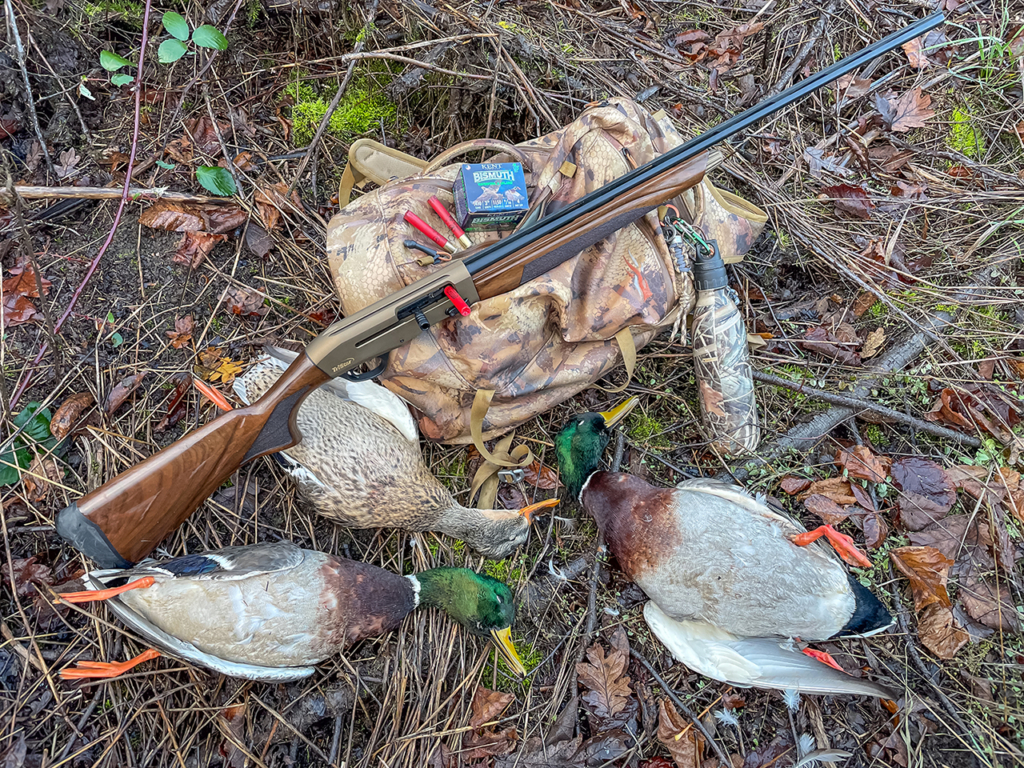
I’ve shot a number of .410s over the years and own a few models. For the past five years, I’ve primarily shot a pump-action .410. I liked it, but wanted a semi-automatic, something that would let me keep a firmer grip on the gun. I’d torn both rotator cuffs, six months apart, and even working the pump action on the tiny .410 was excruciating. It was a long road to recovery.
I shot some .410 semi-autos that buddies had. The guns were nice, but not what I wanted. Then, at the suggestion of a fellow outdoor writer who knows way more about .410s than I do, I picked up a TriStar Viper G2. I’d shot their pump guns before and liked the sturdy build and crisp action.
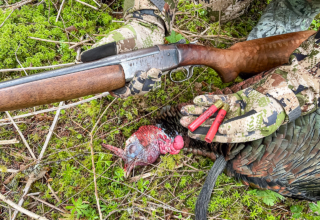
I went all in and got the TriStar Viper G2 with a sleek, bronze finish. The moment I pulled it from the box, it screamed turkeys…then ducks, grouse, band-tailed pigeons, quail, gray squirrels, doves, and more. I love .410s.
A local farmer was having issues with starlings in his barnyard, so I grabbed two boxes of #7 1/2 shot. At the manufacturer’s suggestion, before shooting the light loads, I ran a box of 3” magnum loads through it. In an hour, I burned through three boxes of shells. Every shell cycled perfectly, even the light loads, and I managed to knock down some of the invasive birds.
Instantly, the feel, swing, and follow-through of shooting the Viper G2 were smooth and consistent. Right away, the 5.8-pound, 28-inch barreled .410 felt like an extension of my body. The safety was stiff, which I prefer. Feeding shells into the magazine was crisp and precise, no matter their length.
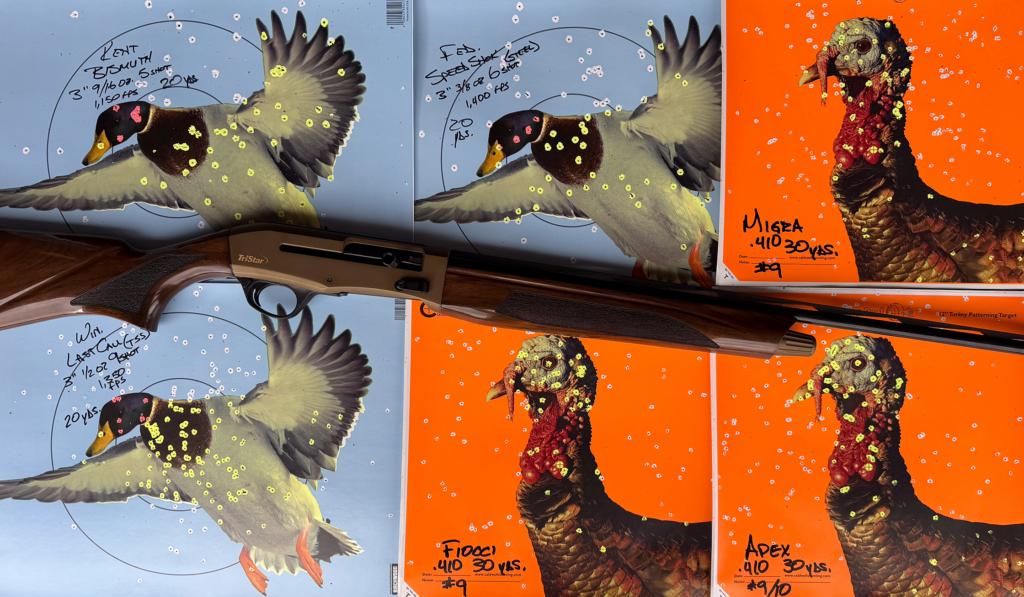
Since purchasing the .410 Viper G2 last fall, I’ve shot a range of shells through it. From 2 1/2” lead to 3” lead, steel, bismuth, and Tungsten Super Shot (TSS). All patterns were well-penned on paper, and all cycled well in the gun. Never has it jammed on me.
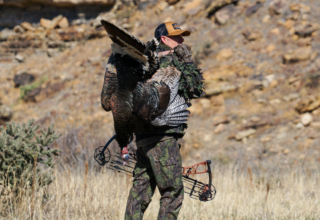
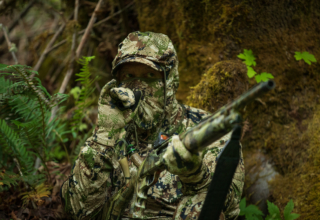
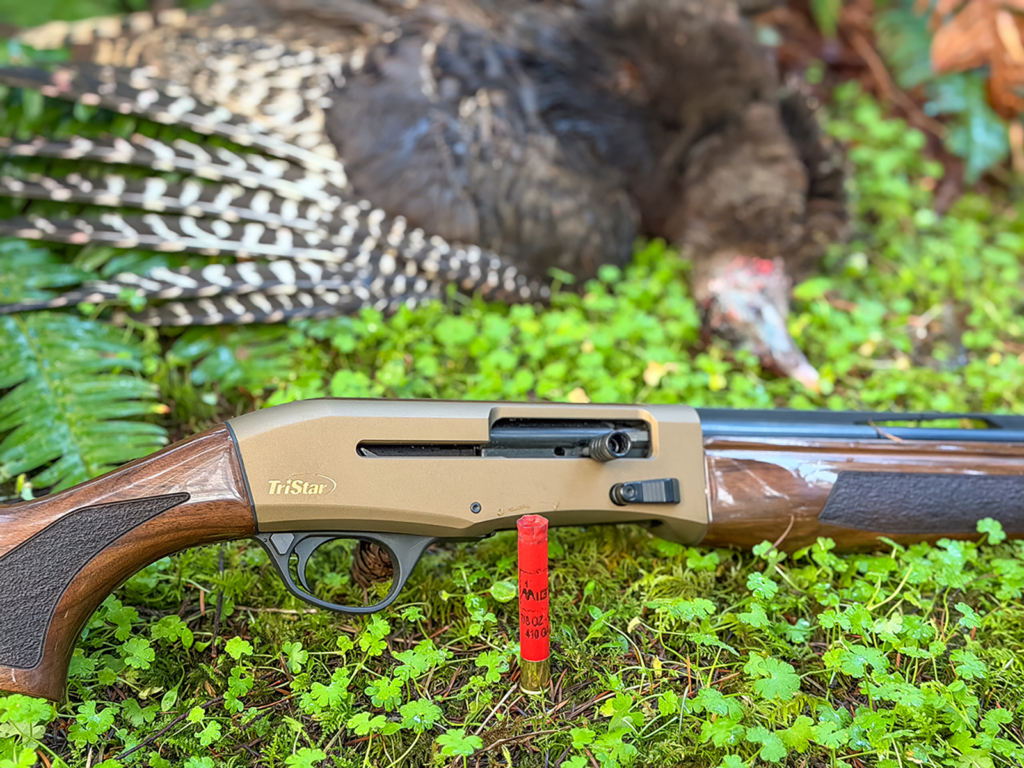
I’ve shot all three chokes, but settled on the full choke for almost every hunting situation. This past fall, I shot two turkeys with it, a jake at 22 yards and a hen at 27 yards. The TSS all but jelly-headed the turkeys. Accurate and powerful, all-around.
A buddy and I took the Viper G2 on its first duck hunt. He also shot a .410. When waterfowl hunting with a .410, I prefer doing it alone or with one friend who is shooting the same-sized bore, that way I’m not competing with them.
Not many ducks worked the creek we hunted, but I did come away with three fat mallards. I shotKent Bismuth Waterfowl & Upland #4shot. Every shot was inside 20 yards. I missed one shot that morning, a total airball.
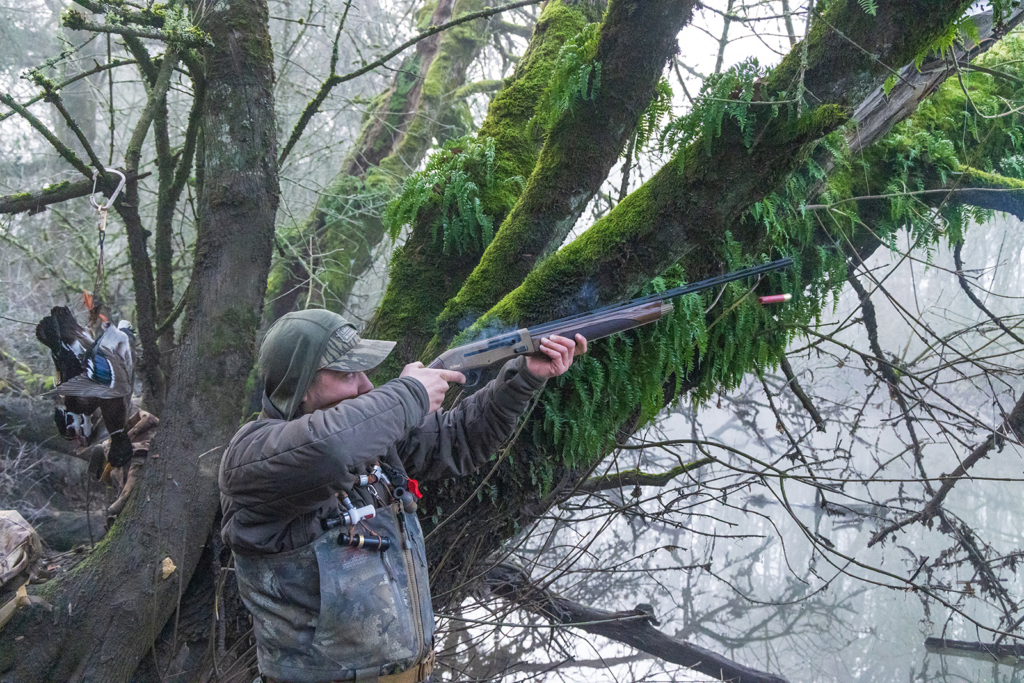
A couple of weeks later, I was chasing ducks on another narrow creek. This creek was wide with short trees growing on the shorelines. Shots would be out to 30 yards. I shot Winchester’s TSS Last Call in #9 shot. The 1/2 oz. payload hit hard, and I went home with a mallard and two wood ducks for dinner.
A few weeks later, I took the .410 out for cackling Canada geese. About 20,000 minimas—the smallest of our cacklers—were grazing in a rye grass field. They were feeding right next to a creek that flowed through a green field. Shots were inside 25 yards. Again, the Last Call TSS #9 did well, quickly dropping a two-bird limit. Both were head/neck shots, a conscious choice when shooting such small pellets.
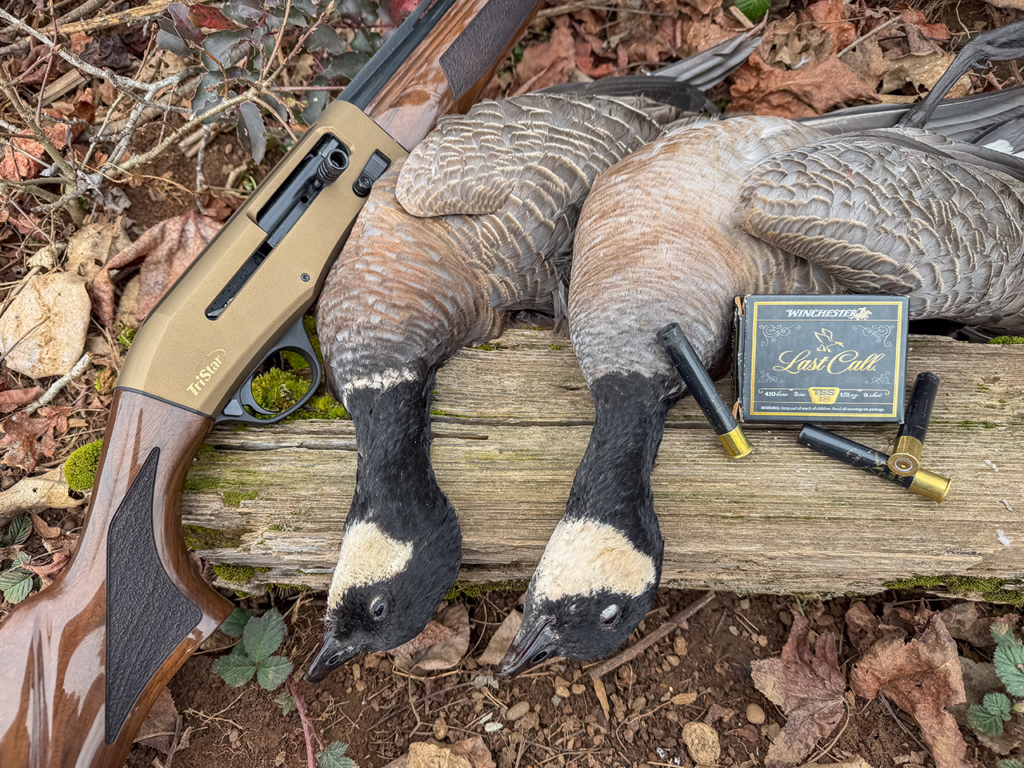
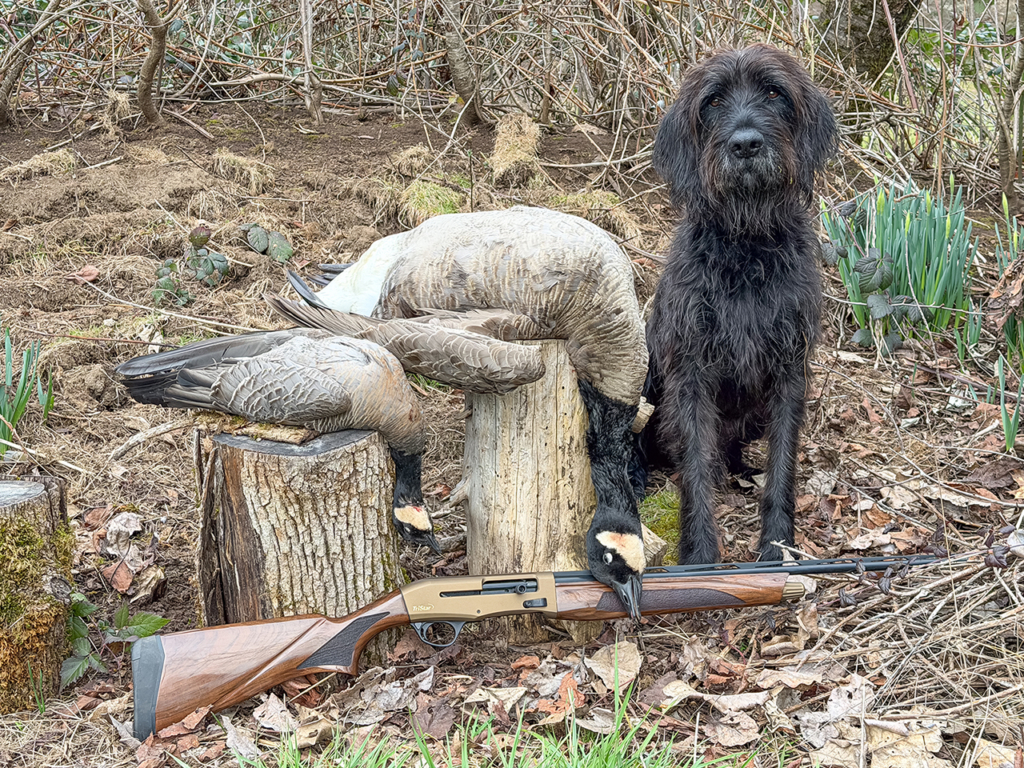
Two days later, the little Viper G2 dropped a big honker and a cackler. Kona, my male pudelpointer, seemed extra proud bringing those geese back, especially the big bird.
The more I shoot this little beauty of a .410, the more I like it. One thing that’s helped me gain consistency in my shooting is off-season practice. And I’m not talking about clay pigeons. I shoot invasive species and small game. Eurasian doves and starlings have no closed season where I live, so year-round hunting of them can be had. Spring and early summer see both bird species flourishing, and the more birds there are, the more shooting practice I get.
A few farmers in the area know to call me when the barnyards fill up with these obnoxious birds. The same is true of menacing ground squirrels around farms. Their holes can be ankle-breakers for livestock. These squirrels are fast and have great eyesight. They put quick-reaction shooting skills to the test.
Such practical practice—shooting live targets rather than clays—quickly builds your familiarity with a gun. And it’s helpful and often humbling, especially with a .410. Shooting fat mallards as they backpedal into the decoys at 20 yards or less is one thing. Trying to consistently hit small, fast-moving targets is another. These high-volume, off-season hunts not only allow you to learn the operating mechanics of a gun, but also test various loads. Patterning loads on paper is a starting point. Shooting birds with those loads is when you truly discover what you like.
The TriStar Viper G2 .410 is easy to clean and reassemble. I’ve run eight brands of shells through it. With the same full choke and shim, the gun has shot every load with impressive accuracy and consistency. Patterning consistency is a rarity, but the Viper G2 delivers it in spades. I let a friend try the gun this past duck season. He shot a limit of mallards with the .410, then bought one.
Note: For copies of Scott Haugen’s popular line of hunting and fishing books, and Tiffany’s cookbooks, visit scotthaugen.com.