Hunting pronghorn with archery tackle can be awesome and seem like mission impossible. Utilize these tips, and you’ll love it more than you hate it.
by Jace Bauserman
I have a love/hate relationship with pronghorn. I harvested my first pronghorn with archery tackle in 2003, and I’ve been addicted since. Over the years, I’ve chased the prince of the plains across the West. I’ve killed them over water, spot-and-stalk, on fence crossings, with decoys, and using horses to get within bow range. I even penned a book about my love affair with these plains dwellers.
I’m not telling you this to brag. Instead, I want you to know that I have 23 pronghorn seasons under my belt, and the information you’re about to digest comes from lots and lots of first-hand experience.
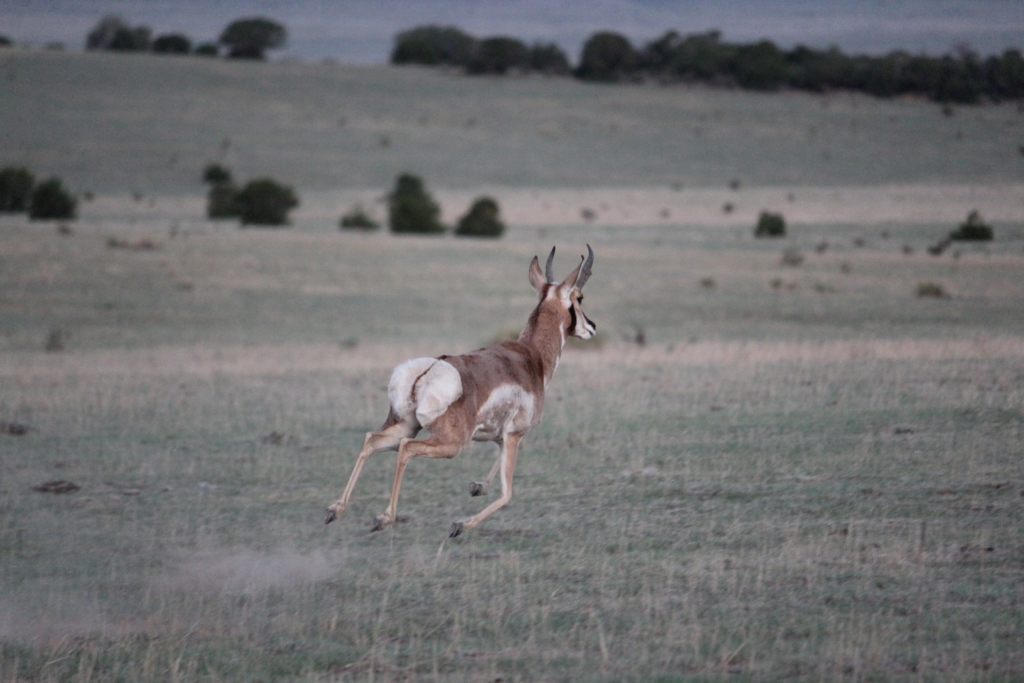
As much as I love the pronghorn, I also hate them. While their iconic black horns, giraffe-like neck, and white-and-burnt-orange coloring make them a symbol of the American West, they are arguably one of the most frustrating animals to bowhunt. Maybe this is because pronghorn are their own species. Their closest living relative is the giraffe, and they aren’t actually an antelope at all.
Win Over Water
Make no mistake: water is the most efficient way to arrow a pronghorn; however, having a ground blind at the right water source is critical. If the stars align and you arrive in your pronghorn area and the summer heat and recent rains scar the landscape have missed the area, you’re in the chips.
Use HuntStand, onX, or your favorite digital scouting app to pin possible water sources. These include stock tanks, natural and artificial ponds, and springs.
Pronghorn are nervous creatures, and their anxiety spikes when they go to drink. Look for water sources in flat areas where pronghorn can survey the landscape for danger as they approach and while they drink. Ponds and springs are typically better than stock tanks because antelope don’t have to lower their eyes below the rim of the tank. However, my best pronghorn sightings over water have been on stock tanks that are overflowing. There’s something pronghorn crave about water spilling out in small pools on the ground.
Investigate all water sources and pay attention when walking or driving to them. Live-speed goats in the area are an excellent sign. Look for tracks, droppings, and scrapes around water sources. Bucks scrape year-round, but scraping intensifies in August. Bucks paw out the earth and urinate and defecate in scrapes.
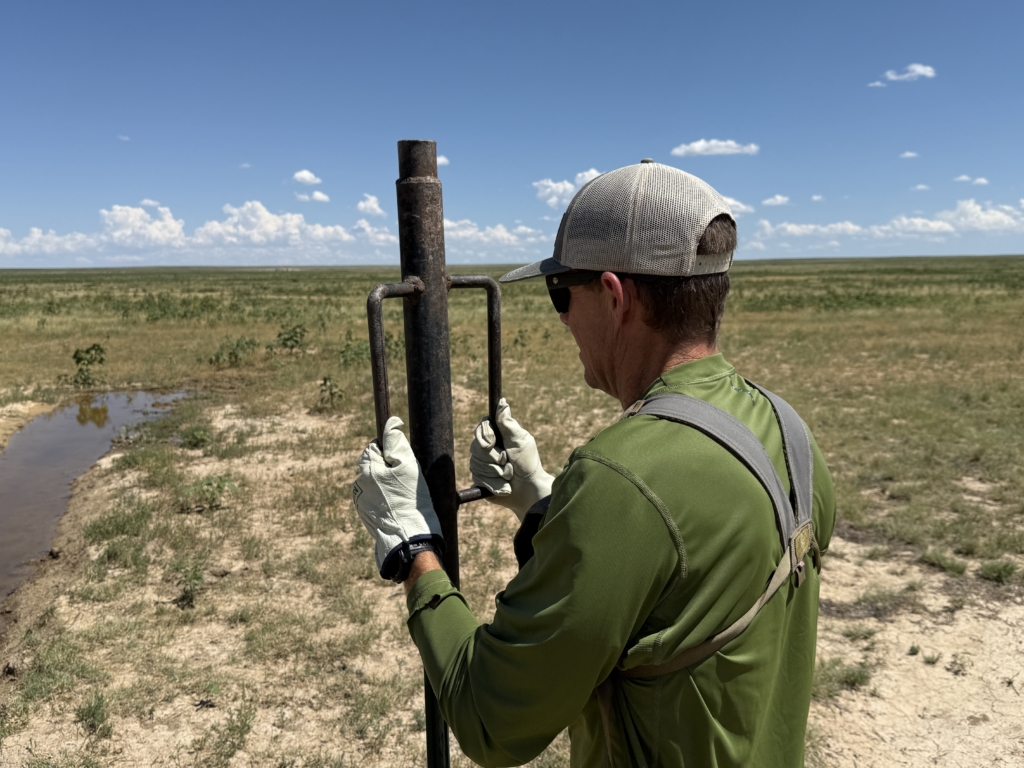
If possible, and legal, put a trail camera on the water sources. I like to use a T-post and a posthole driver. Badgers and coyotes tend to dig up wooden posts, urinate, and bite your cameras.
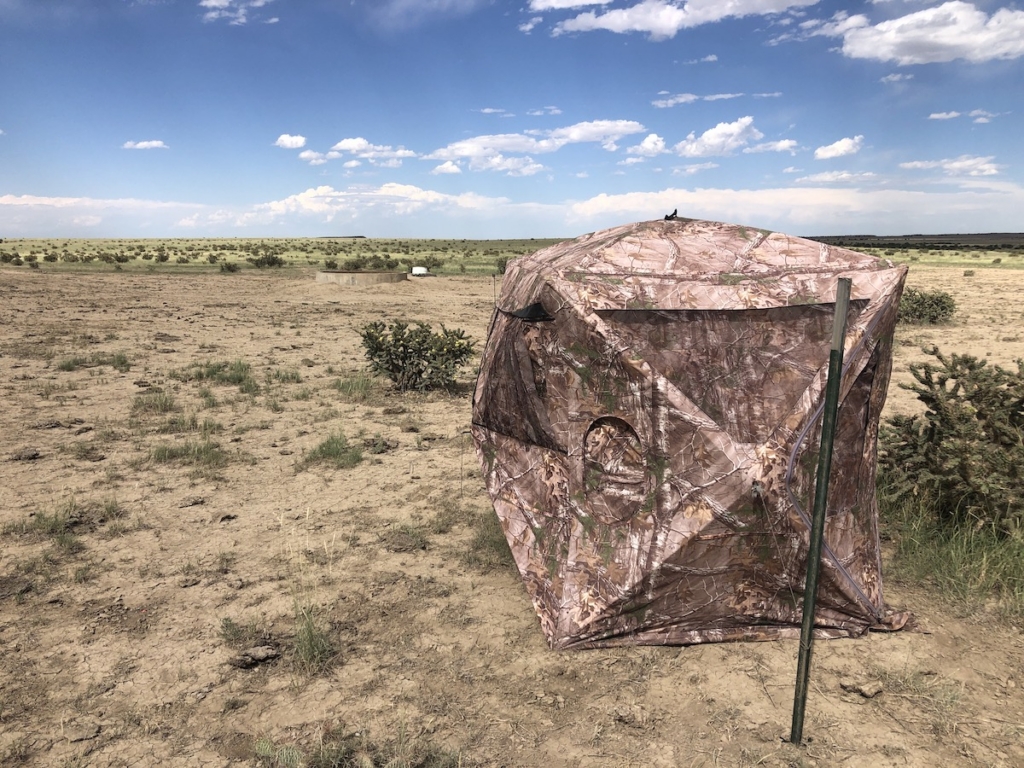
Blind placement varies. If you have a few days before the season opens, you can place your blind between 20 and 25 yards. The season is open, so save that idea for next year. If you plan to hunt the water the next day or the same day you deploy it, I like to put the blind 30 or 40 yards from the tank. In my experience, pronghorn take a few days to accept a new blind. If you do a same-day or next-day sit, be ready for pronghorn to hang up between 50 and 70 yards and circle the blind. Take scent precautions and play the wind the best that you can.
Spot-and-Stalk Success
Know this: if you can spot-and-stalk and successfully arrow a pronghorn, you can spot-and-stalk any animal in the world. Pronghorn have binocular-like vision, excellent hearing, and a decent sense of smell. Oh, and they are the fastest land animal in North America. They rely on their eyes and speed to avoid danger, and rarely put themselves in positions that are bad for them and good for the spot-and-stalk bowhunter.
Bring the best optics you can afford—binos and a spotter—and spend time watching pronghorn. I prefer to stalk lone bucks and either wait for them to bed in a location that allows an approach or choose a travel route and get there before they do.
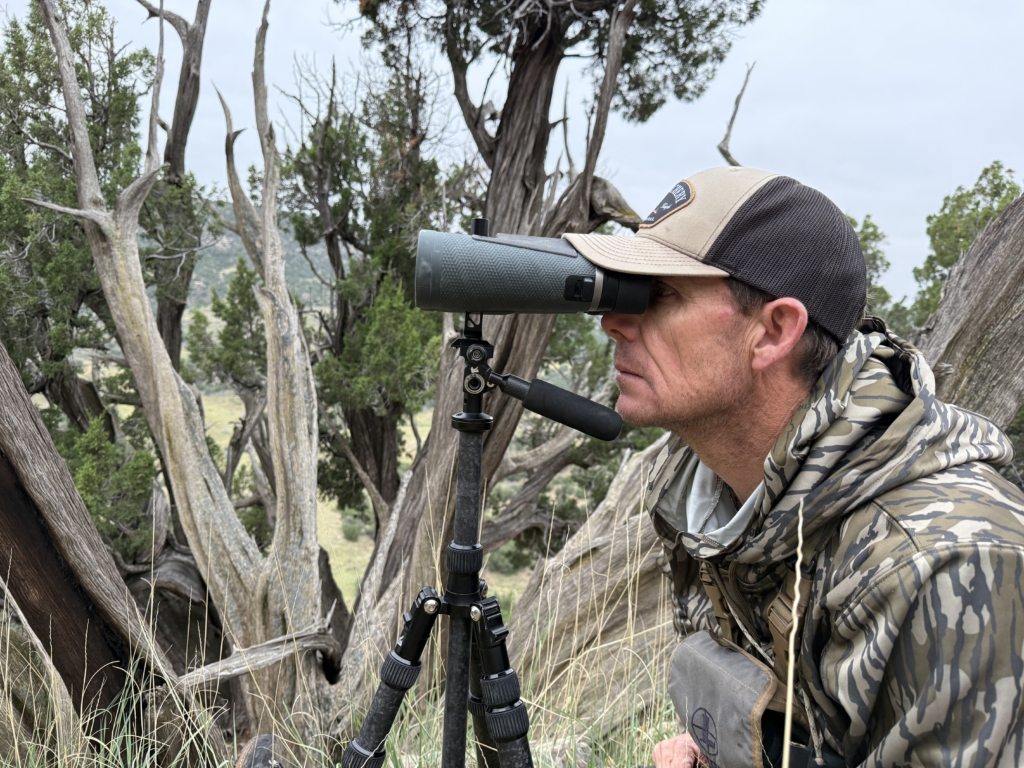
This August, my good buddy Danny Farris and I stalked pronghorn for four days in a locale void of much cover and with very little topography. I made nine stalks over four days, most in low-light conditions and periods of heavy rain.
Pronghorn tend to bed during rainy periods, and low light can slightly hinder their visibility. To spot-and-stalk pronghorn effectively, you will need leather gloves, knee pads, and a lot of grit. Crawling hundreds of yards is not uncommon, and often, you’ll discover that an excellent stalk ends with one or more white butt bounding away from you at warp speed. Don’t get frustrated! I’ve killed 12 pronghorn bucks using the spot-and-stalk method, and I’ve never killed one on my first six stalks.
Plan your approach carefully. Take pictures of the terrain with your phone, and it’s a great idea to mark the buck’s location, or the location you want to get to, on your digital scouting app. Play the wind, pick distinguishable landmarks, and stay low.
On my ninth stalk of the trip, a lone buck wandered into a small depression. Two sage bushes were at the top of the depression, and after a long crawl, I had the buck quartering away at 70 yards.
The most difficult piece of the spot-and-stalk puzzle was before me: getting drawn. It’s extremely difficult to get drawn on a pronghorn in open country. Their vision is nearly 300 degrees. For this reason, I often use a bow-mounted buck or doe Stalker Pronghorn Decoy from Ultimate Predator Gear. The decoys weigh nothing and mount quickly to any bow. A sizable shoot-through window allows for arrow clearance.
As I suspected, the buck caught movement just as I got to my knees and started to draw. However, the lifelike image of the bow-mounted decoy kept him still, and I was able to make a perfect shot.
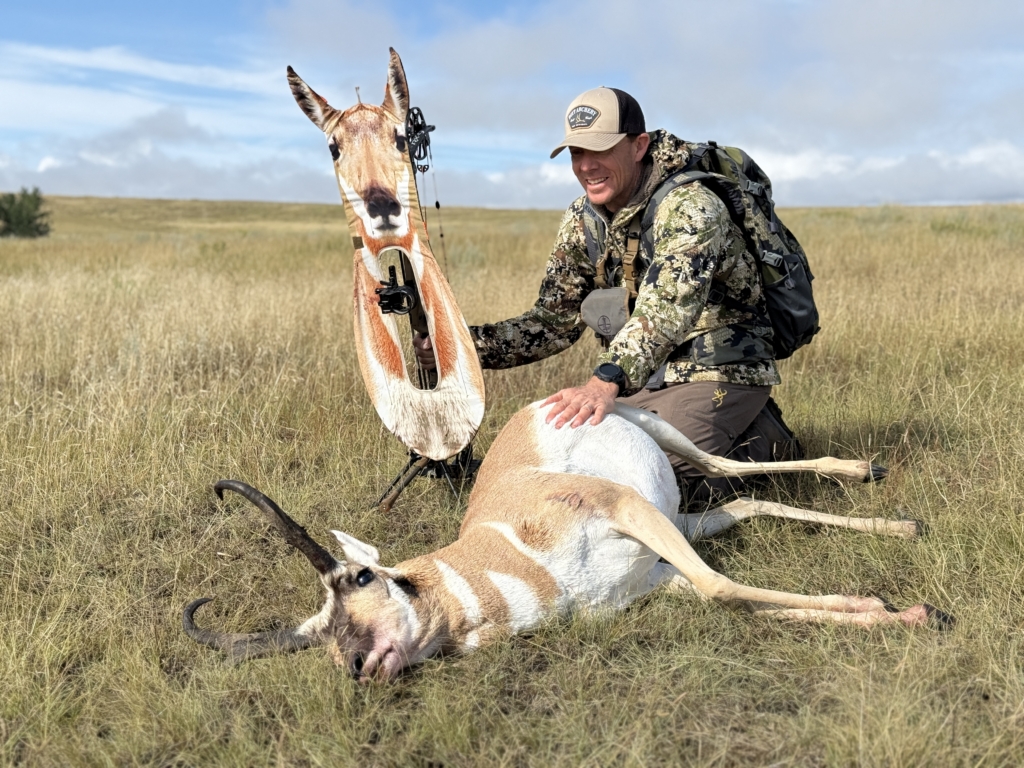
While the curmudgeon amongst us will cuss me for shooting at 70 yards, long-range shooting is a big part of the spot-and-stalk game. I practice shooting my bow all year and feel extremely comfortable out to 80 yards. Only you know your limitations and your ability to execute during the moment of truth. Only shoot as far as you feel comfortable.
Decoys: Make ‘Em Crazy
By September’s second week, bucks’ testosterone levels are through the roof. Dominant bucks are working hard to keep their does, and satellite bucks are constantly circling.
During this time, dust trails rising from the prairie are common. Bucks will leave their does and run rivals—sometimes for miles—before going back to their herd.
When decoying pronghorn, I look for three things. First, I want a buck with a bad attitude. Like people, not all bucks are fighters. You want to find a fighter. This will show in how often and how aggressively a herd buck runs a challenger off. I look for a buck that goes after other bucks, even those over 500 yards or more out, and runs them hard. Second, when possible, I want a buck that’s on the backside of his does. When you’re closer to the girls, bucks feel more threatened. Lastly, I will go after a buck that’s running does and trying hard to breed them. A buck with one thing on his mind doesn’t take too kindly to another buck wandering in to spoil his party.
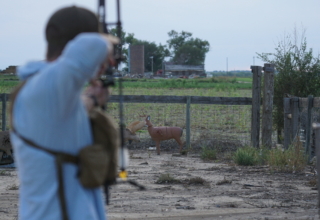
My favorite decoy to use is Flambeau’s 3-D Pronghorn Buck Decoy, but they no longer make it. However, you can take a standard deer decoy (use a doe), paint it, and add horns from a pronghorn 3-D target. It works amazingly. Attach an Ultimate Predator Buck Decoy to your bow, and position yourself behind the decoy so you can easily slide out and make your shot.
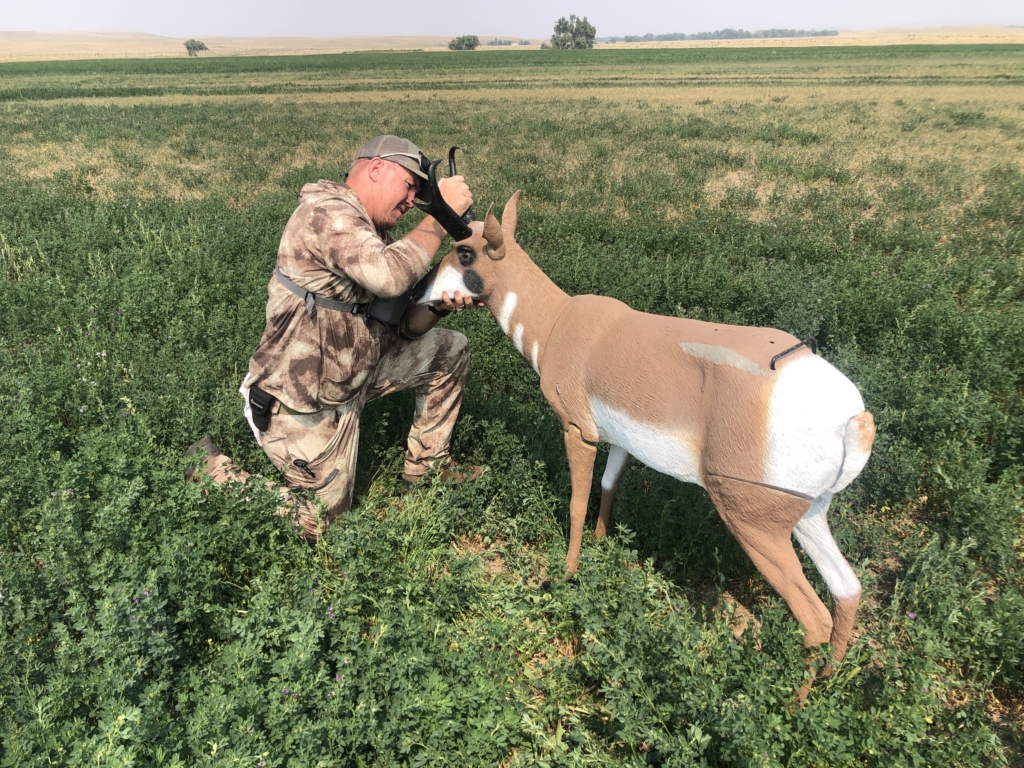
Decoying works best when you can deploy your decoy without the buck, or his does, seeing it go up. Often, I go to an area where I’ve seen intense activity, place my decoy in the dark, and use an Alps Stadium Chair for bottom and back support. I wear a white shirt to match my bow-mounted decoy. Pronghorn prefer to see white when you’re hiding behind any decoy. It works amazingly well. You can also work with a partner and move on bucks with the 3-D decoy and a bow-mounted decoy. This run-and-gun system is extremely effective during the rut.
Often, a buck will react to an imposter decoy instantly. He will bolt out of his herd and will slide to a stop like a cutting horse 30 yards from the 3-D imposter. The buck is expecting a reaction from the buck, so when you draw your bow behind the bow-mounted decoy, he won’t think twice about it.
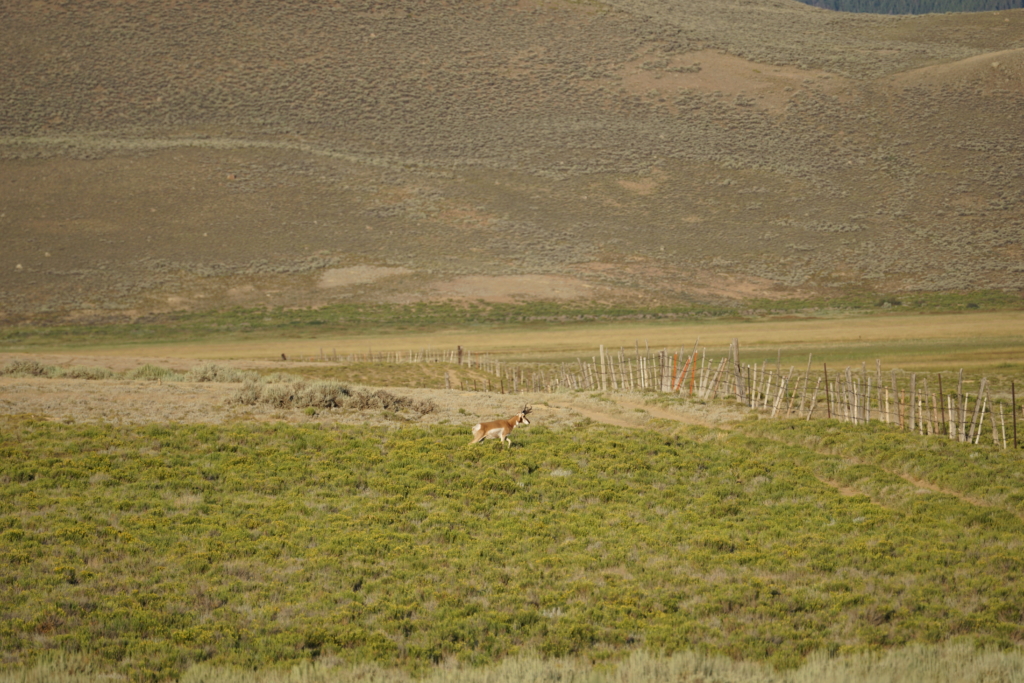
Another thing I love about devoting pronghorn is that you’ll likely have the prairie to yourself. Most bowhunters have switched gears to elk, which means you’ll have more decoying opportunities.