Whitetail hunters have many caliber options, but for field‑proven reliability you can’t go wrong with these six.
The October air smelled like leaves and spent corn when I glassed the ravine and saw him. He appeared out of thin air, a wide, dark-bodied 10 slipping through a ribbon of timber. I ranged him, pushed the forend of my rifle deep into the cradle of my shooting sticks, and sent a 175-grain bonded round through the middle of the lungs. He folded inside his own shadow. That shot’s been in my head ever since. Here are six top-end whitetail calibers I reach for, why they work, their pros and cons, and what you’ll find on the shelf at your local sporting-goods store.
If you’re looking for a feel-good whitetail story chock-full of adventure, give this one a pass. If you’re looking for a quick-hitter on six down-and-dirty deer killers, keep reading.
The .30-06 Springfield
Why it’s great: Legendary, versatile, and proven on everything from whitetails to elk. Loads range from light 150-grain bullets for flatter trajectories to heavy 220-grain bullets for deep penetration and tough hits.
Strengths: Massive ammo selection, forgiving recoil (depending on load), excellent terminal performance with quality bullets, reliable hunting round at 0–400-plus yards.
Weaknesses: Heavier recoil than 6.5s or .243; long-action rifles are a tad heavier. Still, I’ve spot-and-stalked lots of animals across the country with a long-action .30-06 in hand and have had zero trouble.
Availability: Ubiquitous — almost every major brand stocks multiple loadings (Nosler, Federal, Winchester, Fiocchi, Hornady) at big-box and local shops.
Born Hunting Goes To: Inexpensive, sporting a decent BC, and wearing a pointed soft point bullet, Fiocchi’s 165-grain Field Dynamics Big Game is a great whitetail round between 0 and 300 yards.
A Little More: The .30-06 Springfield arrived with a bang in 1906 and never learned to be polite about it. The Army traded up from black powder to smokeless and wanted a single, reliable .30-cal round that could do everything. It did—150‑ to 220‑grain bullets, dependable velocity, and the kind of stout performance that showed up in both World Wars and Korea. After WWII, surplus rifles and brass poured into civilian hands, and hunters discovered a cartridge that didn’t fuss about roles: it could flatten shots in open country or punch through a heavy shoulder when the timber closed in.
Why it still sings today is simple. The .30-06 lives in a comfort zone most cartridges only wish for. It has enough power for elk, plenty of options for whitetails, and endless bullet choices that let you tailor recoil, expansion, and penetration. Modern powders and bonded bullets polished a century-old design into something downright surgical when paired with good shot placement.
The .308 Winchester
Why it’s great: Short-action, accurate, and hits hard enough for any whitetail shot if you place it correctly. The do-it-all deer round for many hunters. Most ammo options work great in bolt-action and semi-auto .308 Win. builds.
Strengths: Excellent barrel life, tons of factory ammo choices (match, hunting, bonded), controllable recoil, great for rifles you’ll carry all day.
Weaknesses: Not as flat-shooting as some 6.5s at long range; heavier bullets have less BC than similar-diameter 6.5 bullets.
Availability: Everywhere — major sporting goods stores stock numerous brands and grain weights.
Born Hunting Goes To: I’ve filled my freezer more times than I can remember, compliments of Winchester’s Ballistic SilverTip. The 168-grain .308 Win. features an alloyed lead core and a thick copper base that helps the bullet retain weight, resulting in deeper penetration. I’ve recovered many of these bullets that were stuck on the offside hide, and all of them showed peeled-back petals.
A Little More: The .308 Winchester walked into the scene in 1952 as a civilian version of the military’s 7.62 NATO and immediately earned street cred for being short-action, stout, and surprisingly genteel. It quickly became the go-to for hunters and precision shooters who wanted magnum performance in a milder package. It’s the rifle you reach for when you want accuracy without wrestling with magnum recoil—150–180 grain bullets that punch through lungs and shoulders with surgical authority.
Why it still works today? Because it’s sensible. It balances velocity, barrel life, and recoil in a way that lets you shoot tight groups and make ethical hits without sacrificing shoulder time. Ammo is everywhere, bullet options are endless (bonded, polymer-tip, monolithic), and guns in .308 are plentiful and affordable. For whitetail work, it’s a Swiss Army caliber—easy to carry, easy to shoot, and brutally effective when you place the shot. That reliability and practicality keep it on my shelf season after season.
The 6.5 Creedmoor
Why it’s great: Modern, flat-shooting, high-BC bullets with low recoil. It’s the long-range whitetail cartridge for ethical shots past typical hunting ranges. Elk hunters are killing bull elk beyond 800 yards with the 6.5 Creedmoor. The round, if you’re shooting a top-end bullet, hits the tuft of hair you aim at.
Strengths: Superb accuracy, mild recoil (helps follow-up shots), excellent downrange energy with quality bonded/controlled-fragmentation bullets.
Weaknesses: Lighter-for-caliber bullets can be more wind-affected; bone-crushing on heavy-boned shots requires choosing proper hunting bullets. Our advice: Avoid any chance of heavy bone. Shoot them in the ribs and pop the lungs.
Availability: Very common now — Federal, Hornady, Nosler, and others regularly on shelves at major retailers and local shops.
Born Hunting Goes To: A 2,800-fps plus downrange tack driver, Federal’s 130-grain Terminal Ascent features a match-grade long-range accuracy bonded hunting bullet. The BC (.532 and .263-G7) is top of the heap, and the copper shank and bonded lead core retain weight for excellent penetration at any range. The 6.5 Creedmoor is my top personal choice for white-tailed deer.
A Little More: The 6.5 Creedmoor burst onto the scene in 2007 as a shooter-friendly, long-range round designed for match accuracy and sensible recoil. Designers wanted high-BC 6.5mm bullets pushed at moderate speeds so rifles could be lighter, easier to shoot, and still deadly at distance. It took off fast—precision shooters, hunters, and guides adopted it for its flat trajectory, minimal recoil, and superb wind-bucking bullets. Today it’s great because it marries accuracy with real-world terminal performance: bonded and controlled-expansion 120–140 grain hunting bullets retain weight and penetrate reliably on whitetails while letting you shoot calm, confident follow-ups.

The .270 Winchester
Why it’s great: Classic hunting cartridge that shoots flatter than the .30s while delivering lethal energy on whitetails. Long favored for east-west deer hunting.
Strengths: Flat trajectory, excellent BC bullets available, plenty of energy at extended ranges, comfortable recoil for many shooters.
Weaknesses: Can be marginal on very heavy-boned shots if you pick lighter bullets. There are fewer ultra-heavy bullet options compared to .30-cal.
Availability: Widely stocked — most sporting goods stores carry factory hunting loads from the big makers.
BH Goes To: I love the price and performance of Nosler’s .270 Win. 130-grain Solid Base Whitetail Country ammo. My oldest son, Hunter, smashed a 432-yard buck with this ammo, and it took two steps before tipping over. I love the Solid Base bullet. It offers a great combination of accuracy and drop-’em-dead performance.
A Little More: The .270 Winchester debuted in 1925 and quickly won hearts for its flat trajectory and killer efficiency. Based on the .30-03 necked to .277, it paired 130–150 grain spitzers with high velocity to make long shots easier and recoil manageable. Guides and plains hunters loved it for open-country work; woods hunters learned to respect its speed and honest knockdown. Today it’s still great because it balances flat-shooting, energy, and shooter-friendly recoil better than most cartridges—ideal for whitetails out past 200 yards yet gentle enough for long days in the stand. Reliable ammo and proven bullet designs keep it relevant season after season.
The .243 Winchester
Why it’s great: Fast, flat, and easy to shoot; ideal for hunters who want light recoil with lethal terminal performance on whitetails when using quality expanding bullets (95–100+ grains preferred for big deer). The .243 Win. was made to be a deer hunter’s best friend.
Strengths: Very mild recoil (great for young or recoil-sensitive shooters), flat trajectory, excellent accuracy in light, handy rifles. Makes an excellent cross-over predator and pronghorn rifle.
Weaknesses: Underbuilt bullet weights or the wrong bullet can lead to insufficient penetration on very large bucks; less “knockdown” compared with heavier .30-cal bullets. Know your bullet and know your distance.
Availability: Common — mainstream brands regularly stock hunting loads; some specialty hunting bullets focused on heavier grain options may be less common but still available.
Born Hunting Goes To: I’ve watched six deer crumble behind quality glass and looked down to see the shooter still in their scope, and ready to send a follow-up round. None were needed. A priced-right killer, Federal’s 95-grain Fusion Soft Point sizzles at 2,980 fps. I love this round on white-tailed deer to 300 yards.
The .243 showed up in 1955 and immediately earned a rep as the shooter’s deer cartridge. The .243 Win. is fast, flat, and soft on the shoulder. It’s essentially a tweener that lets you drive 95–100-grain hunting bullets hard enough for reliable expansion and penetration on big whitetails while keeping recoil to a minimum. Guides and dads love it for the same reason: you can practice all day and still steady the crosshairs when it counts. Today it’s great because it’s forgiving, accurate, and versatile—use bonded or solid-copper hunting bullets for larger bucks and avoid lightweight varmint rounds. Ammo is common, and rifles are plentiful; for many hunters, it’s simply easy and effective.
The .300 Winchester Magnum
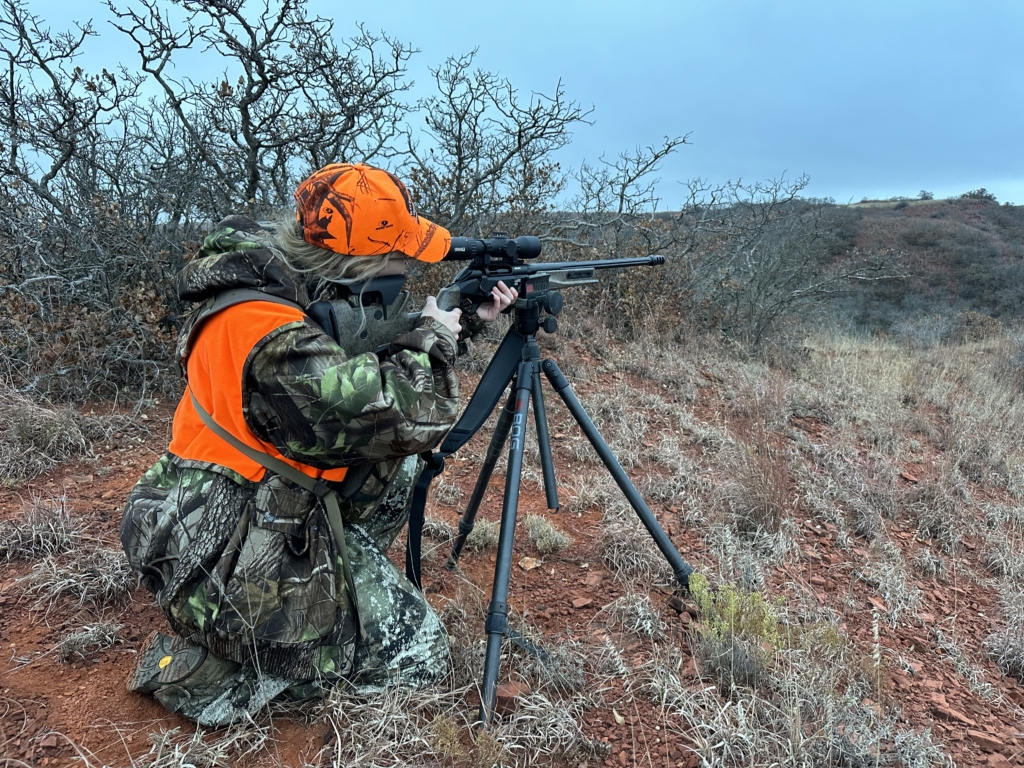
Why it’s great: Overkill? Maybe. Effective? Absolutely. If you want reach and bone-crushing energy in one package, the .300 Win. Mag. will deliver center-lung kills and reliable penetration at long ranges. If I had to pick one go-to big-game caliber for the rest of my days, it would be a .300 Win. Mag.
Strengths: Huge energy, excellent ballistic performance at long range, flexible bullet weights for any hunting scenario. The .300 Win. Mag. is the ideal crossover hunting rifle. I’ve killed various critters around the world with it.
Weaknesses: Heavy recoil, more muzzle blast, shorter barrel life, and generally more expensive ammo.
Availability: Very common in big-box and specialty stores — multiple premium hunting loads (bonded bullets, controlled expansion) available from major makers.
Born Hunting Goes To: If whitetail are on the to-hunt menu, my go-to is Hornady’s .300 Win. Mag. 150-grain InterLock SP American Whitetail. The InterLock bullet is tried and true in the whitetail woods. Ballistics are good, muzzle velocity with a 24-inch barrel is over 3,200 fps, bullet drop is less than 6 inches at 300 yards, and Hornady uses top-tier cases and primers.
A Little More: The .300 Win. Mag. debuted in 1963 and quickly became the magnum many hunters swear by—flat-shooting, heavy-hitting, and built for reach. It delivers big .30-cal bullets at high velocities, translating to massive downrange energy and deep penetration through bone and heavy shoulders. It’s the cartridge you pick when country opens up or when you want one rifle that can stretch to elk and bear as easily as whitetails. Downsides are felt recoil, muzzle blast, and pricier ammo, but if you can shoot it well, the terminal performance is undeniable. Ammo is widely available in premium bonded and polymer-tipped hunting loads.
Final Thoughts