How one hard climb revealed a repeatable method for killing pressured elk.
by Chad Carman
The bull barely twitched when the shot hit him. At six hundred yards, a suppressed 7mm PRC makes a different kind of sound in cold November air —more of a deep punch than a crack — and instead of startling the herd, it seemed to confuse them. They lifted their heads, pausing mid-chew, and stared blankly across the basin as if the breeze had simply shifted. Nothing scattered. For a few surreal seconds, the only motion in the entire drainage was the collapse of Bryce’s bull tipping into the sage.
I stayed below the skyline while Bryce turned back toward me, the excitement in his face almost more intense than the shot itself. It was his first bull, taken cleanly and confidently, and the mountains rewarded him with something you rarely see in rifle season: stillness. The herd milled around, unaware that a bull had just died among them. It was the kind of moment that only happens when everything comes together — the wind, the light, the terrain, and persistence.
And for a brief moment, there was a second opportunity.
“Get up here with your gun,” Bryce said. “This isn’t the gun for that range,” I quickly replied.
“Wanna shoot mine?” he asked.
“Hell yes.”
I crawled up to Bryce’s rifle, a Sig Cross Magnum Sawtooth, that had just anchored his bull. In the moment, I didn’t feel good about making a six-hundred-yard shot with the rifle I was carrying.
The second bull stood broadside, calm as could be. I settled the crosshairs, squeezed the trigger, and heard that same heavy impact drift back across the basin. He ran 50 yards and folded within seconds. Two bulls down. Minutes apart. Same ridge. Same ground.
And that’s when the déjà vu hit me. As I walked up and put my hands on my bull, I realized it had taken its final breath in the same spot I had shot from to kill my bull in the previous year. Three bulls in two years, all tied to a single approach that seems to be working for me in pressured elk country.
Persistance Pays
The day before this hunt, two friends and I put in nine miles through country that should have held elk. It had before. There was sign everywhere. Neighboring private land, good feed, tucked-in benches, wind-friendly slopes: all the ingredients that look appealing on a map. We saw nothing save for a lone forked mule deer chasing a doe.
When I asked the crew if they wanted to join me the next morning to get back after it, they both responded with a quick, “I think I’ll sleep in.”
A key part of elk hunting heavily hunted pressured grounds is that the elk can show up at any point, whether it be from someone bumping the herd, shooting an elk, or simply moonlight migration. Anything can make them move. You can’t kill ‘em from the couch, as they say. This was my 10th day this season in this particular drainage system, but I had killed an elk here before, and I knew elk were likely to show up. I just had to be out there when they did.
The Hard Truth About Pressured Elk
This particular area was known for road hunters and heavy public pressure a mile or so in. The only animals that day in the drainages close to the roads were hunters. We bumped into them on ridgelines, saw their headlamps cutting through the dark timber at first light, and watched them glass across the same cuts we were watching. Elk don’t tolerate that.
When rifle season piles pressure into accessible terrain, elk don’t shift slightly. Instead, they evacuate. They go to places that look like mistakes. The places that are steep enough to make your lungs burn before you’re even halfway up. The places that make you question whether the elevation number on the map is a typo. laces you look at and get exhausted before going there.
That’s where they go. And that’s exactly where we went the next morning.
The Climb That Makes The Difference
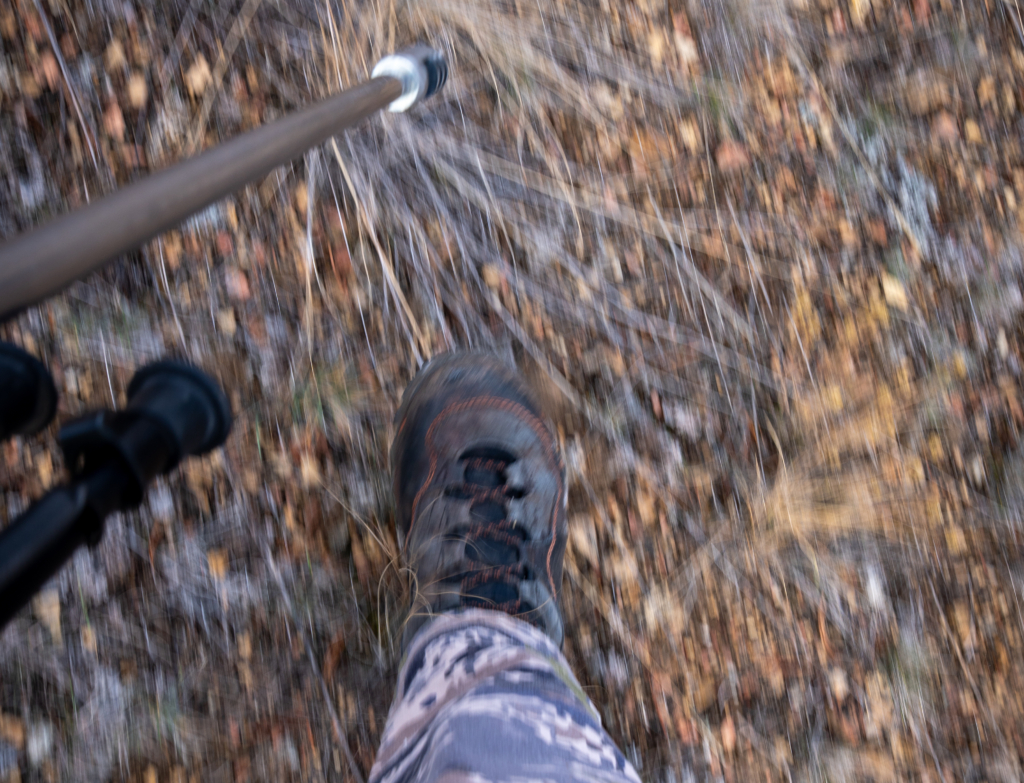
There’s no clever way to climb a thousand feet in ¾ of a mile. Bryce, a former SEAL sniper, chose the zig-zag method. I, on the other hand, went straight up in bursts, huffing and puffing at every pause. The scene was likely akin to the Tortoise and the Hare. Either way, your legs and lungs are going to negotiate with the mountain. The only thing you control is whether or not you keep climbing. Twenty-two-degree temps made it a little easier, especially since Bryce reminded me to be “comfortably cold” leaving the truck that morning. The cold gave each breath more bite, but it kept us from sweating too much.
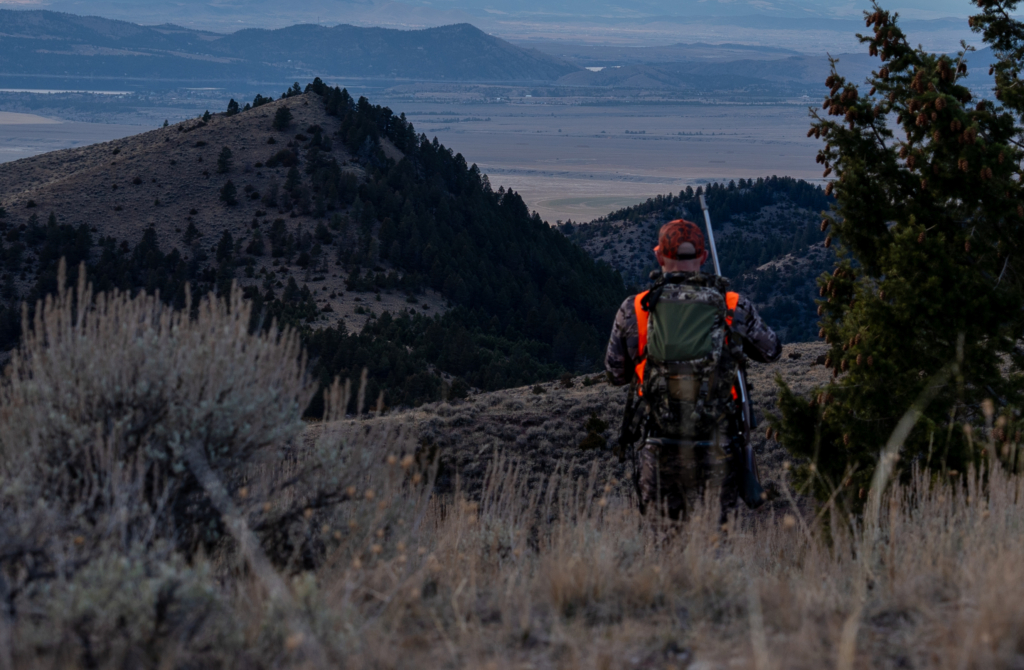
When we topped out the highest peak, the eastern sky had just begun painting the hillside in that early lavender color that lasts only a few minutes. The frost clinging to the sage looked almost blue. It was dead calm, the kind of quiet that settles over the mountains before the wind remembers its job. From that vantage point, we could see everything we needed to. We arrived at the elevation well before first light. I like to be at my glassing spot at least 15-20 minutes before legal shooting light.
The Glass That Finds What Others Miss
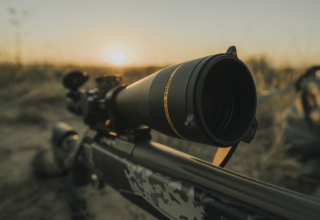
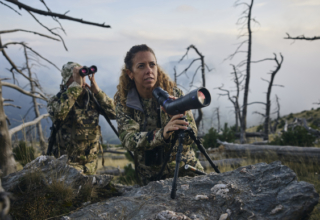
If you want to find elk in big country, you’d better have great optics. Elevation is nothing without optics that can leverage it. I’ve come to trust my BX-5 Leupold Santiam 10x42s in those first light conditions. They produce incredible edge-to-edge clarity. They have a way of separating shadow from shape in a way that cheaper glass simply can’t. Bryce’s SIG Kilo 10K Gen II binos, mounted on a tripod, take that up to another level entirely. They don’t just reveal elk, they give you immediate, precise information you can use once you decide to move.
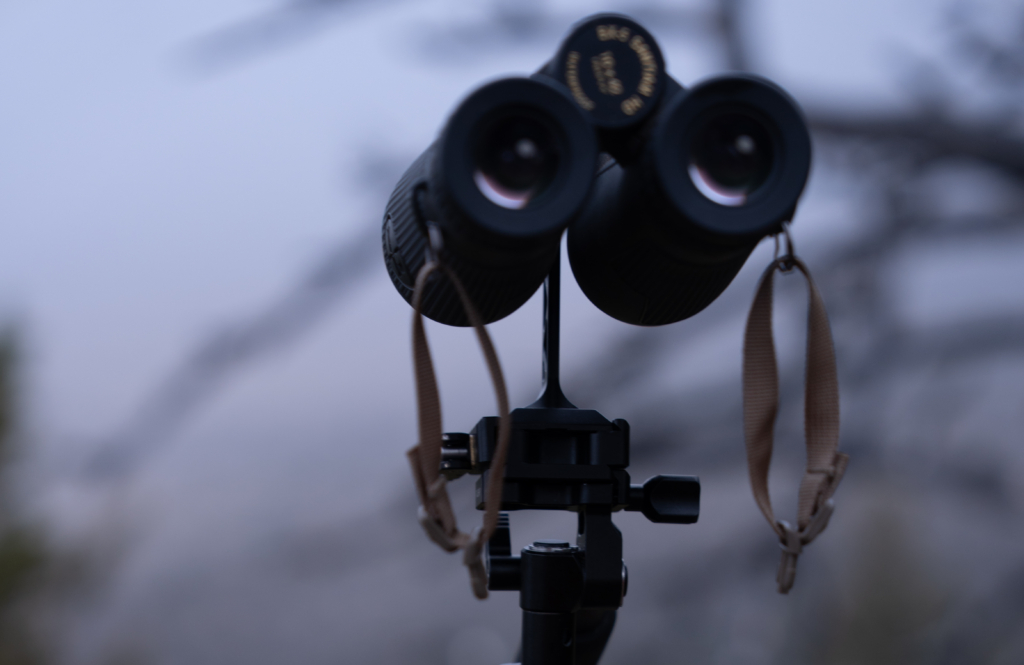
And that morning, movement came quickly as I picked up a sliver of tan across a ridge nearly a mile away. According to Bryce, it was the kind of shape that might be an elk or a rock, with good posture. Bryce steadied his glass and confirmed it. Elk. Several. And at least one bull. Spotting them pre-shooting light gave us the chance to move in the dark, a key component to our success that day.
The Moment You See Elk, Move
Maybe I’ve just been lucky. But it seems a majority of hunters spot elk and then freeze themselves out of the opportunity. They wait for a “better angle,” or for the elk to “move into a better spot.” They spend so much time thinking about where they might go that it turns into paralysis by analysis. In my mind, the longer you think, the worse your odds get. Thermals shift. Other hunters drift into view. Elk do what elk do, which is move. So when I see elk, I move.
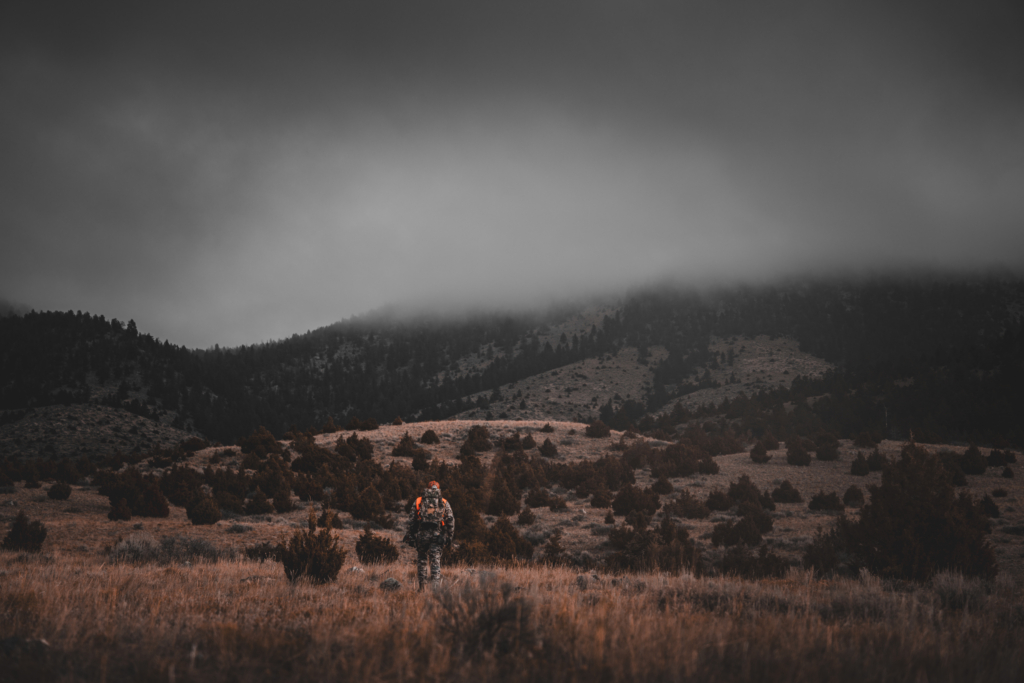
We dropped off our ridge, losing the elevation we had just fought for, but gaining the invisibility of the bowl. The fold of the ridgeline hid us completely, even though it cost us energy. We ran the lip and climbed the opposing ridge as quickly as we could.
Know Your Equipment
When we reached the last rise, we realized we had run out of room to close ground. There was no timber to slip through and no more ridgeline; no shadowed finger ridge to creep along. Just open sage. A clean, exposed slope. The kind of ground that convinces you the elk will see you if you breathe too loudly. If we tried to circle the ridge at all, we would be spotted. It was cross canyon or nothing.
When you’ve done everything right up to that point — the climb, the elevation, the optics, the decisiveness — this is where knowledge of your equipment kicks in.
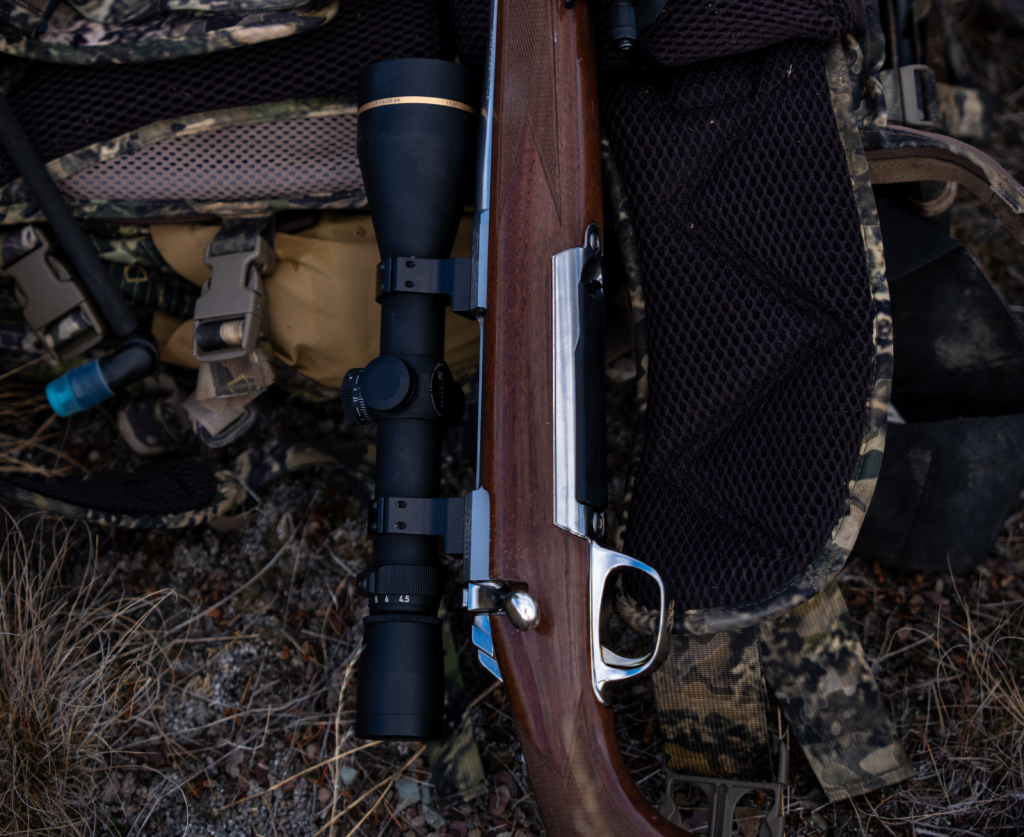
The elk were feeding slowly, comfortably, and unaware. Bryce, aforementioned SEAL sniper, looked at me, and before he could even ask “who should shoot,” I told him to get up there. It was his chance at his first bull. He dropped into the sage and crawled forward, inching over the ridgeline into a shallow crease on the hillside that gave him a perfect prone position. He ranged the bull at 602 yards and dialed in the elevation from his SIG’s Applied Ballistics Elite engine, as he had done literally 100s of times before.
When his trigger broke, his Thunder Chicken suppressor turned what would normally be a sharp report into a muted, controlled thump. The bull dropped. The herd stayed still. That moment was the final proof of what true knowledge and ethical selection of your equipment and ability were capable of.
Know Your Limits
When Bryce turned and mouthed for me to shoot one too, the idea came at me sideways. I didn’t expect it. The herd was calm, the opportunity was real, and now I had a decision to make.
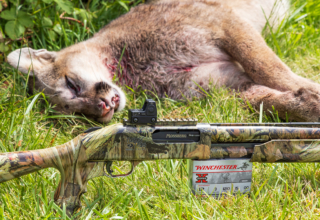
I set out this year to take a bull with my dad’sBrowning X-Bolt White Gold Medallion, and told myself no further than 400 yards. The rifle was plenty capable of a bullseye at that distance, but at 600 yards with the bullet I was using, I wasn’t going to pretend it had the energy I demanded for an ethical shot. I wasn’t going to compromise.
Bryce’s PRC held far more energy at distance, and the morning conditions were perfect. On hands and knees, I crawled the 20 or so yards up to his rifle, and I realized there wasn’t a single excuse left in the world. A deep inhale and a perfectly executed double-lung shot followed.
The Mountain Always Provides The Ending
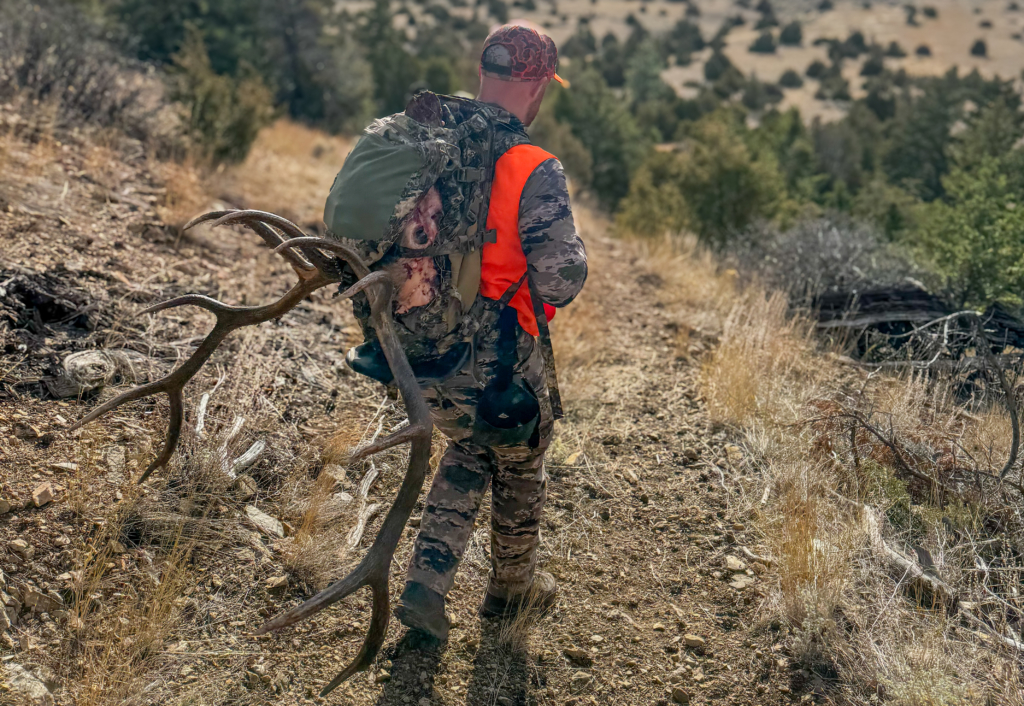
We had both bulls quartered and hanging in the trees within a couple of hours. My Eberlestock Mainframe hauled the head out without complaint, thanks to the real blessing that came when a friend appeared over the ridge with four horses.
My wife, my brother-in-law, and his wife arrived to help guide the horses through the cuts and around the steeper slopes. By midafternoon, the entire mountain was cleared of meat, and we were back at the trucks handing each horse its pelleted treats.
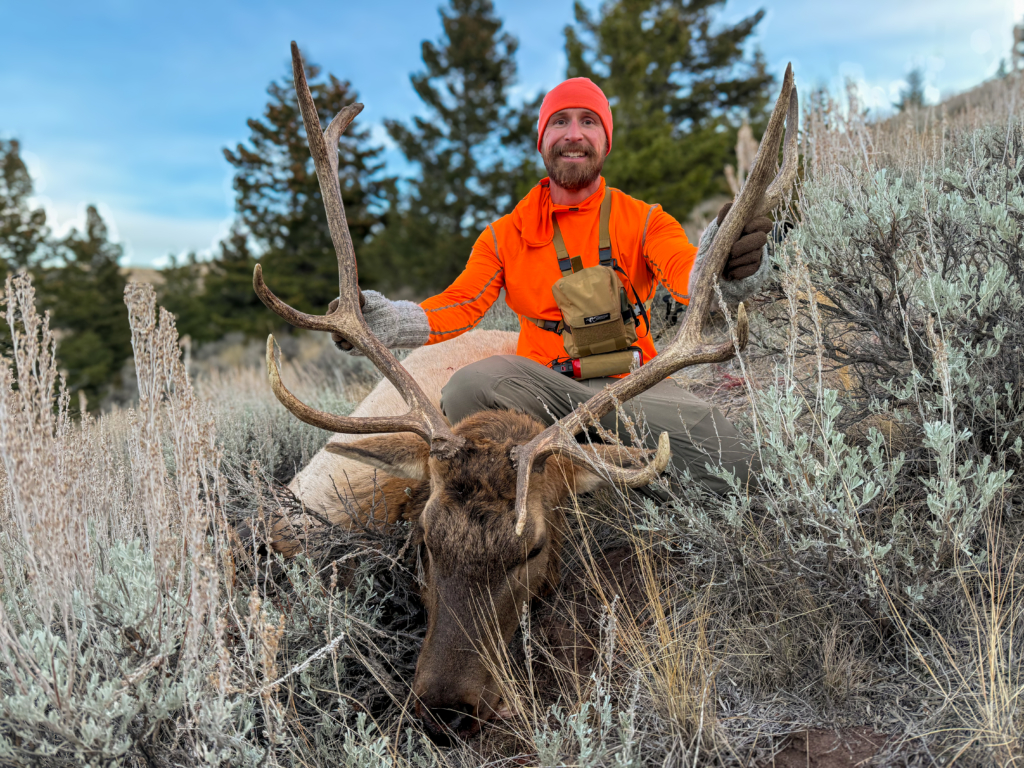
Three bulls. Two years. Same ridge. Same Hunt.
Who knows, maybe next year we make it three years?