Want an adrenaline rush? Follow Haugen’s system and call cougars into 20 feet using trail cams, an e-caller, and mouth calls.
by Scott Haugen
Thirty-three minutes into my calling sequence, a cougar busted out of the brush. The transition from full speed to stealth mode happened in one stride. Its muscles rippled beneath a dull, gray coat. Its head cocked 90 degrees to pinpoint the distress squirrel sounds flowing from an electronic speaker nestled in the brush on the ground.
I anticipated the cougar coming down one of two trails, but it took neither. My shotgun was already cradled in the shooting sticks. I had to adjust my point of aim to the left. The lion caught the slight movement and grew even more tense. I was unsure whether it would flee or charge. Regardless, it didn’t matter. A payload of 00 buckshot was on the way.
At 12 paces, it was over in an instant. Thirteen of the 15 pellets hit the cat, nine of which I’d consider lethal impact.
Calling in big predators that can kill you is a rush. I’ve experienced it with big bears in Alaska, man-eating lions in Africa, and cougars. In this game, there’s no room for error, and the entire approach is based on precision.

Know The Land
This marks my fifth year of calling cougars in this location. It’s the third one I’ve called in and killed over the last two years. I’ve called in five others who hung up in thick cover too dense to shoot through.
The mountainous area is small, just under a square mile. But it’s thick and steep in places. Blacktail deer, cottontails, a mix of squirrels, and loads of birds thrive, and that’s what draws the mountain lions.
A smattering of old logging roads, now narrow and mostly overgrown, meanders through the dense, 18-year-old Douglas fir trees. Beneath the trees, visibility is limited to feet. Several of my setups in cover find me anticipating shots between 10 and 20 feet, even closer.

It took three years of hunting this area before I called in a mountain lion. I now have over 40 trail cameras set throughout the area and tediously expand that number as cats continue to humble me. Between information gleaned from trail cameras and spending countless hours on foot, I’ve learned where cats want to be and what paths they travel to get there. I used to spend hours calling in these foothills of the Cascade Range, just hoping to bring in a cougar. I’ve learned that approach is a game of chance that rarely results in victory.
For me, success has come down to knowing every inch of the landscape, being aware of when cougars pass through and even thrive here and wasting no time getting on them when they appear. Knowing exactly where I must be to effectively set up and call in a lion is planned before a cat even arrives.
Trail Camera Benefits
Three-quarters of the trail cameras I run are Moultrie Cellular Trail Cameras. Cellular trail cameras are among the most important tools for my cougar hunting success; timing is everything. Exactly 1 hour and 43 minutes elapsed from the time I caught the last lion on a Moultrie camera, drove from home, got set up, called, and pulled the trigger.
Mind you, this is not a backcountry ordeal. These cougars are coming to kill local wildlife, but largely to hunt for house cats, dogs, and livestock in people’s yards that adjoin the timbered, brush-choked hills. A major highway runs less than a mile from most of my setups, and the number of cougars I’ve caught within 50 feet of houses is mind-boggling.
In some of the thickly covered and wooded draws, cell coverage is absent. These are the places I rely on Stealth Cam DS4K Ultimate Trail Cameras. I set them to the highest-quality video mode and the longest runtime option, 3 minutes. I load them with 64GB SD cards to hold all the footage. These cameras have provided me with invaluable insight as to when and where cougars are moving. A Stealth Cam DS4K trail camera helped me pinpoint where the last cat I killed was spending its days.

The sooner you can get on a cougar, the greater the odds of calling it in. But it’s not a guarantee.
Over 80 percent of the cats I’ve got on within two hours of being seen on a trail camera or by a landowner have come to calls. I’ve never called in a cougar that’s got a three-hour or more head start. And I’ve never had luck calling the big cats back to a place they’ve already been, which is where knowing the habitat and the cat’s path of travel lets you get ahead of them. This is the epitome of situational calling. There’s no magic bullet. I’ve had to figure it all out alone.
Calls & Calling Sequences
Over the years, I’ve chatted with several hunters who are way more experienced at calling cougars than I am. Most say they use only fawn distress sounds. Some use only varmint sounds. A few mix it up, but not many. Some swear by a decoy, some don’t.
On a recent setup, I hung a turkey wing in a tree above my e-caller. A cougar came in and lay in thick brush for 35 minutes, staring at the wing. It was too brushy for a shot, even with my shotgun. It made me wonder how many times this has happened without my knowing. Now, when calling in thick cover where cats can potentially hang up, I go without a decoy.
When a mature tom appears on camera, I like to play cougar mating sounds and whistles. This combo brought in the last adult female I killed. There was a big tom in the area, too. I’ve tried these sounds many times when females with yearlings show up, and when lone females are in the area, with no success.
The last cougar I called in was a juvenile female. I called to her three times that week. My first two attempts were overly aggressive with loud fawn and livestock distress sounds. I also used other aggressive predator sounds. I think this cat was too timid. She’d left her litter mates—both males—six weeks prior. Given her propensity to stalk cats and dogs near homes meant she was having trouble killing wild game, so the next time I used subtle calls to bring her in.
The sequence began with very light rodent sounds on a FoxPro X24. I let the e-caller run for four or five minutes, paused for two minutes, then boosted the volume for three minutes on the next series. After a minute or so, I paused the caller, then began the third sequence with mid-volume rodents. I ran the call to full volume, then toned it down. That lasted about four minutes.

The next two sequences on the FoxPro were flying squirrels. We have a lot of squirrel subspecies in the woods, including flyers, but I just like the sounds of these unique tree squirrels that spend a lot of time on the ground at night. The first sequence was low volume for three minutes. Then, I paused the caller, increased the volume, and let it run.
I also like to sprinkle in bird distress sounds. My go-to call on this hunt was Slayer’s Cow External Elk Call. The call works wonders on elk, but when manipulated correctly, it makes excellent bird distress sounds. I’ve called in loads of predators, including bears and mountain lions, with this call.
After a few minutes and no cat, I went back to low volume flying squirrel sounds on the FoxPro. It ran only a few seconds before the cat busted out of three-foot-tall grass and thick briars, skirted around low-growing fir bows, and stared at the speaker. The speaker was 30 feet from where I sat, and the cat was six feet from that when I shot.
When it comes to calling cougars, I still have a lot to learn, but at this point, one of my biggest takeaways is that the calling is very site-specific. My goal is to pique a mountain lion’s curiosity. I think a lot of cougars come in that we never see. My run times are longer than most hunters’, and I switch species and fluctuate volumes more than anyone I’ve talked with.
It’s working, and all my moves are based on what I’ve learned through trial and error, time in the woods, and hours of studying trail camera video. When it comes to consistently calling brush country cougars, the best way to learn is by being afield. No amount of reading or talking with fellow hunters will prepare you for calling cats in your area like getting out and discovering things on your own. Once you get dialed in, you’re in for some of the most exciting, thrilling, addictive hunting imaginable.
The Shotgun Setup
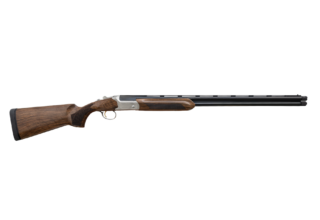
Over the decades, I’ve shot several short-barreled shotguns with streamlined stocks. Mossberg’s 535 Turkey Thug has been my go-to predator shotgun for years. I like the maneuverability of the pistol grip stock over thumbhole stocks, and the short barrel is perfect for up-close encounters. Another strong point: this shotgun accepts a Picatinny rail, meaning it doesn’t elevate the optic so high that you must lift your cheek off the gun to acquire the target, which can lead to punches in the mouth with magnum loads.

My red dot sight is a Trijicon RMR with a 1.0 MOA Dot. The adjustable LED sight accentuates the red dot to fit your needs. Be sure to make periodic adjustments for changing daylight, as you don’t want the dot too dim or too bright when it’s time to take the shot. I have Trijicon RMRs on other shotguns, a lever gun, and pistols. I have been using them for over 20 years, and their durability and precision are top-notch.

My shotgun is fitted with an XX Full AccuChoke and shoots Winchester Super X 00 Buckshot with consistent precision. The 3-inch payload delivers 15 pellets at 1,210 fps, which is the perfect combination of size and speed to drop a cougar in its tracks. Testing setups on paper is fine, but the truth comes out when you shoot a mountain lion head-on at close range.
Final Thoughts
The art of calling mountain lions is as thrilling as it is challenging. The experience of observing these magnificent predators in their natural habitat, particularly when using effective calling techniques, can provide an unmatched adrenaline rush. Mastery of the landscape and understanding of cougar behavior are crucial for success, as demonstrated over years of practice and the strategic deployment of technology, such as trail cameras. Embracing patience, observation, and adaptability in calling mountain lions transforms every outing into a unique adventure, emphasizing the thrill of the chase.